
Department
Earth, Atmospheric and Planetary Sciences

Global reductions in mercury emissions should lead to billions in economic benefits for U.S.
Benefits from international regulations may double those of domestic policy.

At COP21, finding hope for climate in the "Aerocene"
Visiting Artist Tomás Saraceno and MIT scientists join forces to confront climate crisis at United Nations conference.
MITEI names co-chairs of Energy Education Task Force
Professors Hager and Ram are the new co-chairs of MITEI’s Energy Education Task Force and the Energy Minor Oversight Committee.

Putting the science in science policy
Faculty and students from the Program in Atmospheres, Oceans, and Climate visited our nation’s capital to build relationships with policymakers on both sides of the aisle.
Daniel Rothman awarded math prize for work on Earth's carbon cycle
Professor of geophysics and co-director of the Lorenz Center at MIT honored with the 2016 American Mathematical Society Levi L. Conant Prize.
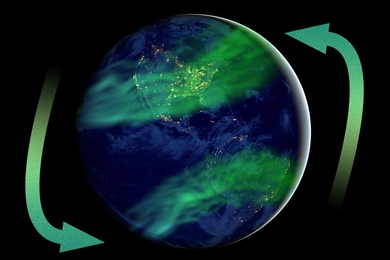
Earth not due for a geomagnetic flip in the near future
Researchers find geomagnetic field intensity is double the long-term historical average.
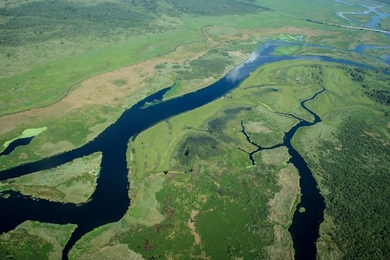
Cracking the problem of river growth
MIT researchers find that a similar principle predicts the growth of fractures and rivers.
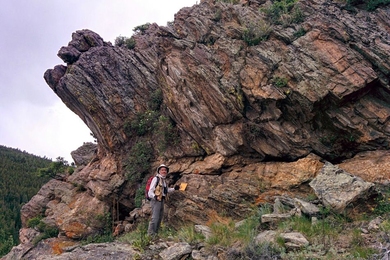
Study predicts bedrock weathering based on topography
Shape of a landscape determines the thickness of Earth’s life-sustaining “critical zone.”
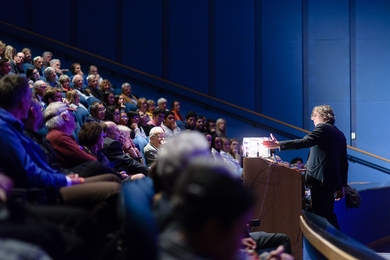
Cloud watching: Bjorn Stevens delivers 2015 John Carlson Lecture on clouds and climate change
Director of the Max Planck Institute for Meteorology describes how atmospheric water contributes to climate change.

Triggered earthquakes give insight into changes below Earth’s surface
Quakes can change elastic properties of the Earth’s crust up to 6,000 kilometers away.

A “fair and ambitious” pledge? Not quite
Study finds pledges by top greenhouse gas emitters leaves little room for others; urges greater R&D.
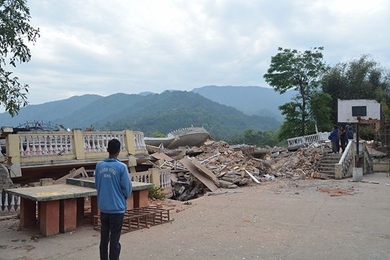
MIT’s response to earthquake in Nepal
MIT supports recovery and learning following earthquake in Nepal.
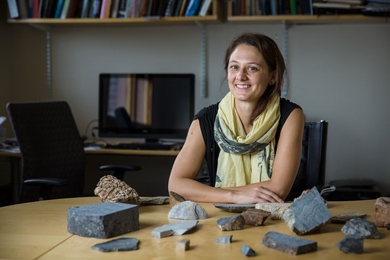
Microbe sleuth
Tanja Bosak examines how life and the Earth evolved in tandem during their early history together.
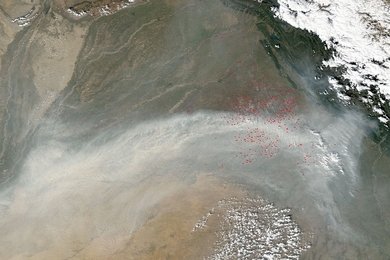
Messing with the monsoon
Study: Manmade aerosols can alter rainfall in the world’s most populous region.