Global development and prosperity have become increasingly dependent on minerals and metals. This growing dependence has drawn attention to the mining industry and underscored national economic and security vulnerabilities across supply chains. As demand for these materials rises, the challenge for expanding capacity will be to develop scalable pathways to produce, use, and steward them.
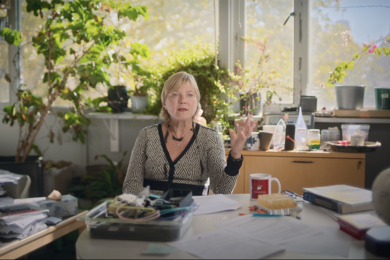
In this interview, Professor Elsa Olivetti, co-director of the MIT Minerals Stewardship Consortium, discusses how collaboration can strengthen mineral and metal supply chains and focus research on practical impact.
Q. In its first decades, MIT had a Department of Mining and Metallurgy. In recent years, we’ve seen increasing interest in mining and minerals at MIT. What explains this resurgence?
A: Six of MIT’s first 14 graduates in 1868 earned degrees in geology and mining. In 1889, one of those graduates, Robert Hallowell Richards, was the MIT professor who explicitly linked metallurgy to mining engineering within Course III [Materials Science and Engineering]. MIT shaped its curriculum to meet the nation’s increasing need for advanced materials for railroads, industrial machinery, and electrification.
It feels very similar to our time. We’ve all heard about the growing demand for minerals to support the energy transition, defense applications, data centers, and global economic development. That includes tiny amounts of gallium for defense radar systems and vast quantities of steel, aluminum, and copper for the grid. But each element and supply chain has its own “personality.” For example, gallium is a by-product of the process to make aluminum, so increasing its supply requires coordination beyond mining.
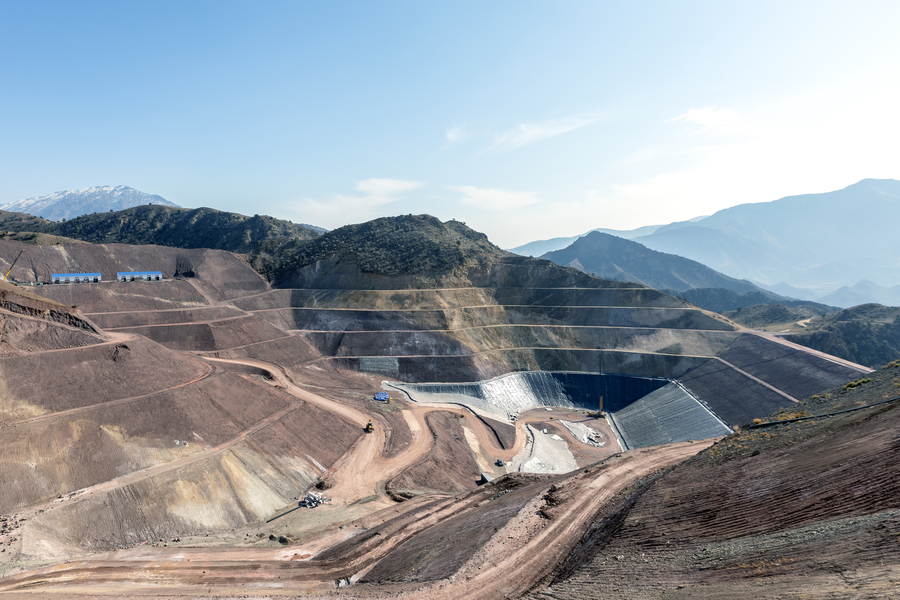
Mining and mineral processing are environmentally intensive — and becoming more so. It's harder to obtain newly mined minerals, even from places where mining already occurs. Ore bodies are deeper, lower-grade, and more often located in socially and environmentally sensitive regions. Mine projects face shifting water availability, extreme climate events, the concerns of nearby communities, fluctuating mining costs, and advancing digital technologies that change how ore is monitored, extracted, and processed over a mine’s life.
And that explains why we are seeing a renewed focus on mining and minerals at MIT. To meet this moment and serve the nation, not only do we need advances in science and engineering for extraction, but also innovations in the markets and governance to incentivize developers and communities to engage continuously and transparently. Our campus is compelled by mining’s broad, systems-level impact on people, the complex science, and the entrepreneurial opportunity.
Q. President [Sally] Kornbluth has called curiosity-driven science our “intellectual rocket fuel.” What does fundamental research contribute to solving the challenges of mining and critical minerals?
A: What’s exciting to me is that these challenges call for fundamental research across MIT.
As an example, rare-earth elements have very similar chemical properties, making them difficult to separate from each other for the different end use applications we depend on. Researchers are exploring engineered microbes that can bind one metal selectively and withstand harsh conditions. This work draws on basic advances in producing engineered proteins and computational models that predict how metals bind. Other teams are investigating electrochemical approaches to extraction, studying how ions behave in ore minerals including oxides and sulfides to improve separation.
We also need contributions from different disciplines. Researchers in earth, atmospheric, and planetary sciences are partnering with colleagues in aeronautics and astronautics to advance remote sensing of changes in land use. Experts in automation and control are developing ways to keep sensitive separation processes within narrow temperature ranges, while mechanical engineers study fluid dynamics relevant to deep-sea mining. Some minerals are essential but traded in small volumes, raising distinct economic questions. Urban planners examine how community knowledge can inform more equitable and resilient decisions.
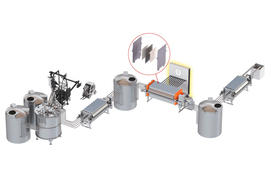
And we have to move ideas from the lab to the field. MIT’s Office of the Vice President for Energy and Climate, the MIT Energy Initiative, and other programs are seeding early-stage work. Some projects have attracted follow-on support, including the U.S. Department of Energy’s Genesis Mission, to advance technologies toward pilot testing. MIT startups Lithios and RockZero are pursuing lithium extraction from brines and hard rock, respectively. SiTration, Nth Cycle, and Found Industries are pioneering metal recovery from mining and industrial waste. These examples show how basic discoveries can lead to technologies and policy impact — and how challenges in the field can prompt new research questions.
Q. We see regular calls from the government and others to re-shore the production and refinement of critical minerals and rare-earth elements. What is the role MIT can play, and where do you see opportunities for collaboration?
A: Building domestic and allied capacity is more than just opening mines. Extraction, separation, refining, and manufacturing are technically demanding, and the economics are challenging. Trade restrictions can disrupt supply at any point along the supply chain. A domestic magnet industry, for example, needs reliable access to separated rare earth oxides. Otherwise, we replace a dependence on imported magnets with a dependence on imported materials. There must be capability across the entire supply chain to establish resilience, and it needs to be done responsibly and with a robust workforce. This will take collaboration across industry, government, and research institutions.
MIT can play a strong role as a convener, particularly among industry partners.
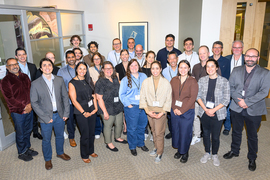
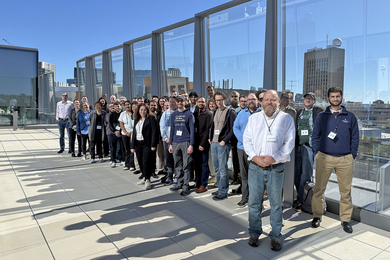
In September 2025, we launched the MIT Minerals Stewardship Consortium (MSC) with three inaugural members — BHP, Vale, and Rio Tinto — which MIT Sloan Professor Chris Knittel and I lead. All of this came together when staff from MIT’s Industrial Liaison Program came to me and said, "We've been having conversations with companies, and they're describing similar needs. Is there an opportunity to have them work together with MIT?" The MSC is a platform to gather stakeholders from across the supply chain with specific aims, such as identifying barriers to technology adoption, to curate research questions and collaborative next steps.
The consortium brings together faculty expertise in operations, urban planning, aerospace engineering, materials science, and economics. Through the MSC and other campus efforts, MIT connects industry, government, startups, and researchers to identify shared priorities and move research toward practical impact.
The U.S. administration and other governments are mobilizing capital, driving regulation, and building international and corporate alliances to strengthen critical mineral supply chains. Through the MSC and engagement across campus, MIT can bring together stakeholders to identify priorities, coordinate efforts, and ensure we help build competitive, resilient supply chains.