Mining provides the raw materials that form the backbone of many critical sectors, including construction and infrastructure, technology, manufacturing, and energy. Despite the vast significance that the extraction and processing of materials have on the global economy, the mining industry faces several challenges as it balances competing demands from the financial and social sides of business.
The newly launched Minerals Stewardship Consortium (MSC) at MIT aims to inform mining companies as they navigate this complex landscape and effectively address the increasing need for more responsible mining practices while maintaining economic stability. By convening industry with academia, the MSC fosters cross-sector collaborations that help equip mining companies with the information needed to develop responsible, scalable strategies for the production, use, and stewardship of critical minerals. Together, through their work in the MSC, these groups will aim to advance systems-level innovation that links technology, policy, and community to secure the critical materials the world needs — in ways that prioritize positive impact and lay essential groundwork for global energy resilience.
“The Minerals Stewardship Consortium is researching approaches to strategically elevate the environmental, social, and economic impacts of mining while also building resilient and ethical mineral supply chains,” says Elsa Olivetti, the faculty co-director of the MSC, the Jerry McAfee Professor in Engineering, and a mission director within the Office of the Vice President of Energy and Climate.
“Our goal is to spark interdisciplinary teamwork to fill in some of the current gaps in the mining space, as companies think beyond economic considerations,” adds Christopher Knittel, MSC faculty co-director and Associate Dean for Climate and Sustainability, the George P. Shultz Professor and a professor of applied economics at the MIT Sloan School of Management, and a mission director within the Office of the Vice President of Energy and Climate. “We are eager to provide insight to enable balance financial, environmental, and community outcomes.”
The MSC’s inaugural members are Vale, BHP, and Rio Tinto.
The MIT Industrial Liaison Program (ILP), administered by MIT Corporate Relations, is the Institute’s central gateway for corporate engagement and played a key role in building the MSC, together with MIT’s Office of Strategic Alliances, Transactions and Translation (OSATT). ILP’s mining sector membership expanded from a single company to eight leading players by 2022. Through targeted engagement with its mining company members, the ILP and OSATT supported the formation of the MSC alongside Olivetti and Knittel.
“ILP’s guidance and network and OSATT’s expertise in structuring and negotiating transactions have been essential in driving this collaboration from idea to launch with the founding members,” says Ron Spangler, program director at MIT Corporate Relations. “The ILP and OSATT will remain involved in this important initiative as it expands and grows.”
Research and workstreams focused on technological deployment and impact
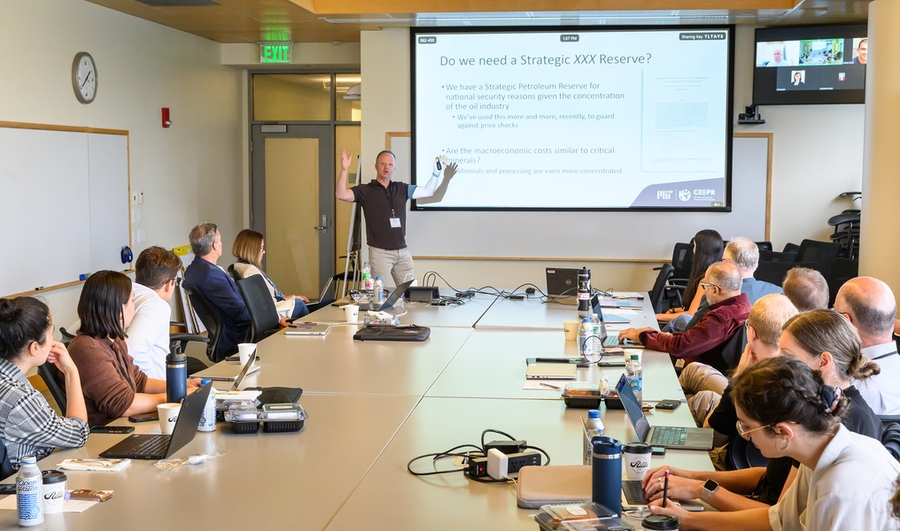
The consortium is guided by four research pillars that were co-created with the member companies through a series of workshops, site visits, and ongoing dialogue.
- Digital mining and decision-support innovation focuses on developing new considerations within data stitching, simulation, AI, and optimization tools to support mine design and operations under uncertainty.
- Social, ecological, and economic integration creates frameworks to incorporate community knowledge, social equity, and environmental impact into mining decisions and project development.
- Environmental monitoring and remote sensing uses AI-driven remote sensing and low-cost monitoring to track ecological impacts and environmental risks around mining sites.
- Market and policy innovation develops economic models of supply, demand, and substitution that integrate social, geopolitical, and environmental risks into market analyses.
“The MSC brings together diverse stakeholders to tackle shared industry challenges collaboratively,” adds Olivetti. “The research team develops research agendas, decision-support tools, and policy insights. The research is action-oriented, supports practical outcomes, and is grounded in application, all to support informed decision-making.”
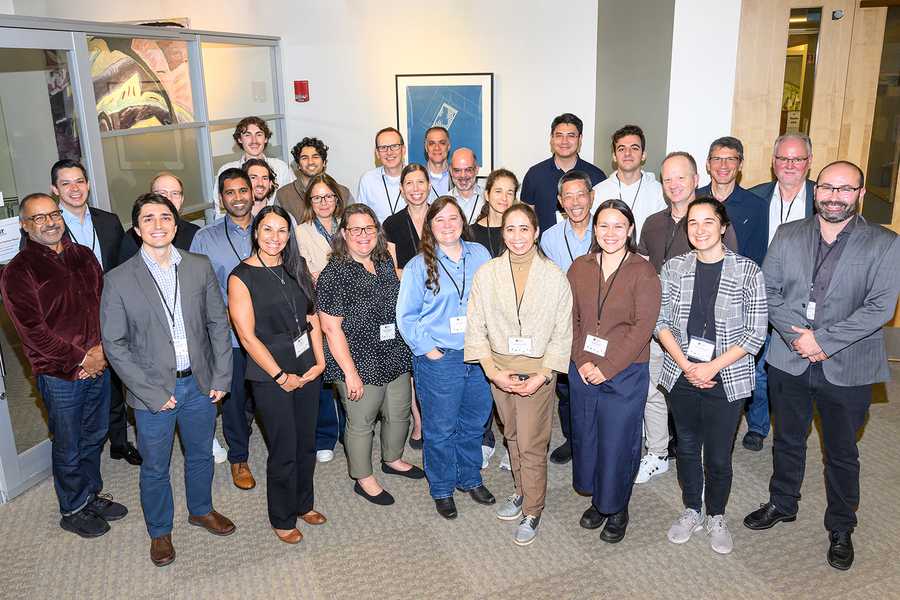
The MSC is led by nine MIT faculty members across four of MIT’s five schools and the MIT Schwarzman College of Computing. The interdisciplinary nature of the consortium strengthens its approach to tackling challenges and amplifies its impact.
The faculty members include Elsa Olivetti and Christopher Knittel as co-directors as well as Kerri Cahoy, associate professor of aeronautics and astronautics; Vivek Farias, Patrick J. McGovern Professor of Operations Management at the MIT Sloan School of Management; Janelle Knox-Hayes, Lister Brothers Professor of Economic Geography and Planning in the Department of Urban Studies and Planning; Kent Larson, a professor of the practice in media arts and sciences; Liz Reynolds, a professor of the practice in urban studies and planning; Rich Roth, director of the Materials Systems Laboratory; and Kalyan Veeramachaneni, a principal research scientist at the MIT Schwarzman College of Computing.
MIT’s longstanding engagement with mining
The establishment of the Minerals Stewardship Consortium is a recent update in a long history of mining-related work at MIT. MIT has engaged with industrialization, including a focus on material development and material extraction, since its inception, in part due to founder William Barton Rogers’s experience as a geologist and his vision for education in the “useful arts.” Rogers aimed to train students to address social problems through hands-on experience, teaching them to apply scientific insights to the world’s most pressing challenges.
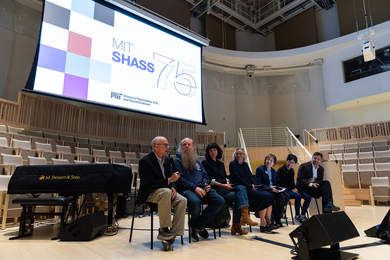
“To grasp both scientific breadth and depth, theory and practice, MIT students worked not only with equipment and test tubes in their new laboratories but also with places and the material world,” said Megan Black, MIT associate professor of history, in her opening remarks at the MSC launch event.
Robert Hallowell Richards, one the first students to pass through MIT’s doors, benefited from this hands-on philosophy and as an undergraduate student traveled west to take in the industrializing United States. He spent a summer working at Michigan’s Calumet and Hecla copper mine, which inspired his lifetime interest in the mineral processing space. He later became a faculty member at MIT and founded Course 3 in mining and metallurgy (today materials science and engineering).
Richards and his wife, Ellen Swallow Richards — who was the first woman to attend MIT as a student and later became the Institute’s first female instructor — shared a sharp environmental awareness and grappled with the complex interplay of industry and the world that surrounds it, foreshadowing some of the challenges faced by mining companies today.
“We can never know precisely how these forerunners would have responded after the era of environmental awareness that raised questions about carbon emissions, water pollution, and biodiversity loss,” said Black. “But seeing the pattern of their deep appreciation of nature, their determination to get details 100 percent right, and their willingness to revise, I think that it’s safe to assume that they would have responded to newer and better information with care.”
The MSC hopes to embrace these same values by providing tools and knowledge to member companies as they pursue mining practices with a strong a social and environmental lens.