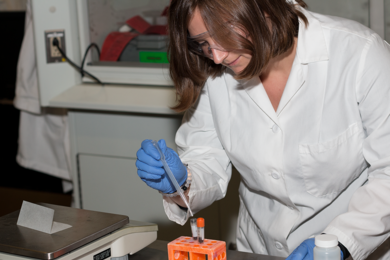
Analyzing lithium ion battery fatigue
Summer Scholar Erica Eggleton joins Van Vliet Lab to make and test lithium manganese oxide electrodes.
Summer Scholar Erica Eggleton joins Van Vliet Lab to make and test lithium manganese oxide electrodes.

Resource could yield linguistic insights, practical applications for non-native English speakers.
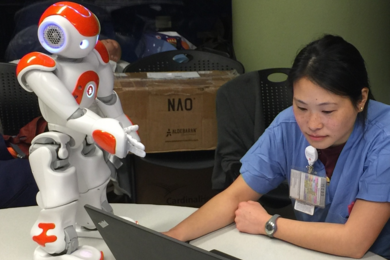
System from Computer Science and Artificial Intelligence Lab suggests where to move patients and who should do C-sections.
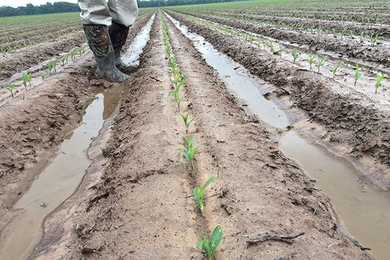
New approach tracks key factors affecting crop yields, enabling early adaptation.

Method uses readily available tools to quickly determine materials’ properties.
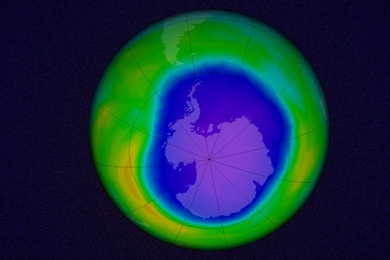
September ozone hole has shrunk by 4 million square kilometers since 2000.
Inexpensive sensors could be worn by soldiers to detect hazardous chemical agents.

Computer model finds slits in the spleen impose a “physical fitness test” on red blood cells.
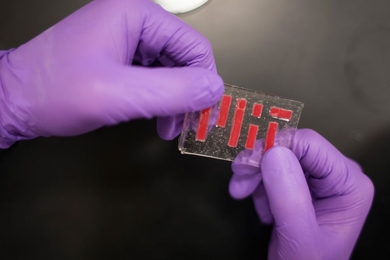
Water-based material could be used to make artificial skin, longer-lasting contact lenses.

Research suggests Antarctica and the Southern Ocean may be experiencing a period of cooling before warming takes over, thanks to the ozone hole.

Report calls for more integration of physical, life sciences for needed advances in biomedical research.

Signal was produced by two black holes colliding 1.4 billion light years away.

Study: Group dynamics of teamwork and internships deter many women in the profession.
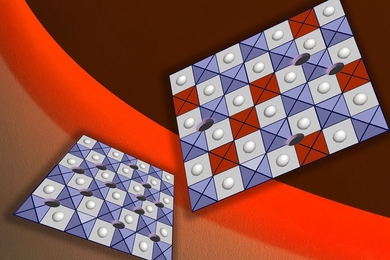
Surface treatment greatly reduces degradation of catalyst material.

Communesins, originally found in fungus, could hold potential as cancer drugs.