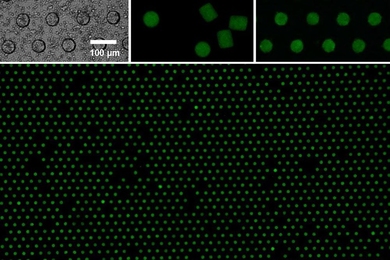
A better way to assay
New design of large-scale microparticle arrays can make materials science and bioengineering applications more scalable, precise, and versatile.
New design of large-scale microparticle arrays can make materials science and bioengineering applications more scalable, precise, and versatile.
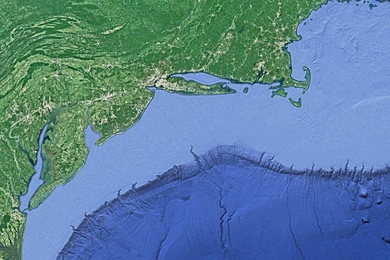
Better simulations of internal tides may benefit sonar communications, protect offshore structures, and more.
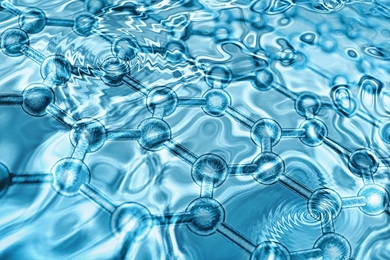
New analysis finds way to safely conduct heat from graphene to biological tissues.
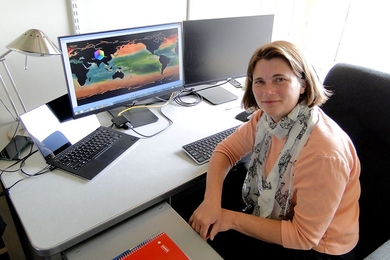
Stephanie Dutkiewicz’ phytoplankton models project the future of the ocean as food source and carbon sink.
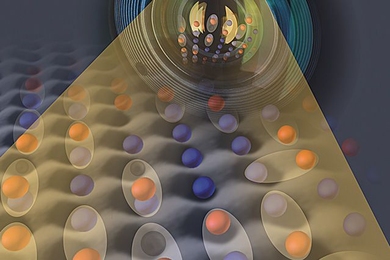
Observations of atomic interactions could help pave way to room-temperature superconductors.
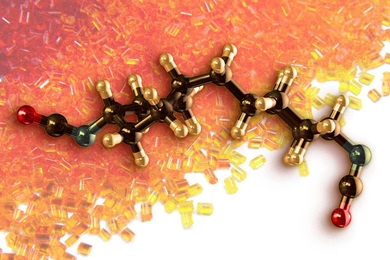
Technique for calculating elasticity could aid design of new materials.
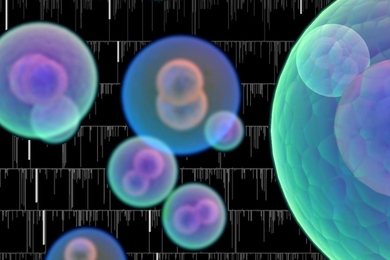
Device that measures growth of many individual cells simultaneously could lead to rapid tests for antibiotics.
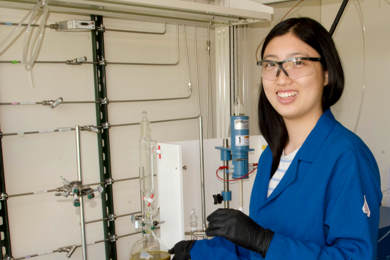
Summer Scholar Victoria Yao experiments with water-based, flow-driven battery concept in Brushett Lab.
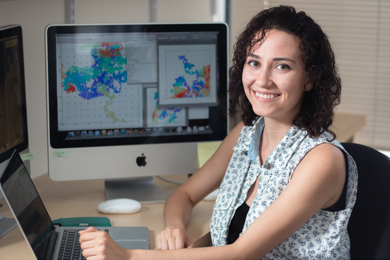
Summer Scholar Jennifer Coulter works on computer simulations with associate professor of materials science Alfredo Alexander-Katz.
MegaMIMO system from the Computer Science and Artificial Intelligence Lab speeds data transfer by coordinating multiple routers at the same time.
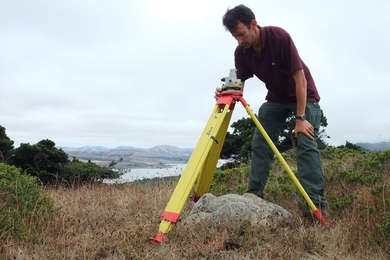
Continuing seismic activity could pose additional hazards to infrastructure.
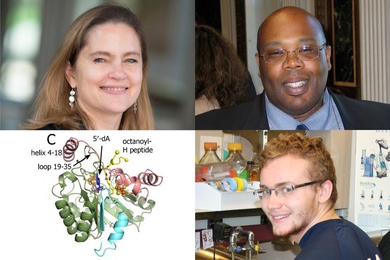
Study finds enzyme “cannibalizes” itself to perform an essential reaction.
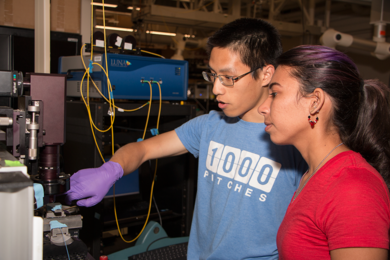
Summer Scholar Ashley Del Valle Morales probes new a silicon carbide system in the MIT Microphotonics Center.
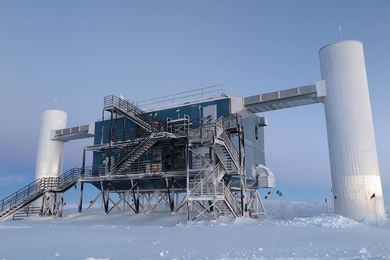
If discovered, sterile neutrinos may explain dark matter.
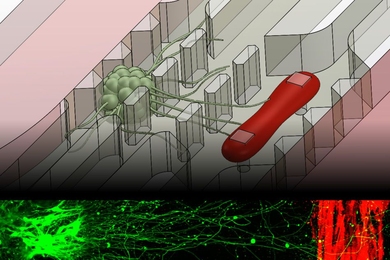
New chip could help test drugs for ALS, other neuromuscular disorders.