
Search Stories
Laser particles could provide sharper images of tissues
New imaging technique stimulates particles to emit laser light, could create higher-resolution images.
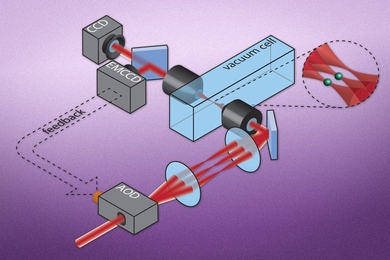
Scientists set traps for atoms with single-particle precision
Technique may enable large-scale atom arrays for quantum computing.
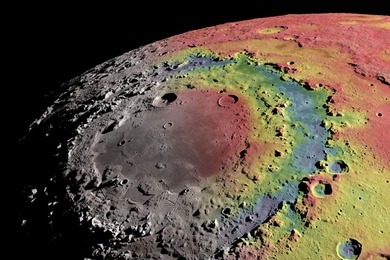
Retracing the origins of a massive, multi-ring crater
Scientists reconstruct first hours after a giant impact created one of the largest craters on the moon.
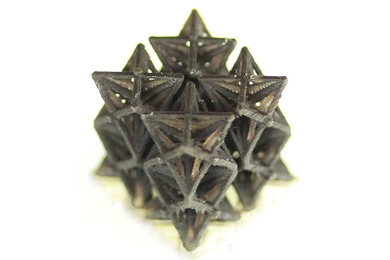
3-D-printed structures shrink when heated
Counterintuitive “metamaterial” may enable heat-resistant circuit boards.

With new model, buildings may “sense” internal damage
System predicts how MIT’s tallest structure responds to vibrations, may help monitor stress over time.
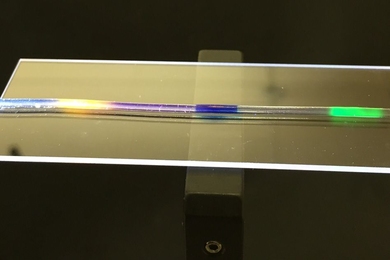
Stretchy optical fibers for implanting in the body
Biocompatible fibers could use light to stimulate cells or sense signs of disease.

Electron-phonon interactions affect heat dissipation in computer chips
Study shows particle collisions may explain overheated circuits, improve thermoelectric devices.
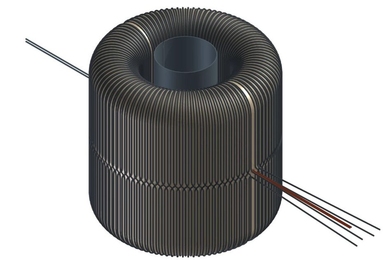
Team simulates a magnetar to seek dark matter particle
Detecting “axion” particles may solve longstanding problem in particle physics.
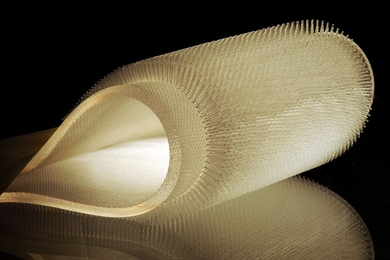

Researchers find explanation for interacting giant, hidden ocean waves
Better simulations of internal tides may benefit sonar communications, protect offshore structures, and more.
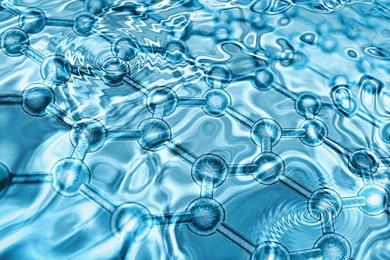
How to power up graphene implants without frying cells
New analysis finds way to safely conduct heat from graphene to biological tissues.
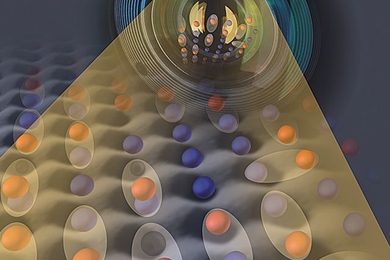
For first time, researchers see individual atoms keep away from each other or bunch up as pairs
Observations of atomic interactions could help pave way to room-temperature superconductors.
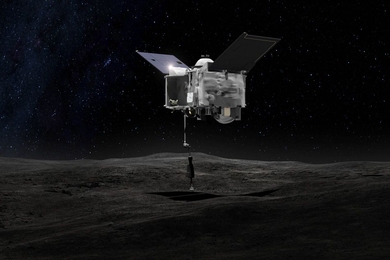
MIT’s REXIS is bound for asteroid Bennu
Instrument will help OSIRIS-REx mission identify locations for collecting an asteroid sample.
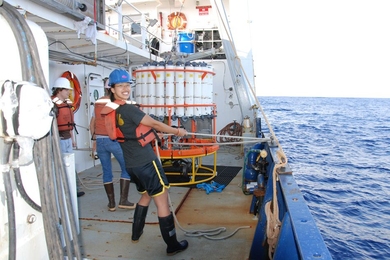
Study finds increased ocean acidification due to human activities
More anthropogenic carbon in the northeast Pacific means weaker shells for many marine species.