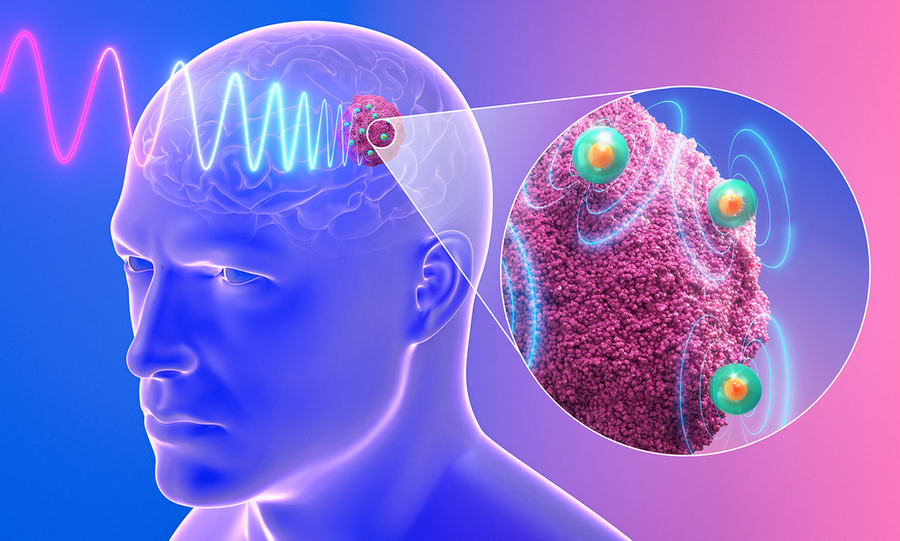
The brain cancer glioblastoma is one of the most aggressive and treatment-resistant cancers known to medicine, carrying a median survival of just 12-15 months, even with the best available care. Now, researchers at the MIT Media Lab have developed injectable nanoantennas, each about one-hundredth the width of human hair, that can be magnetically activated to create localized therapeutic electric fields that target and kill brain cancer cells without damaging healthy brain tissue.
“In laboratory and animal studies, this approach significantly reduced tumor growth and extended survival without detectable side effects, highlighting its potential as a precise and safe brain cancer therapy,” says Deblina Sarkar, associate professor and AT&T Career Development Chair at the MIT Media Lab and head of the Nano-Cybernetic Biotrek group.
The researchers named their technology “HITMAN” — short for highly-localized electric-field-induced tumor therapy using magnetically actuated nanoantennas.
An open-access paper describing this technology published today in Science Advances.

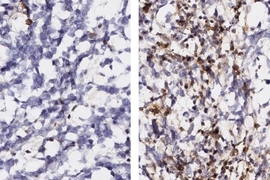
To test HITMAN against the most clinically realistic version of this disease, the research team worked with tumor tissue obtained from patients diagnosed with aggressive and chemotherapy-resistant glioblastoma at Mayo Clinic. Using cells derived from this tissue in the laboratory, the researchers demonstrated that HITMAN eliminated 52.2 percent of these drug-resistant cancer cells — more than five times than that achieved by the standard chemotherapy drug temozolomide (TMZ) — while leaving healthy neurons and brain-supporting astrocytes unharmed.
The team then implanted those patient-derived tumor cells into the brains of mice to recreate the disease in a living system. In these orthotopic animal models — widely regarded as the gold standard for preclinical brain tumor research — HITMAN substantially inhibited tumor growth, extending median survival by more than 50 percent with no detectable toxicity to major organs or surrounding healthy tissue.
The injectable nanoantennas can be activated wirelessly from outside the body, with the application of a low-frequency (no higher than 200 kHz, to prevent tissue-damaging heat) magnetic field that can penetrate the skull and brain tissue. The magnetic field actuates parts within the nanoantennas made of magnetostrictive material, creating stress and strain, which result in deformation of a piezoelectric film, producing localized electric fields.
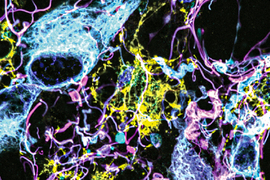
Such localized electric fields were demonstrated to preferentially attack glioblastoma at the cellular level, disrupting the cells’ inherent bioelectric currents and fields, which regulate cellular function. Such disruption provoked a number of antitumor mechanisms, including protein unfolding, membrane damage, and endoplasmic reticulum stress, curtailing the production of a cell’s functional proteins. Such forms of cell dysfunction led to cell death. According to the researchers, cancer cells were selectively targeted over healthy cells due to their high proliferative rate, which elevates protein-folding demand, as well as their characteristic abnormalities in membrane composition and intracellular organelles.
Among a wide array of control experiments, the researchers also exposed glioblastoma cells to the nanoantennas without applying a magnetic field, as well as exposing the cancer cells to a magnetic field alone, confirming that the demonstrated effects were in fact due to the nanoantennas and their magnetic field activation. They also tested for side effects damaging to the animal models’ major organs — kidneys, liver, spleen, lungs, and heart — and detected none.
Also demonstrated by the research was a significant reduction in the number of cancer cell colonies formed after application of the nanoantennas, from 112-150 in the control groups to just 26 in the experimental group, indicating significant potential to reduce tumor recurrence and metastasis.
If translated to clinical use, the nanoantennas, whose size is approximately 150 nanometers, could be injected through the skull. Sarkar points out, however, that a technology developed previously in her lab could make their deployment even simpler.
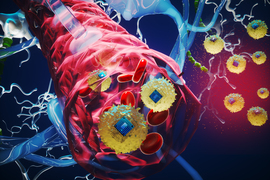
In 2025, Sarkar and her colleagues created “circulatronics,” a technology that could allow devices like the HITMAN nanoantennas to be administered through an injection in a patient’s arm and to travel to a target region of the brain. In that previous work, the electronic devices were integrated with living cells so they would not be attacked by the body’s immune system and could easily cross the blood-brain barrier, as was demonstrated in pre-clinical studies.
A glioblastoma diagnosis comes with formidable treatment challenges. Because this type of cancer is extremely infiltrative, complete tumor removal is difficult to achieve and can affect cognitive function. Also, the tumors often resist radiotherapy and chemotherapy, and immunotherapy is challenged by an immunosuppressive tumor environment.
“The persistent failure of these therapies underscores the urgent need for novel approaches to target treatment-resistant glioblastoma cells,” the researchers write. “HITMAN offers a minimally invasive, spatially precise, and clinically translatable therapy for glioblastoma.”
Sarkar is joined on the paper by other members of her lab, including Monochura Saha, a former MIT postdoc; Ishaq Khan, a former MIT senior postdoc; Baju Joy, Shun Ying Chen, Hao-Tung Yang, Preet Patel, and Pengrui Zhang, all MIT graduate students; and Faheem Azeemi, an MIT undergraduate student.