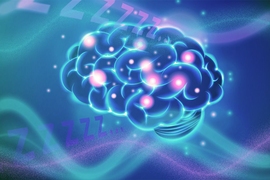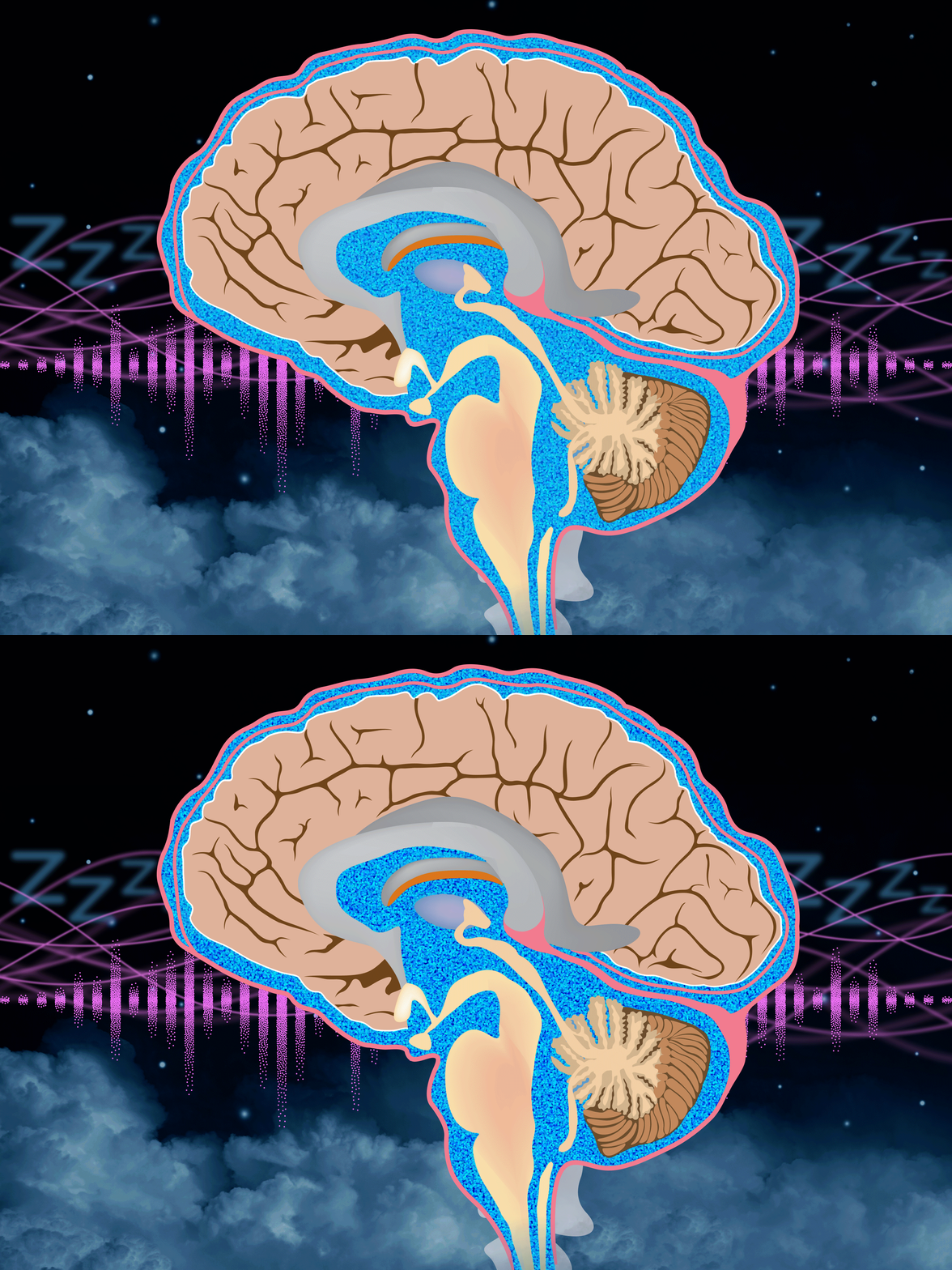
During the day, waste products such as lactic acid and worn-out proteins build up in the brain. When we sleep at night, waves of cerebrospinal fluid (CSF) help to wash away this waste, keeping the brain healthy.
In a new study, MIT researchers have shown that they can strengthen these CSF waves through exposure to short bursts of a gentle, staticky sound known as “pink noise” during sleep. These bursts increase the amplitude of slow electrical waves in the brain, which then enlarges the CSF waves.
The researchers now hope to explore whether this enhanced CSF flow could help to boost cognitive function, improve memory, or even slow the progression of neurodegenerative diseases caused by the buildup of harmful proteins such as amyloid beta.
“We found that we were able to increase the size of the CSF flow wave during sleep, which as far as we know, there hasn’t been a method to do before. Now that we can enhance CSF flow during sleep in healthy adults, we’re really excited to bring this technology to clinical populations to see what effects we can have,” says Laura Lewis, the Athinoula A. Martinos Associate Professor of Electrical Engineering and Computer Science, a member of MIT’s Institute for Medical Engineering and Science and the Research Laboratory of Electronics, and an associate member of the Picower Institute for Learning and Memory.
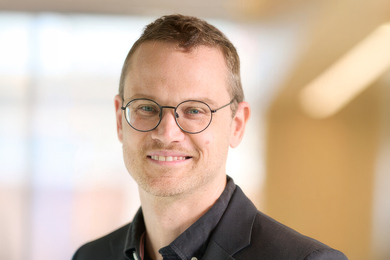
Lewis is the senior author of the study, which appears today in Science Translational Medicine. Joshua Levitt, who recently earned his PhD from Boston University and was a visiting graduate student in Lewis’ lab, is the paper’s lead author.
Cleaning up the brain
Cerebrospinal fluid is a clear liquid that surrounds and cushions the brain and spinal cord. In addition to protecting the brain from injury, it also helps provide nutrients such as glucose and removes waste products secreted by brain cells as they burn energy.
In 2019, Lewis reported a way to use functional magnetic resonance imaging (fMRI) to measure CSF waves as they flow in and out of the brain during sleep. That study showed that these waves are tightly coupled with brain waves called slow waves, which are associated with deep sleep.
In the new study, she wanted to further explore the relationship between brain waves and CSF flow, and investigate whether manipulating brain waves might enhance CSF flow. Previous work had already shown that delivering an auditory stimulus at the peak of slow waves can deepen the waves.
“You can make more of these electrical slow waves through an auditory stimulus, if it comes at just the right time. Similar to a child on a swing, if you push them when they’re at the right moment in their movement, you can make that swing go farther,” Lewis says. “The challenge is: How do you find just the right time?”
The auditory stimulus used for this study is a 50-millisecond burst of pink noise. Similar to white noise, pink noise contains all sound frequencies audible to the human ear, but the lower pitch frequencies are louder and the higher pitch frequencies are softer. This creates a balanced, gentle sound similar to steady rain or a distant waterfall.
To deliver these bursts at the peak of the brain’s slow waves, the researchers had to measure each participant’s EEG activity as they slept. This proved challenging because they also needed to measure fMRI signals to monitor CSF flow, and the magnetic fields used for fMRI interfere with EEG signals.
To overcome that, the researchers developed a way to process the EEG signals to eliminate the noise caused by fMRI, very rapidly — in less than 100 milliseconds. To make up for that small lag time in the EEG measurement, they also developed an algorithm that could predict when the slow wave peaks would occur. This allowed them to deliver the pink noise stimulus at the correct time.
More restorative sleep
In tests of 14 healthy volunteers, the researchers found that the auditory stimulus they delivered — which is not loud enough to wake a sleeping person — increased the amplitude of both the slow electrical waves and the CSF waves, during sleep.
Their fMRI studies also revealed that the slow waves stimulate blood vessels to constrict and dilate, allowing them to act as a pump that drives CSF out of the brain. Slow waves are seen only during non-REM sleep, and they become more prominent in deeper stages of sleep.
The researchers now hope to study whether enhancing CSF flow could help people to get more restorative sleep, especially people with insomnia. They also plan to explore whether increasing the flow of CSF, and the removal of waste products from the brain, could help people with Alzheimer’s and other diseases characterized by buildup of harmful proteins.
“Brain waste clearance is really important for Alzheimer’s and other forms of dementia, which are caused, in part, by the buildup of molecules like amyloid and tau in the brain. If we can improve brain waste clearance, we may be able to help prevent the buildups of these plaques that lead to disease,” Levitt says.
Levitt has started a company that hopes to develop a device, such as a headband, that people could use at home to increase CSF flow by delivering an auditory stimulus at the right time.
The research was funded by a McKnight Scholar Award, a Sloan Fellowship, a Pew Biomedical Scholars Award, the Simons Foundation Collaboration on Plasticity in the Aging Brain, the MIT EECS Transformative Research Fund, the National Institutes of Health, the Corundum Convergence Institute, and the Panasonic Well Fellowship for AI and Wellness.