Probing graphene physics
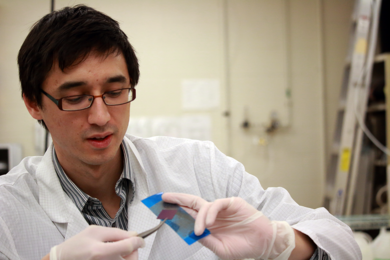
MIT postdoc Javier Sanchez-Yamagishi charts quantum signatures of electronic transport in graphene.
3Q: Getting ever closer to observing gravitational waves
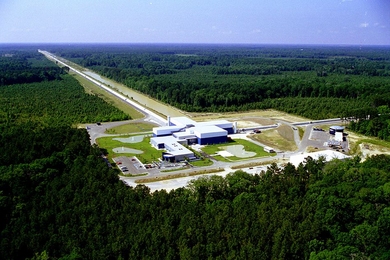
Einstein’s theory of general relativity to be put through the paces as Advanced LIGO comes online.
Three MIT physicists win 2015 NSF and DOE early-career awards
Assistant professors Aram Harrow, Yen-Jie Lee, and Tracy Slatyer will share $2.1 million in research support.
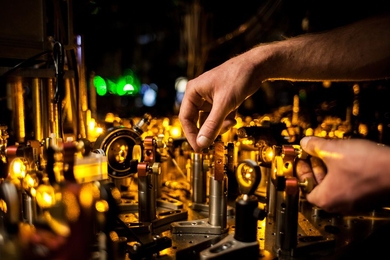
Researchers build new fermion microscope
Instrument freezes and images 1,000 individual fermionic atoms at once.
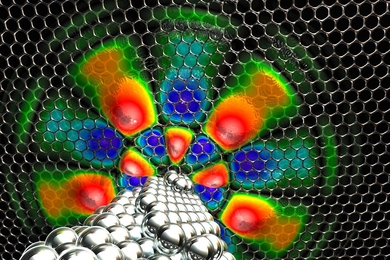
Electrons corralled using new quantum tool
“Whispering gallery” effect confines electrons, could provide basis for new electron-optics devices.
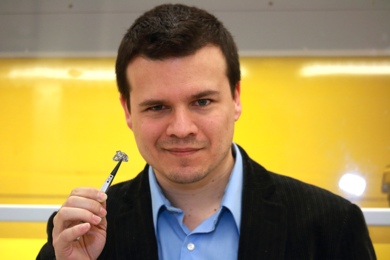
Faculty highlight: Pablo Jarillo-Herrero
MIT physics professor has played a leading role in the development of revolutionary new artificial materials.
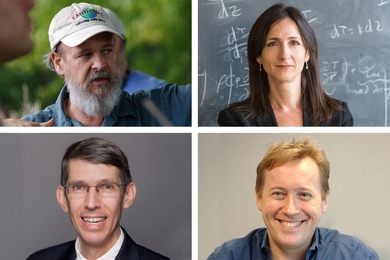
National Academy of Sciences elects four MIT professors
Bowring, Mrowka, Poterba, and Seager named for “distinguished” research.
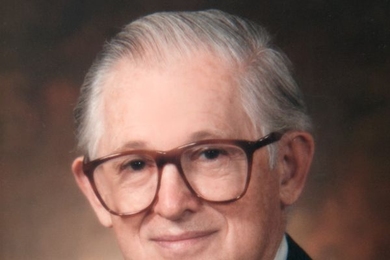
Professor Emeritus Benjamin Lax dies at 99
Pioneer in semiconductors created MIT's magnet laboratory and served as associate director of the MIT Lincoln Laboratory.
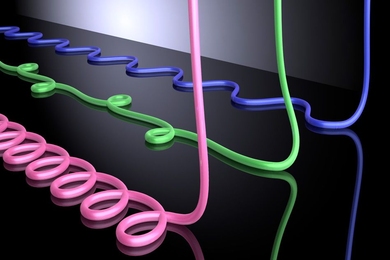
Boiling down viscous flow
A new simplified model predicts patterns that form from honey-like fluids.
Eight faculty members elected to the American Academy of Arts and Sciences
Among 197 elected this year to the prestigious honorary society.
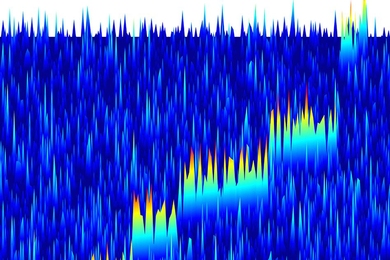
New tabletop detector “sees” single electrons
Magnet-based setup may help detect the elusive mass of neutrinos.
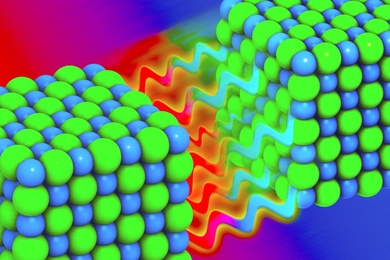
Tunneling across a tiny gap
“Phonon tunneling” explains heat flow across nanometer-wide gaps, study finds.
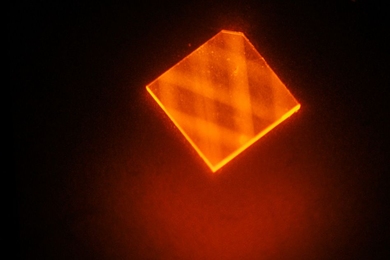
Better sensors for medical imaging, contraband detection
Magnetic-field detector is 1,000 times more efficient than its predecessors.
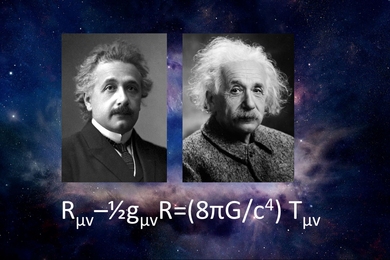
Celebrating Einstein
events to mark 100th anniversary of the general theory of relativity
Events across MIT will mark the 100th anniversary of the general theory of relativity.