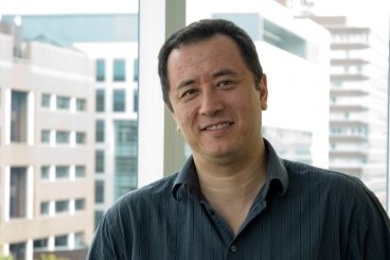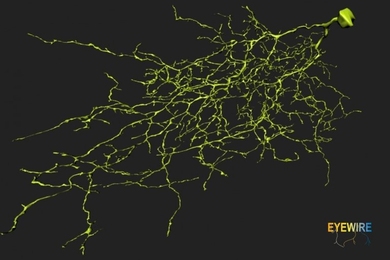
Four MIT researchers attend White House announcement of brain initiative
Obama invites Boyden, Brown, Desimone and Seung to launch of new federal initiative.
Obama invites Boyden, Brown, Desimone and Seung to launch of new federal initiative.
Award will fund study evolution of antibiotic-resistance in bacteria

At the intersection of medicine and computer science, researchers look for clinically useful correlations amid mountains of information.
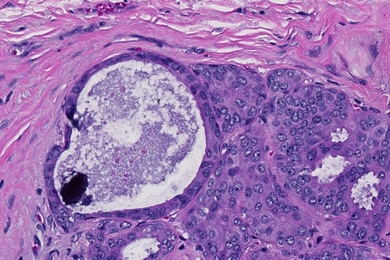
New spectroscopy technique could help doctors better identify breast tumors.
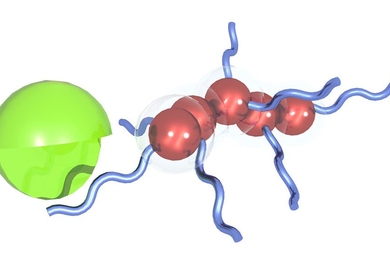
Nanoparticles amplify tumor signals, making them much easier to detect in the urine.
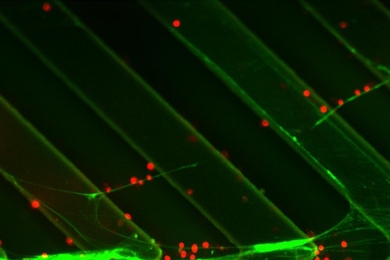
Jellyfish-inspired device that rapidly and efficiently captures cancer cells from blood samples could enable better patient monitoring.
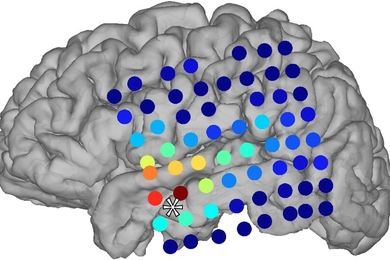
New study reveals brain-wave patterns that mark loss of consciousness during anesthesia.
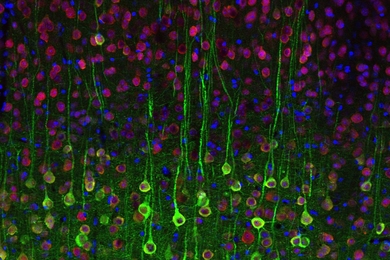
New way to image brain-cell activity could shed light on autism and other psychiatric disorders.
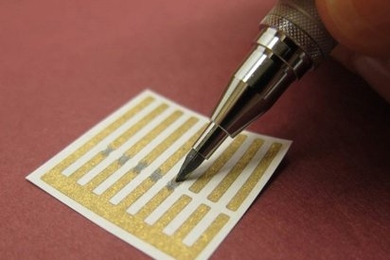
New low-cost, durable carbon nanotube sensors can be etched with mechanical pencils.
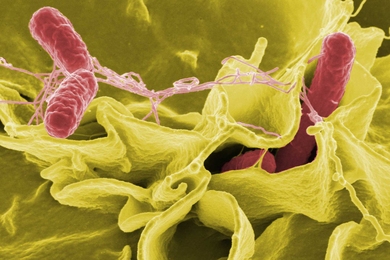
New sensor can detect four different molecules, could be used to program cells to precisely monitor their environments.
Biologists reveal genes key to development of pluripotency, in single cells.
Brown, Gore, Ploegh and Zhang receive grants for innovative biomedical research.
MIT-led research team finds that protein significantly reduces infected cells’ ability to squeeze through tiny channels compared to healthy cells.

Technique may enable robotic animals that move with the strength and flexibility of their living counterparts.