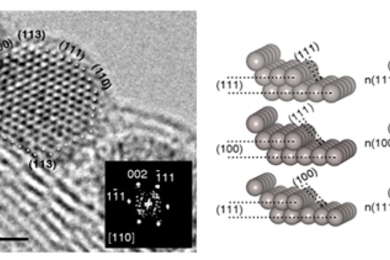
Fuel cells get a boost
Creating tiny steps to electrode surfaces can double the efficiency of the emissions-free electricity sources, MIT researchers find.
Creating tiny steps to electrode surfaces can double the efficiency of the emissions-free electricity sources, MIT researchers find.

New findings show that tiny textures on a surface can produce big differences in how some materials, and even living cells, behave

Mechanical engineer Carol Livermore and colleagues find that carbon nanotubes, used as springs, have potential to compete with batteries for energy storage.

MIT team finds a way to combine materials for semiconductor manufacture. The advance helps address the limitations of conventional silicon microprocessors.
Oxides, as well as metals, seem to be able to sprout carbon nanotubes, study finds

Bringing objects close together can boost radiation heat transfer, according to new study that shows breakdown in Planck's law


Scientist creates model to design radiation-resistant materials

Electrospun fibers could be used for protective clothing, wearable power and more


