
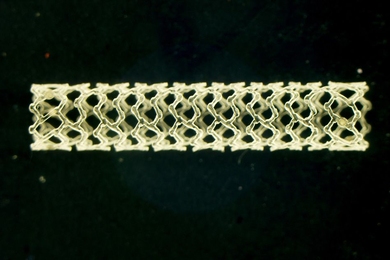
Study reveals why polymer stents failed
Microscopic flaws in material structure can lead to stent deformation after implantation.
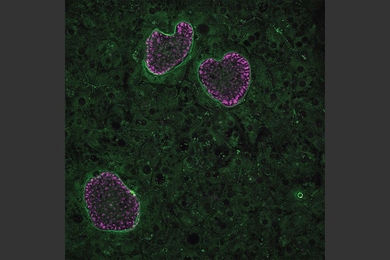
Human malaria parasites grown for the first time in dormant form
Novel technology could allow researchers to develop and test new antimalaria drugs.
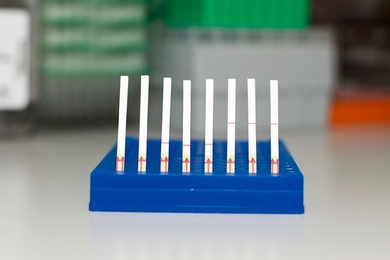
Researchers advance CRISPR-based tool for diagnosing disease
With SHERLOCK, a strip of paper can now indicate presence of pathogens, tumor DNA, or any genetic signature of interest.

MIT alumnus to compete in Winter Olympics
AJ Edelman ’14 will represent Israel in the men's skeleton during the 2018 Winter Olympics.

Back-and-forth exchanges boost children’s brain response to language
Study finds engaging young children in conversation is more important for brain development than “dumping words” on them.
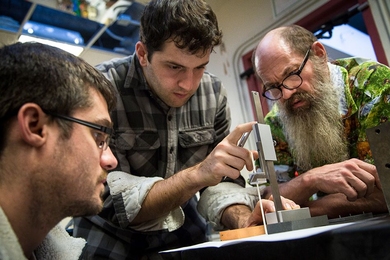
Just what the doctor ordered
Class brings together MIT students and clinicians from local hospitals to design medical devices that address real-world health needs.
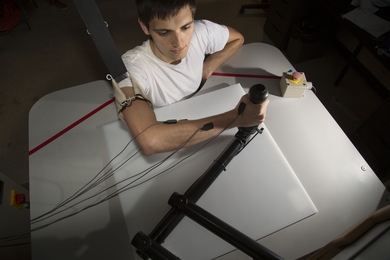
Understanding and treating disease
Mechanical engineering researchers are developing new and innovative ways to improve health care.
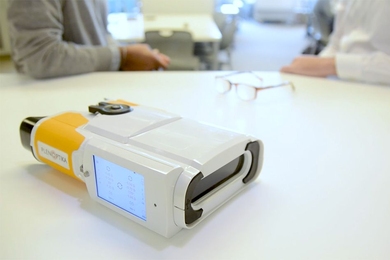
Startup aims to make vision care more accessible in developing world
Portable device can generate corrective lens prescriptions in areas with no optometry care.
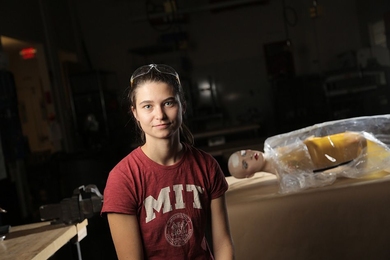
Turning any room into an operating room
With a product called SurgiBox, grad student Sally Miller hopes to make safe, clean surgery possible anywhere.
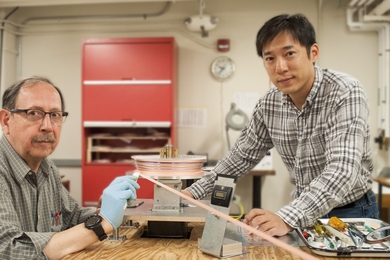
Dongkeun Park: Winding his way to medical insights
Francis Bitter Magnet Lab researcher continues a decades-long pursuit to create a revolutionary magnet for nuclear magnetic resolution spectroscopy.
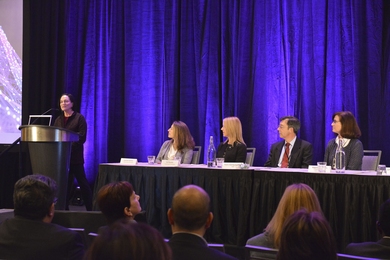
Pioneering a health care innovation ecosystem to better serve patients
NEWDIGS Initiative at MIT leads multi-stakeholder collaboration to design and pilot a sustainable, patient-centered innovation ecosystem for a target disease.
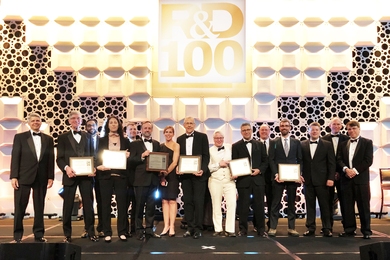
MIT Lincoln Laboratory earns six R&D 100 Awards for 2017
Technologies named among the year's most significant innovations address health care, radar performance, aircraft collision avoidance, and 24-hour wide-area surveillance.
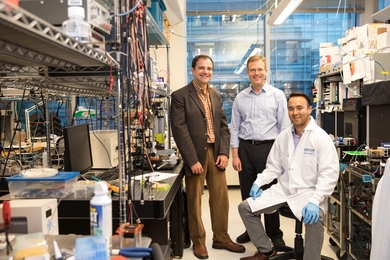
Over the river and do some good
The Bridge Project collaboration accelerates new, highly original, and powerful approaches to defeating cancer.

Fighting a giant foe at a tiny scale
Professor Paula Hammond uses nanoscale biomaterials to craft anti-cancer treatments tiny enough to get through the bloodstream and enter tumors.