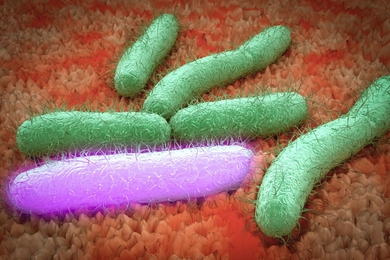
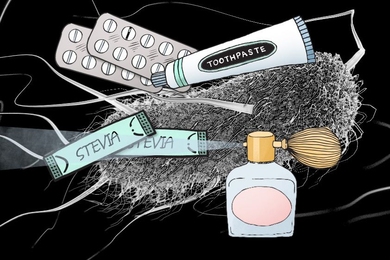
Microbial manufacturing
Engineered bacteria produce rare and commercially useful compounds in large quantities.
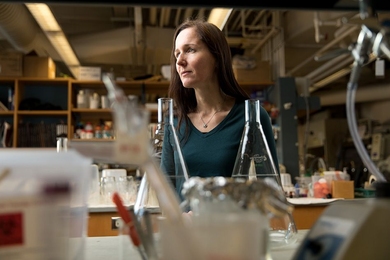
Exploring the tug-of-war over metals during infection
Chemist Elizabeth Nolan studies the battle between microbes and hosts for essential metals.
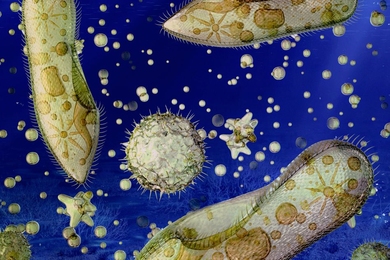
New study sets oxygen-breathing limit for ocean’s hardiest organisms
Bacteria can survive in marine environments that are almost completely starved of oxygen.

A step toward biodegradable plastics
Chemists discover structure of bacterial enzyme that generates useful polymers.
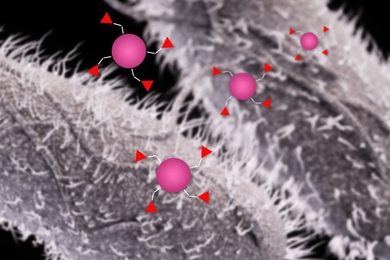
A new approach against Salmonella and other pathogens
Immunization strategy could prevent gastrointestinal disease.
Engineers design a new weapon against bacteria
Antimicrobial peptides can kill strains resistant to existing antibiotics.
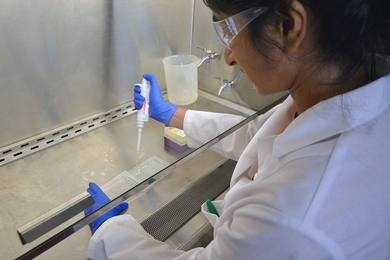
MIT researchers prove fast microbial evolutionary bursts exist
Study reveals closely related microbes can diversify rapidly via horizontal gene transfer.

Delivering beneficial bacteria to the GI tract
Method that transports microbes through the stomach to the intestine may benefit human health.

Microchip enables fast, precise measurement of single-cell growth
Device that measures growth of many individual cells simultaneously could lead to rapid tests for antibiotics.
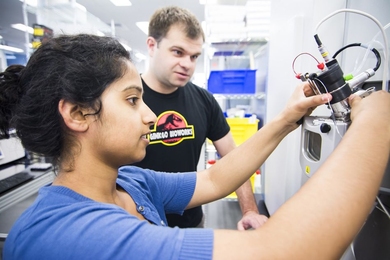
Hacking microbes
Startup’s engineered yeast helps clients produce fragrances and flavors more efficiently.

New technique may help detect Martian life
A novel interpretation of Raman spectra will help the 2020 Mars rover select rocks to study for signs of life.
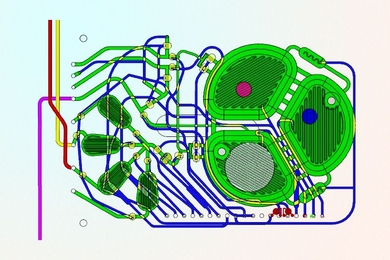
Portable device produces biopharmaceuticals on demand
System would use microbes for manufacturing small amounts of vaccines and other therapies.


Microbiome genes on the move
Largest metagenomic view of the developing world uncovers “mobile genes” that reveal how culture shapes the human microbiome.