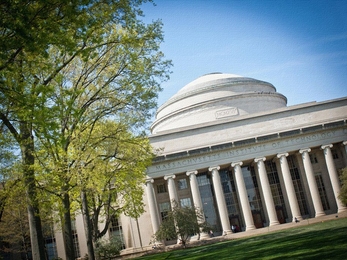
Where the ‘beaver works’ A collaborative space at MIT Lincoln Laboratory, called the Beaver Works Center, will create new opportunities in project-based learning. December 6, 2013 Read full story →
Class on digital humanities premieres with tech-savvy approaches New class offers MIT students the chance to pair technical know-how with real-world art and humanities projects at local museums. December 4, 2013 Read full story →
Storing carbon in the Arctic While the Arctic Ocean is largely a carbon sink, researchers find parts are also a source of atmospheric carbon dioxide. December 4, 2013 Read full story →
Four MIT seniors win Marshall Scholarships Kate Koch, Colleen Loynachan, Kirin Sinha, and Grace Young will study for two years in the UK. December 3, 2013 Read full story →
Researchers unlock a new means of growing intestinal stem cells Studying these cells could lead to new treatments for diseases ranging from gastrointestinal disease to diabetes. December 1, 2013 Read full story →
3-D images, with only one photon per pixel New scheme could enable laser rangefinders to infer depth from a hundredth as much light — and to produce images from only one nine-hundredth the light. November 28, 2013 Read full story →
MIT Center for Integrative Synthetic Biology receives five-year NIH grant Five-year grant will support research on cancer therapy, artificial tissue homeostasis, and infectious diseases. November 27, 2013 Read full story →
'Let’s just do science': The origins of the graduate climate conference The Graduate Climate Conference, led by MIT graduate students in 2013, is an entirely student-run endeavor with a streak of rebellion. November 25, 2013 Read full story →
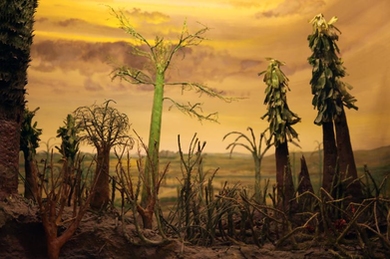
A possible cause of the end-Permian mass extinction: Lemon juice? MIT researchers find that rain as acidic as lemon juice may have contributed to massive die-offs on land 252 million years ago. November 25, 2013 Read full story →
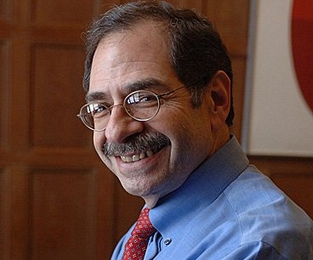
MIT’s Marc Kastner nominated to head DOE Office of Science President Obama taps MIT physicist and dean of science to oversee basic energy research. November 14, 2013 Read full story →
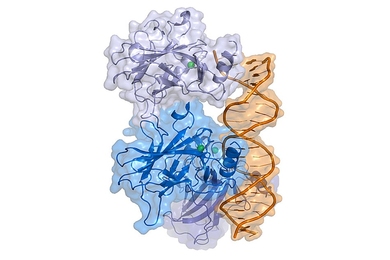
Biologists ID new cancer weakness Drugs that block new target gene could make many tumors more vulnerable to chemotherapy. November 14, 2013 Read full story →
Broad Institute launches next decade with new $100 million gift Historic pledge from Eli and Edythe Broad to propel institute into a new decade of biomedical discovery to benefit patients. November 14, 2013 Read full story →
Machine learning branches out An algorithm that extends an artificial-intelligence technique to new tasks could aid in analysis of flight delays and social networks. November 14, 2013 Read full story →
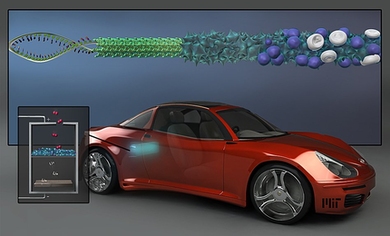
Better batteries through biology? MIT researchers find a way to boost lithium-air battery performance, with the help of modified viruses. November 13, 2013 Read full story →
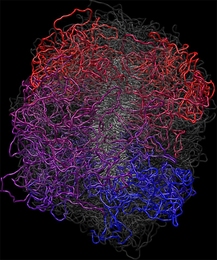
Solving chromosomes’ structure Scientists find that loops of DNA are key to tightly packing genetic material for cell division. November 7, 2013 Read full story →