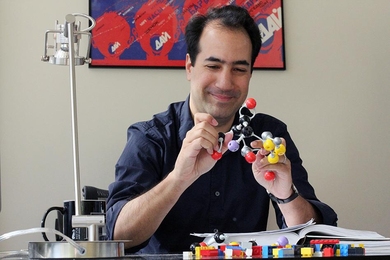
MRI reveals genetic activity
New MIT technique could help decipher genes’ roles in learning and memory.
New MIT technique could help decipher genes’ roles in learning and memory.
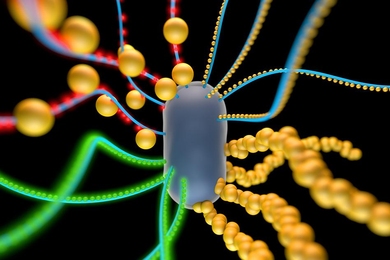
Hybrid materials combine bacterial cells with nonliving elements that can conduct electricity or emit light.
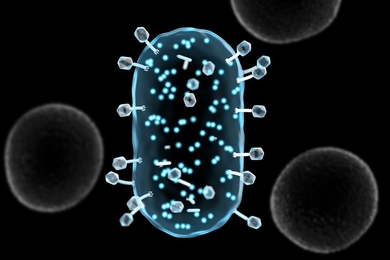
An advanced assay quickly illuminates bacteria for more rapid, accurate detection.
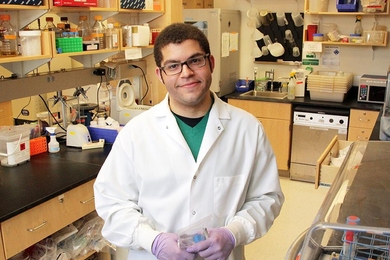

Linda Griffith combines in vitro models with deep molecular analysis to accelerate drug discovery.
New device from MIT can measure masses as small as one millionth of a trillionth of a gram, in solution.

Molecular charges affect peptide transport, MIT postdoc Leon Li demonstrates
MIT postdoc Thomas Crouzier discovers a substitute that restores water absorption.
Dissecting the inner workings of the mucus barrier could yield better drugs, prevent disease
Five-year grant will support research on cancer therapy, artificial tissue homeostasis, and infectious diseases.
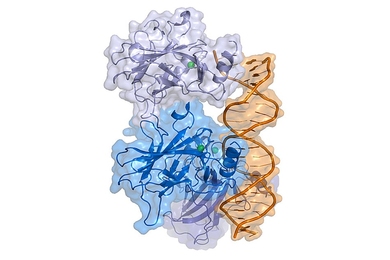
Drugs that block new target gene could make many tumors more vulnerable to chemotherapy.
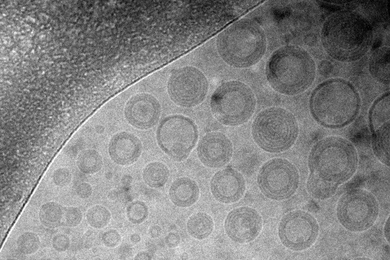
Particles that deliver vaccines directly to mucosal surfaces could defend against many infectious diseases.
Institute’s undergraduate engineering program is again ranked No. 1; undergraduate business program is No. 2.