Skip to content ↓

📬 Want a dose of MIT in your inbox? Subscribe to the MIT Daily and/or MIT Weekly newsletters.

Top News

Looking for audio? Listen to the MIT News podcast

Recent Highlights

More MIT News articles

In the Media

Wired

In an opinion piece appearing in Wired, Prof. Elfatih Eltahir and postdoctoral researcher Yeon-Woo Choi examine the “ongoing water scarcity crisis” in Tehran. “With dry soils and high evaporation, rivers and wetlands shrank. Falling reservoir levels led to disruptions in hydropower generation, and water shortages prompted strict saving measures across parts of the capital,” they write. “These cascading impacts exposed how vulnerable Tehran’s infrastructure, economy, and communities have become under compounding heat and drought stress.” 

New Scientist

A 1927 argument between Albert Einstein and Niels Bohr regarding “one of the core mysteries of quantum physics,” has led multiple scientists, including Prof. Wolfgang Ketterle, to conduct the thought experiments the two scientists developed a century ago to determine if  “light [is] really a wave, a particle or a complex mixture of the two,” writes Karmela Padavic-Callaghan for New Scientist.

Popular Science

Researchers at MIT have developed a noninvasive, light-based blood-glucose monitoring system capable of replacing finger pricks and under-the-skin sensors used by patients with diabetes, reports Andrew Paul for Popular Science. The approach could “even fit on a device the size of a watch,” explains Paul. “Each measurement scan takes slightly more than 30 seconds to complete. The device also shows an accuracy comparable to two commercially available, wearable glucose monitors.” 

Science

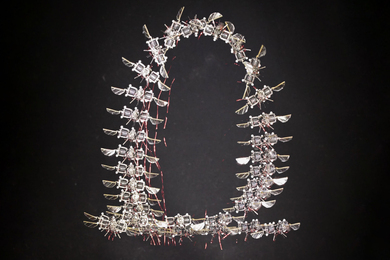
Prof. Kevin Chen and his colleagues have designed a tiny, insect-sized aerial microrobot that is “faster and more acrobatic than any of its predecessors,” reports Phie Jacobs for Science. The device, “which measures just 4 centimeters across and weighs less than a paperclip, flies almost five times faster and accelerates twice as quickly as existing microrobots,” explains Jacobs. “It can also execute sharp turns while enduring 160-centimeter-per-second wind gusts and—perhaps most impressively—can complete 10 consecutive somersaults in 11 seconds.” 

Fox Business

Fox Business host Stuart Varney spotlights MIT’s new Artificial Intelligence and Decision Making (AI+D) major, which has quickly become, “the second most popular undergrad major at MIT.” 

New Scientist

A new study by MIT researchers has found that “AI chatbots were surprisingly effective at convincing people to vote for a particular candidate or change their support for a particular issue,” reports Alex Wilkins for New Scientist. “Even for attitudes about presidential candidates, which are thought to be these very hard-to-move and solidified attitudes, the conversations with these models can have much bigger effects than you would expect based on previous work,” says Visiting Prof. David Rand. 

Fast Company

Researchers at MIT are using AI systems to design new molecules for potential antibiotics, research that is “aimed at the growing challenge of antibiotic-resistant infections,” reports Adele Peters for Fast Company. “The number of resistant bacterial pathogens has been growing, decade upon decade,” says Prof. James Collins. “And the number of new antibiotics being developed has been dropping, decade upon decade.” 

National Geographic

Prof. Earl Miller speaks with National Geographic reporter Dana Binfet about the impact of increased social media and digital platform use on the brain. “Brain rot is not really rotting our brains,” explains Miller. “It’s constantly creating an environment that our brains are not equipped to deal with—that's the real problem. We’re single-minded creatures and when all this information is coming at us, we want to consume everything and it’s hard to turn off that desire.”

The Boston Globe

Matt Carey MBA '17 and Greg Charvat, a former visiting researcher at the MIT Media Lab, co-founded TeraDAR, a startup that has developed advanced sensor technology that can see through various weather conditions that often confuse existing car sensors, reports Aaron Pressman for The Boston Globe. “We’re going to the last part of the electromagnetic spectrum that no one has ever been able to build a product at before,” explains Carey. “And instead of being able to see through your hand like an X-ray, we can see through rain and snow and dust and fog.”

Physics Today

Writing for Physics Today, Prof. Yang Shao-Horn, Research Scientist Sokseiha Muy and their colleagues explain the limitations and concerns surrounding lithium-ion battery technology while highlighting the potential of solid-state batteries as an alternative. “Although solid electrolytes can significantly boost a battery’s energy density by minimizing the battery’s volume, the greatest gains come from replacing conventional graphite anodes with higher-capacity, low-electric-potential alternatives,” they write. 

Fast Company

Prof. Karrie Karahalios has been named to Fast Company’s 2025 “AI 20” list for her work empowering individuals and communities to take a stand against algorithmic overreach, reports Mark Sullivan for Fast Company. “As we build these systems, and they seem to be permeating our society right now, one of my big goals is not to ignore human intuition and not to have people give up agency,” says Karahalios. 

New York Times

New York Times reporter Natasha Singer spotlights MIT’s new Artificial Intelligence and Decision Making major (AI+D), which is aimed at teaching students to “develop AI systems and study how technologies like robots interact with humans and the environment.” Asu Ozdaglar, head of EECS and the deputy dean of academics for the Schwarzman College of Computing, shares that: “Students who prefer to work with data to address problems find themselves more drawn to an AI major.” 

Business Insider

Business Insider reporter Julia Hornstein spotlights Sampriti Bhattacharyya PhD '17, CEO and co-founder of Navier, a startup working to build hydrofoil boats. “Bhattacharyya says the hydrofoiling technique consumes 90% less energy than its traditional gas counterpart and creates a stable glide even in the choppiest of conditions, eliminating seasickness,” writes Hornstein.

Associated Press

Alumnus Jerry Lu and his colleagues have developed OOFSkate, an AI-powered app that can analyze a figure skater’s “jump height, rotation speed, airtime and even landing quality,” reports Dave Skretta for the Associated Press. “Our vision for the system is to automate the technical calling of the sport,” says Lu. “This manifests itself in a combination of using AI-assisted computer vision, but also the knowledge of figure skating, essentially taking out the stuff that should be judged without subjectivity.”

Forbes

Luana Lopes Lara ’18 and Tarek Mansour ’18, MNG ’19 co-founded Kalshi, a company that allows “users to bet on the outcome of future events such as elections, sports games and pop culture happenings,” reports Alicia Park for Forbes. Lopes Lara chronicles her journey from her time on stage as a professional ballerina in Austria to her years as a student at MIT to her entrepreneurial ambitions.

Community Updates

Featured Multimedia

Video thumbnail

Professor Jonathan Gruber speaks to classical economics being built on one powerful explanatory insight: that free markets — networks of buyers and sellers, producers and consumers, weighing the trade-offs of different options and making self-interested choices based on supply and demand — do a better job of deciding how to allocate resources than can be achieved by a top-down, command-economy approach.
Video thumbnail

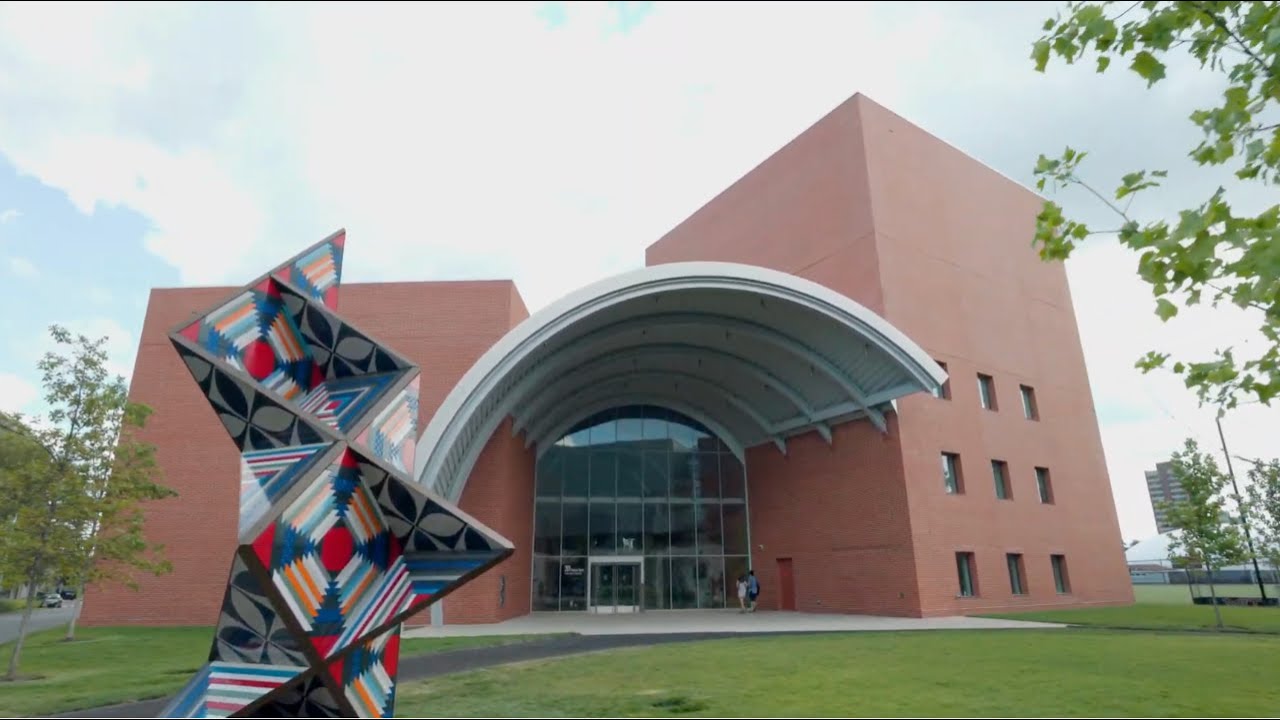
The Edward and Joyce Linde Music Building is the new home for MIT Music. Fully opened in February 2025, the building provides a centralized facility for music instruction and performance, with top-quality rehearsal spaces, recording studios, and new labs for music technology.

Video thumbnail

The MIT Human Insight Collaborative (MITHIC) is a presidential initiative with a mission of elevating human-centered research and teaching and connecting scholars in the humanities, arts, and social sciences with colleagues across the Institute.
Video thumbnail

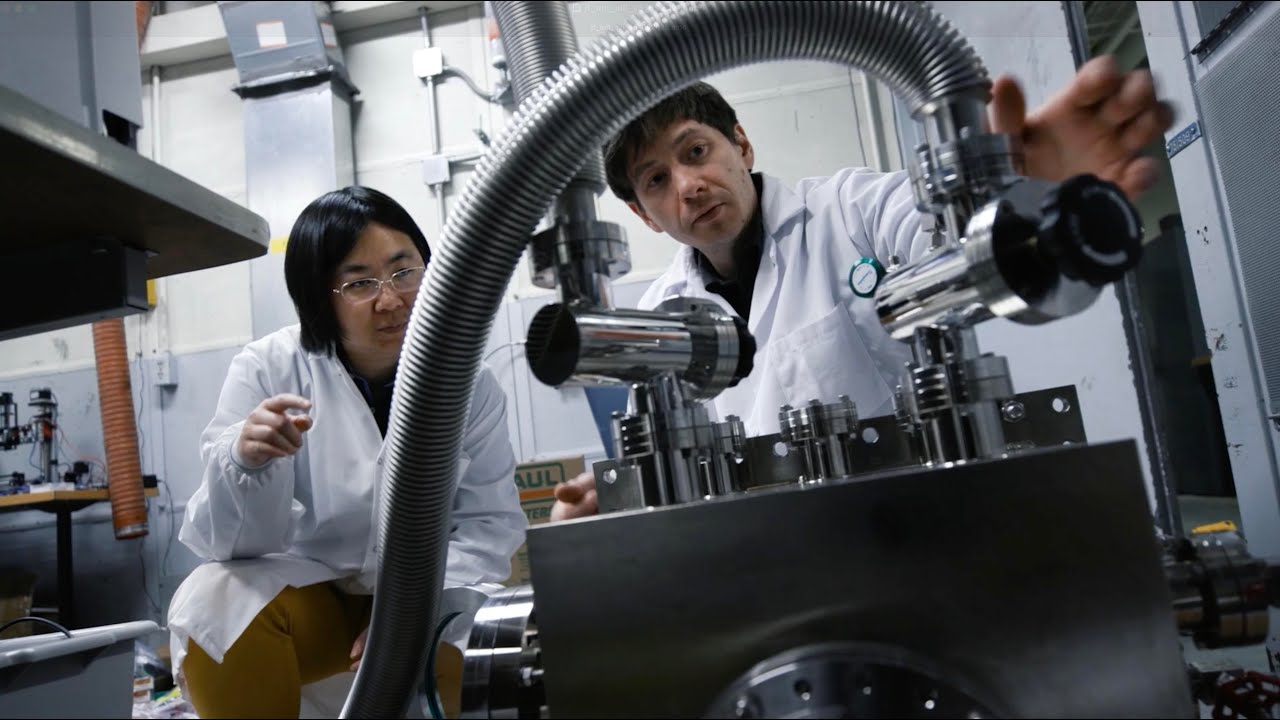
Associate professor of mechanical engineering, Sili Deng, is driving research in sustainable and efficient combustion technologies. Her research group targets three areas: building up fundamental knowledge on combustion processes and emissions; developing alternative fuels and metal combustion to replace fossil fuels; and flame-based synthesis of cathode materials for lithium-ion batteries.

Video thumbnail

At MIT, our mission is to advance knowledge; to educate students in science, engineering, technology, humanities and social sciences; and to tackle the most pressing problems facing the world today. We are a community of hands-on problem-solvers in love with fundamental science and eager to make the world a better place.

More News