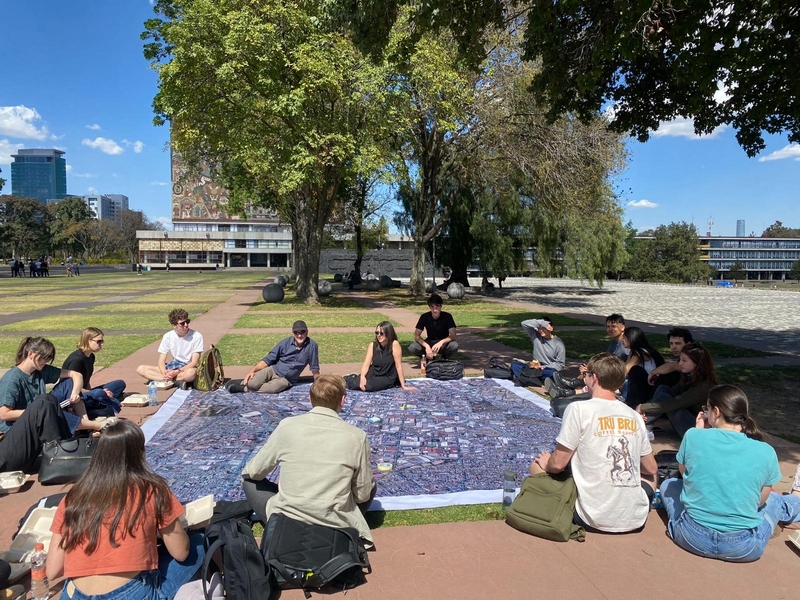
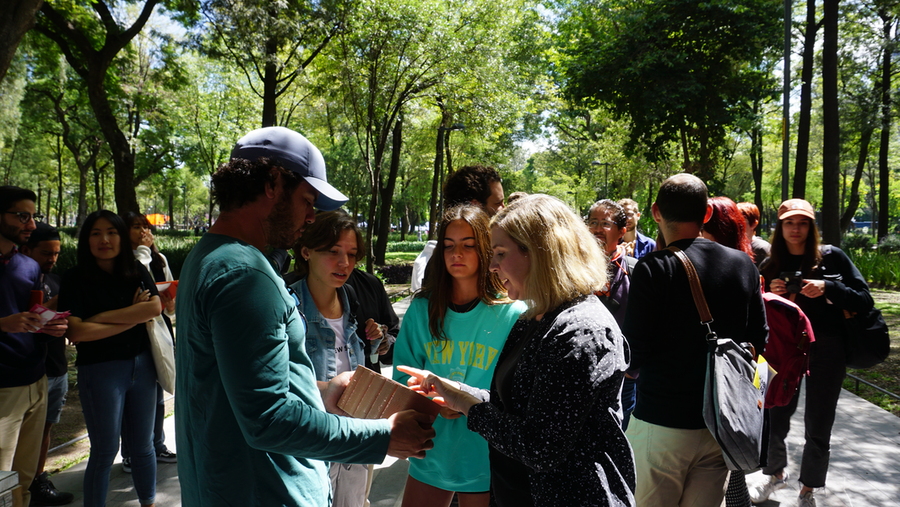
The Mexico City Initiative at MIT, led by the Institute’s Norman B. Leventhal Center for Advanced Urbanism (LCAU), has conceived and modeled an impressive array of solutions for challenges facing urban areas in Mexico and beyond. Faculty and students have designed the repurposing of a vintage roller coaster as a public meeting space, modeled strategies to decarbonize a municipal neighborhood, and proposed plans to convert nearly 990 acres of what was once Latin America’s largest landfill into a model of ecological restoration and clean energy production. The initiative has also spawned a sustainable construction startup that’s contributing to local economies in both Mexico and the United States.
When asked what’s most impactful about their work, however, those leading and collaborating with the LCAU’s Mexico City Initiative point to something else: the cross-border human connections they say are essential to continuing the ideation, development, and implementation of projects designed for Mexico City, but likely to be scalable and beneficial in urban centers around the world.
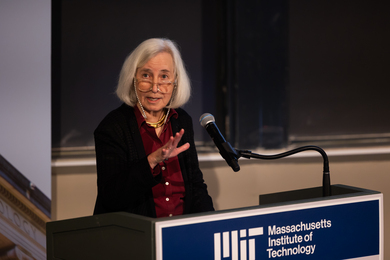
“To really create change in cities, we need to build relationships, friendships, and new networks. And through building them together, we can go so much further,” says Sarah Williams, director of the LCAU, which leads the initiative in collaboration with the National Autonomous University of Mexico (UNAM), the Mexico City government, and the engineering firm Mota-Engil Mexico.
“I think one of the big things we’re proud of is there have been a lot of personal connections created between MIT and UNAM, and I think research collaboration will result from these connections,” says Onésimo Flores PhD ’13, director general of Mota-Engil Mexico’s transportation mobility division. “I think what we have contributed to building is deepening collaboration.”
UNAM associate professor of architecture Elena Tudela agrees, noting that “beyond the projects themselves, we have developed a genuine friendship that I hope will continue long after this specific collaboration ends.”
“What I personally value most from these years of collaboration on Mexico City’s energy transition is the set of relationships we have built — with researchers, professors and especially the team at the LCAU,” says Tudela, an initiative collaborator. “For local students, the impact has been even more profound. It built bonds that transcend the workshop’s objectives, contributing to a deeper understanding of design as a collaborative, multidisciplinary practice.”
Williams credits Flores with helping to obtain Mota-Engil’s crucial financial support for the LCAU’s Mexico City Initiative. An MIT alumnus who earned his PhD in urban studies and planning in 2013 with Mota-Engil scholarship aid, Flores says the company’s support is meant to accomplish three goals: connect Mexican researchers with MIT, get Mexican students involved in MIT programs, and stimulate interest in projects relevant to cities like Mexico City among MIT faculty.
“If you can find urban solutions for a city as complex as Mexico City, you can probably figure it out for any city in the world, particularly in the Global South,” he says.
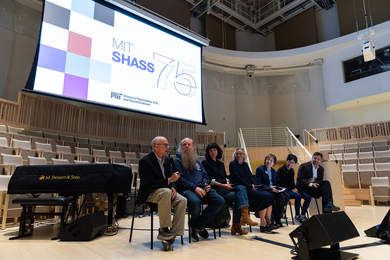
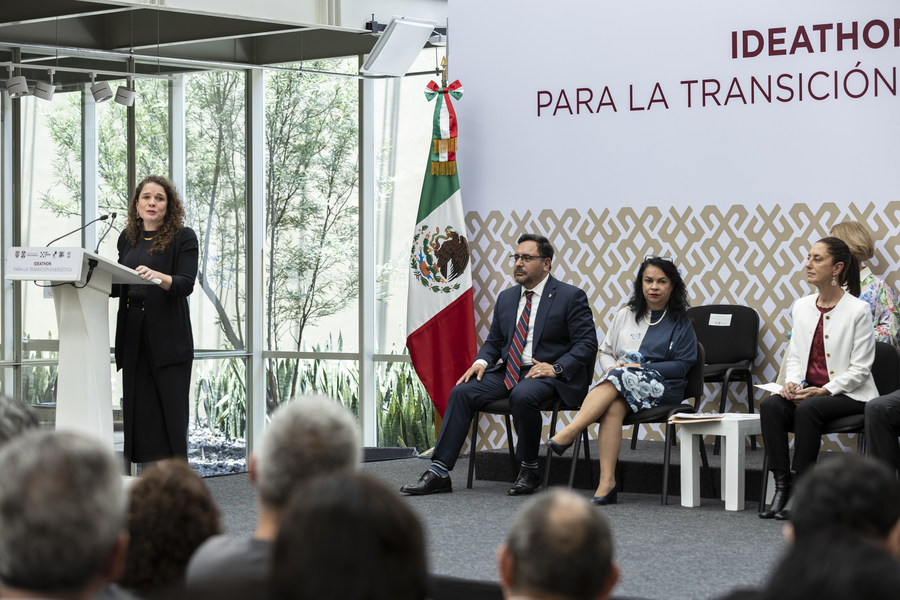
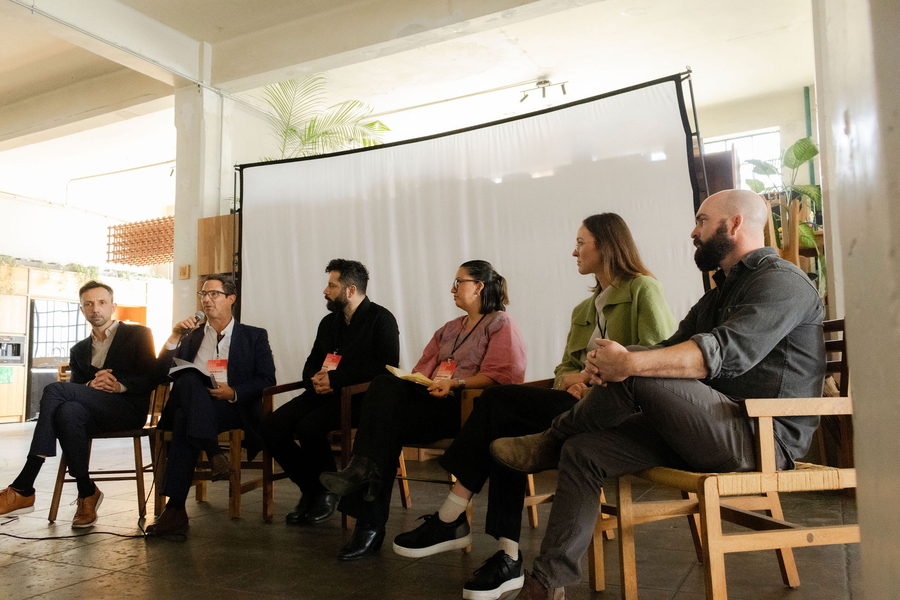
Over the past three years, faculty and students from MIT and UNAM have worked on projects centered on energy transition. Project teams, collaborators, interested local officials, business leaders, and others gathered for a recent symposium showcasing the progress made on the Mexico City Initiative’s projects so far.
Held in Mexico City last fall and featuring presentations by several MIT faculty, the “Energy Transitions” symposium was hosted by the LCAU, UNAM, and Mota-Engil Mexico. Its purpose “was to make sure the research effort that was done together was presented to the public and private sectors — groups that might be able to take the research to the next level,” says Williams, an MIT associate professor of technology and urban planning.
“The lecture series was exciting because we saw an interest in extending all the projects. I also think the conversations and ideas that were had in the room spark the kind of civic debate needed to transform our cities,” Williams says.
Established in 2013, the LCAU’s work cuts across diverse research fields to create innovation in cities.
“There’s not one field that can transform our future cities — innovation happens when we cross disciplines,” says Williams, who became LCAU director four years ago and has since focused the center’s mission on building and maintaining long-term relationships with cities through “City Initiatives.”
Other City Initiatives have included collaborations in Boston, as well as Sydney, Australia; Beirut, Lebanon; Bogota, Colombia; and Pristina, Kosovo. Mexico City was among the first initiatives and is the LCAU’s longest-standing program. Activities have included several classes held between MIT and Mexico City, a public exhibition, a hackathon with MITdesignX, and numerous joint research projects.
Williams describes it as “a fantastic relationship,” which began with development of a strategic plan for a Mexico City Innovation Lab, leading to a decision to focus the initiative on themes playing out over the course of about two years. The current theme is Energy Intersections, which looks at the role design plays in transitioning to cleaner energy infrastructure.
“This came from the group seeing that Mexico wanted to be a player in the global manufacturing marketplace and one of the barriers was how heavily polluted their energy infrastructure was,” Willliams says.
“The LCAU was founded for this idea that the work and research that we do about cities should be experimental, but also framed within contemporary policies and politics,” she says, adding that the team had considered other possible themes — from water and emergency planning to housing — but “as we started to think about energy, it just became so clearly important.”
Attracting about 70 attendees from Mexico City’s academic, government, and private sectors, the symposium was convened to enable MIT and UNAM researchers to share findings and discuss paths forward for several projects. Featured projects included:
- Redesigning Vallejo-I — aimed at transforming Mexico City’s Vallejo Industrial Zone into a revitalized hub for industry, transportation and housing;
- Decarbonize and Revitalize: Urban Regeneration for Mexico City’s Neighborhoods — which envisions ways for energy, equity, and design to regenerate Mexico City neighborhoods, using the Daniel Garza neighborhood as a model; and
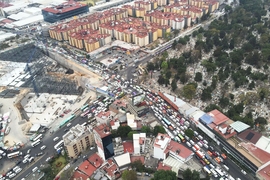
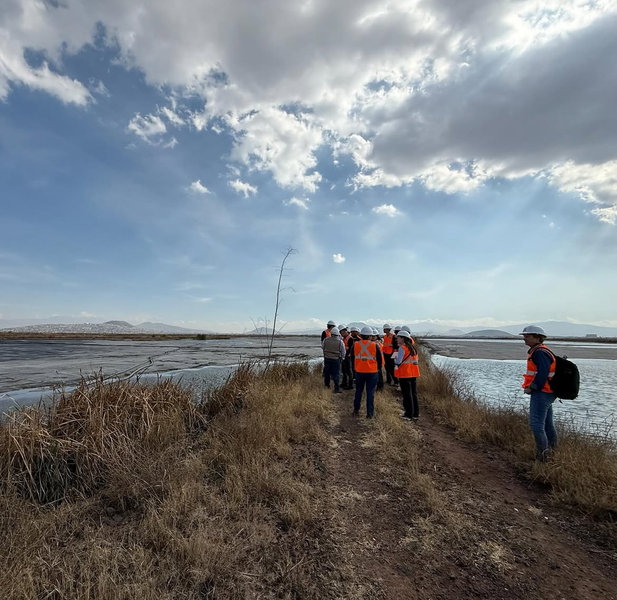
- Bordo Poniente: Territories of Industrial and Ecological Metabolism — which presents strategies for reinventing what was once the world’s third-largest solid waste landfill (Bordo Poniente).
Leading the Bordo Poniente panel was project leader Eran Ben-Joseph, professor of landscape architecture and urban planning at MIT. Developed with UNAM and Mota-Engil partners, the project involved 12 MIT School of Architecture and Planning graduate students working across disciplines to address four integrated objectives: converting waste into public value, advancing energy transition (through methane/leachate capture), promoting equity and environmental justice for neighboring communities, and generating actionable policy recommendations, Ben-Joseph says.
“This collaborative effort exemplifies how international courses can combine rigorous fieldwork, interdisciplinary expertise, and community engagement to reimagine a toxic site as a model of urban regeneration and ecological repair,” he says, adding that the project “reflects MIT’s commitments to climate action, urban innovation, and applied systems thinking.” With over 100,000 landfills worldwide, he says, “a replicable ‘Bordo Model’ positions MIT as a global leader in transformation of waste landscapes into energy, ecological, and civic assets.”
In a similar vein, the Vallejo project reimagines urban industrial blocks as engines of clean energy generation, water resilience, and sustainable mobility. Led by MIT Department of Architecture Lecturer Roi Salgueiro Barrio and moderated by UNAM associate professor of architecture and project collaborator Daniel Daou, the symposium’s Redesigning Vallejo panel discussed how the project establishes an actionable framework for energy and industrial transition that can inspire and guide the revival of other industrial areas.
Finally, MIT professor of architecture and urbanism and project leader Rafi Segal presented the team’s Daniel Garza neighborhood case study, which highlighted two replicable urban planning and community clean energy project designs resulting from work by MIT and UNAM researchers.
“The most impactful aspect of ‘Decarbonize and Revitalize’ is its ability to merge energy transition with urban regeneration at the neighborhood scale. The project does not fit neatly into a single disciplinary category; it operates at the intersection of energy, design, and social infrastructure,” says Daniela Martinez Chapa, a former MIT student and an architect and urban designer who served as research assistant on the MIT team. “The project exemplifies MIT’s commitment to collaborative, context-specific innovation,” she adds.
Like others involved with the Mexico City Initiative, UNAM’s Tudela pointed out how working across disciplines, institutions, and borders has benefited both UNAM and MIT.
“MIT brings cutting-edge tools and methodologies in fields such as energy and urban data science, while UNAM contributes deep local expertise, strong social perspectives, and long-standing engagement with communities,” Tudela says. “This combination has produced highly creative, context-sensitive outcomes.”
As for next steps, Williams is hopeful that conversations started at this fall’s symposium might push the team’s research into the local limelight, helping them go from research and strategies to on-the-ground reality. She pointed to the success of an earlier LCAU Mexico City project as an example of what can happen when the right ideas and stakeholders coalesce.
For the 2022 Mextropoli Architecture and City Festival in Mexico City, an MIT team presented “Sueños con Fiber/Timber, Earth/Concrete.”
“As part of that project, we took a decommissioned roller coaster and reused it as a public forum space. And so that was talking about reuse of wood and making sure that building materials are reused in unique ways,” Williams says.
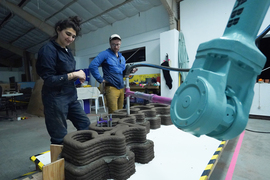
Adjacent to the repurposed roller coaster, Caitlin Mueller, an associate professor in MIT’s departments of Architecture and Civil and Environmental Engineering, built a structure made of 3D printed bricks that capture the traditional style of Mexican construction, but with a fraction of the carbon footprint. Mueller has since taken the Sueños project further, co-founding a design and technology company (Forma Systems) focused on expanding access to high-quality, low-carbon affordable housing and building systems by reimagining widely available materials such as concrete and earth.
“Caitlin’s project with the bricks is just such a good example of what the Cities Initiative can do. We seeded collaborative research, and now there’s a startup based off the idea, and they are continuing to do the work,” Williams says. “I think that’s the idea — we help to fund research that combines deep local knowledge and MIT’s innovation environment to help inspire new ideas and technologies for cities.
“I would hope these new projects just presented in Mexico would have a similar trajectory,” she says. “The future is open.”