
Where economics and materials science meet
Postdoc Michele Bustamante wins Congressional Fellowship for her research analyzing supply risks and cost dynamics for key metals in high technology.
Postdoc Michele Bustamante wins Congressional Fellowship for her research analyzing supply risks and cost dynamics for key metals in high technology.
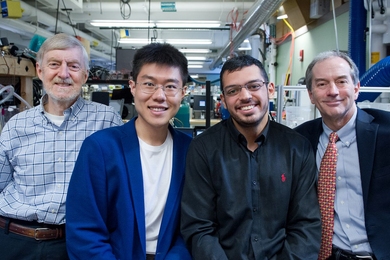
Analysis points the way to energy-efficient systems that take a location-specific approach to cooling and dehumidifying places where people live and work.
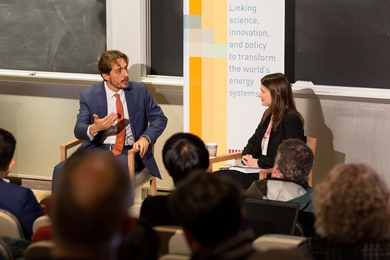
Bruno Verdini, executive director of the MIT-Harvard Mexico Negotiation Program, discusses his award-winning research on negotiating for mutual gains.
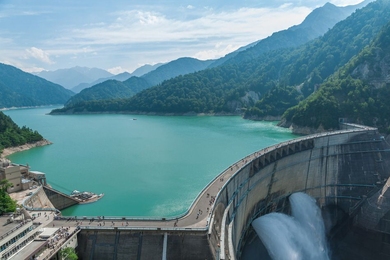
Following the Paris accord could reduce risk of severe water-access problems, researchers find.
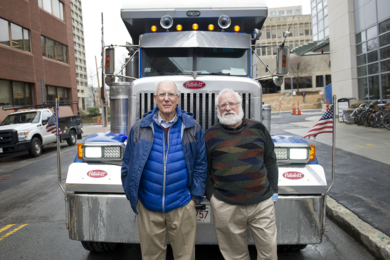
Gasoline-alcohol engines for heavy-duty trucks could produce a meaningful improvement in global air quality.
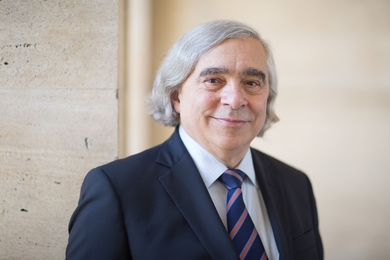
Professor emeritus and former U.S. energy secretary reflects on recent meeting with Pope Francis and energy and finance leaders.
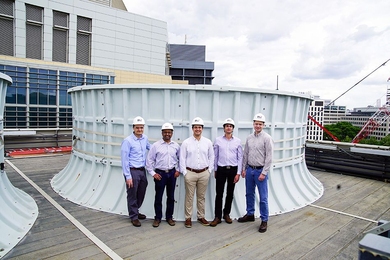
Technology captures water evaporating from cooling towers; prototype to be installed on MIT’s Central Utility Plant.
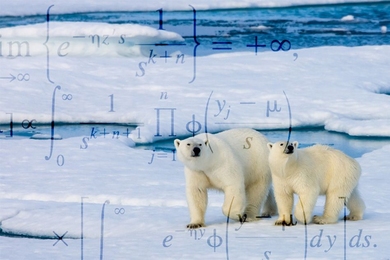
In a “mathy” philosophy class, students explore the risks, outcomes, and ethical implications of living in a warming world.
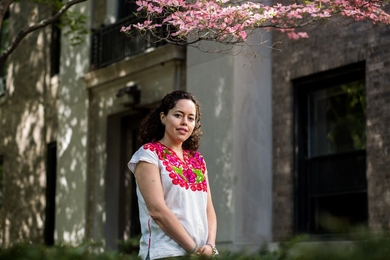
Graduate student Tiziana Smith studies links between water availability and crop yields in the world’s most populous country.
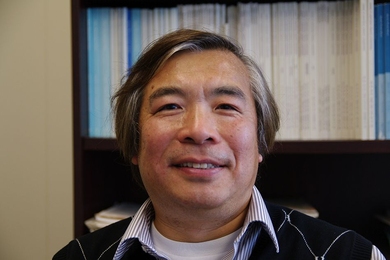
MIT senior research scientist is one of six U.S. scientists to join French President Emmanuel Macron's "Make Our Planet Great Again" program.

Eleven principal investigators from six MIT departments will receive grants totaling over $1.3 million, overhead free, for research on food and water challenges.
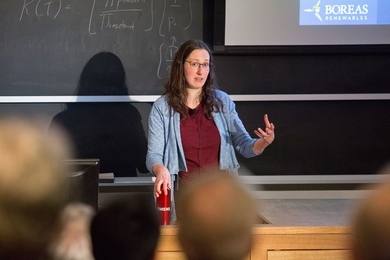
Boreas Renewables' Abigail Krich discusses the incompatibility of New England’s electricity market structure with achieving carbon emissions reduction goals.
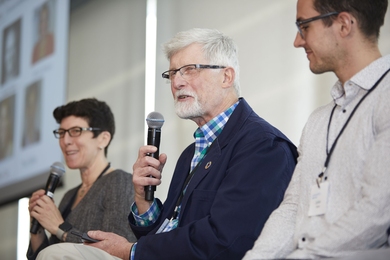
The Institute's fourth annual Sustainability Connect event highlights imagination and the incubation of new ideas.
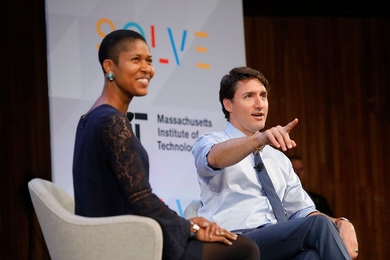
At flagship Solve event, Canada’s prime minister urges audience to help shape the changes transforming society.
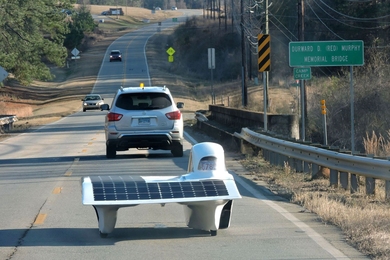
Flux, built by the MIT Solar Electric Vehicle Team, was recently unveiled at Johnson Rink in preparation for its participation in the American Solar Challenge.