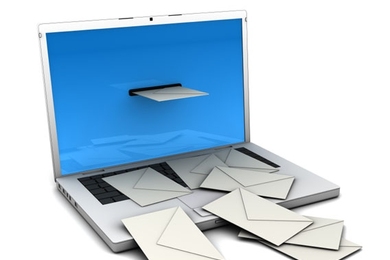
One way to reduce email stress: Re-invent the mailing list
New CSAIL system lets users customize the mailing-list experience by following and blocking users and “upvoting” messages.
New CSAIL system lets users customize the mailing-list experience by following and blocking users and “upvoting” messages.
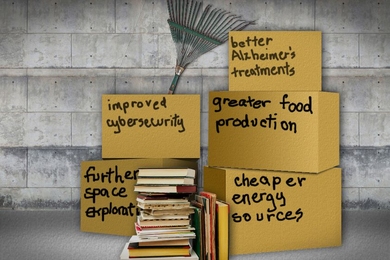
Authors highlight 15 research opportunities that could help boost the U.S. economy, benefit society.
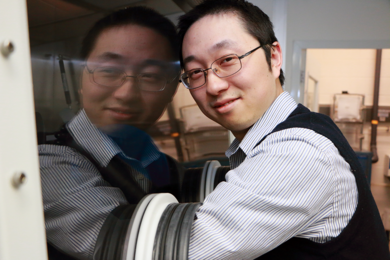
MIT Assistant Professor Juejun Hu melds fundamental materials science and new device designs to enable flexible photonics and other applications.
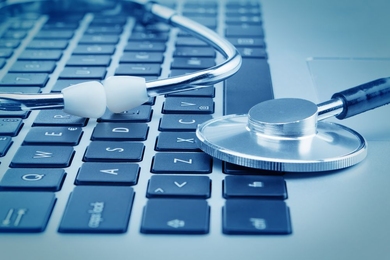
Model from MIT's Computer Science and Artificial Intelligence Laboratory aims to automatically distinguish lymphoma subtypes.
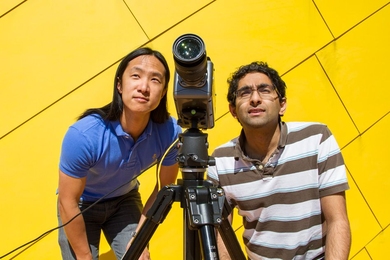
Researchers apply computer vision technique to see tiny vibrations in large structures.

System for defending against memory-access attacks implemented in chips.
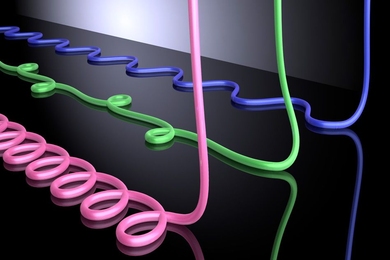
A new simplified model predicts patterns that form from honey-like fluids.
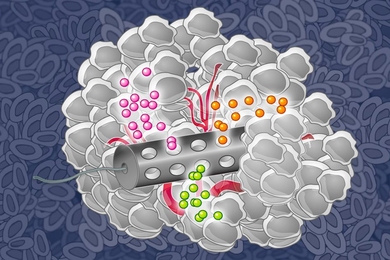
Implantable device could allow doctors to test cancer drugs in patients before prescribing chemotherapy.

Report from conference at MIT addresses potential effects of huge construction project.
MIT innovators take a close look at how basic science research leads to applications, new companies, jobs, and economic growth.

Magnet-based setup may help detect the elusive mass of neutrinos.

Unobtrusive wearable sensor could operate digital devices or augment other device interfaces.

In middle-schoolers, neuroscientists find differences in brain structures where knowledge is stored.
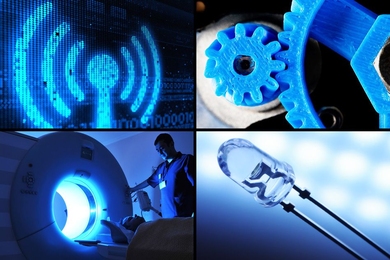
New method uses patent data to estimate a technology’s future rate of improvement.
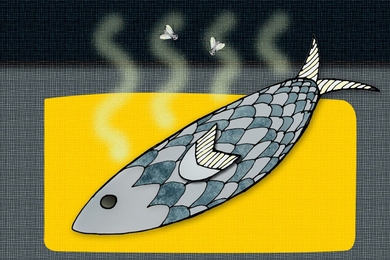
Tiny device could be incorporated into “smart packaging” to improve food safety.