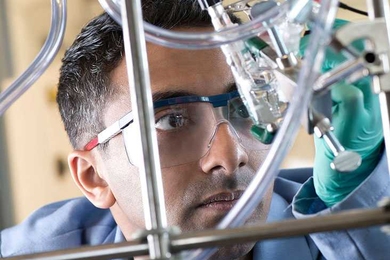
Advanced thin-film technique could deliver long-lasting medication
Nanoscale, biodegradable drug-delivery method could provide a year or more of steady doses.
Nanoscale, biodegradable drug-delivery method could provide a year or more of steady doses.

Brad Olsen creates bioinspired and biofunctional materials for widely diverse applications.
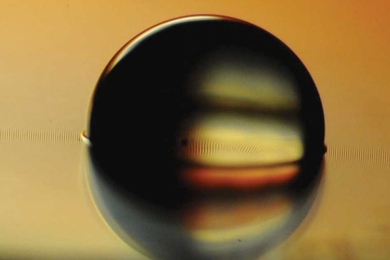
Researchers develop treated surfaces that can actively control how fluids or particles move.
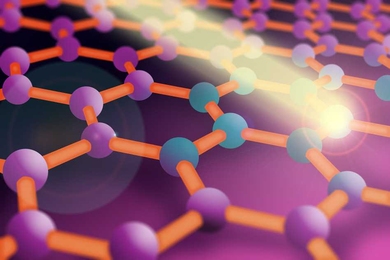
Finding could allow ultrafast switching of conduction, and possibly lead to new broadband light sensors.

Karnik group develops inexpensive ways to analyze blood and filter water
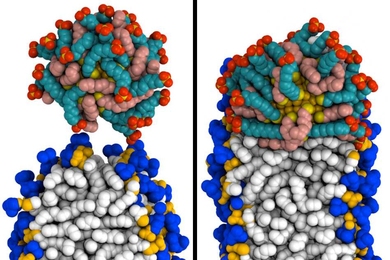
Scientists explain how gold nanoparticles easily penetrate cells, making them useful for delivering drugs.


Nicholas Fang pushes the limits of light to improve performance in communication, fabrication, and medical imaging.
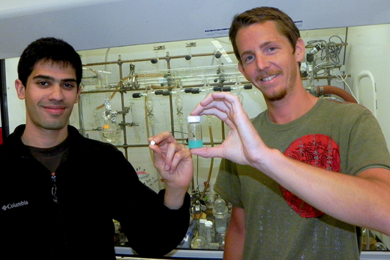
Studies by graduate students Stephen Morton and Nisarg Shah show progress toward better cancer treatment and bone replacement.
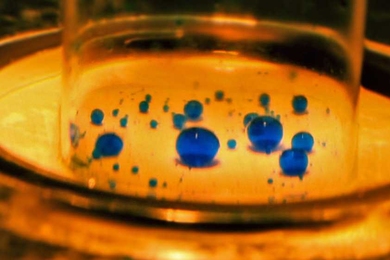
Membrane developed by MIT researchers can separate even highly mixed fine oil-spill residues.
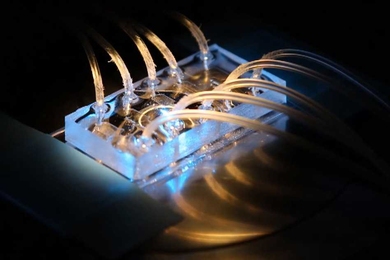
Discovery could lead to new ways of detecting cancer cells or purifying contaminated water.
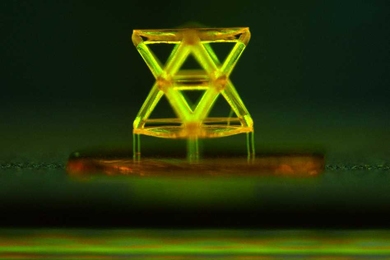
Nanostructured material based on repeating microscopic units has record-breaking stiffness at low density.
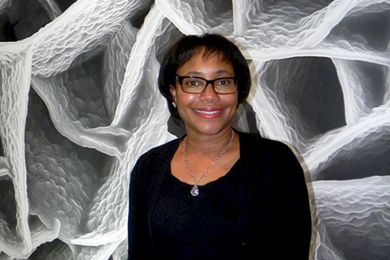
Engineering tiny paths to cancer treatment, bone regrowth, and wound healing, Paula Hammond serves as an exemplary researcher-educator within the MIT community.
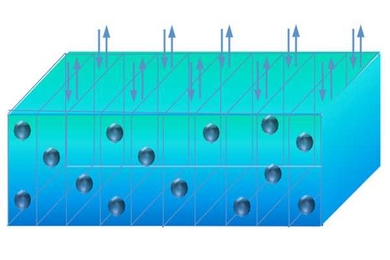
An exotic state of matter — a “random solid solution” — affects how ions move through battery material.