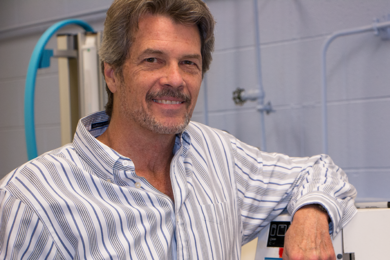
Faculty highlight: Michael Rubner
Materials scientist Mike Rubner’s collaboration with chemical engineer Robert Cohen yields anti-fog coatings, synthetic "backpacks" for living cells.
Materials scientist Mike Rubner’s collaboration with chemical engineer Robert Cohen yields anti-fog coatings, synthetic "backpacks" for living cells.
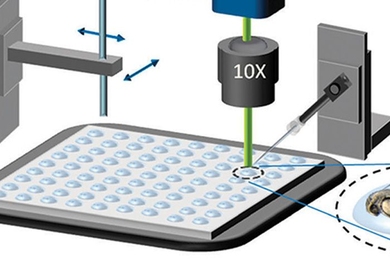
Engineers devise technology for rapidly testing drug-delivery vehicles in zebrafish.
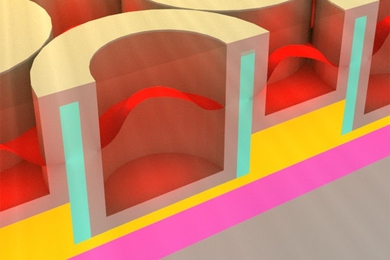
New system aims to harness the full spectrum of available solar radiation.
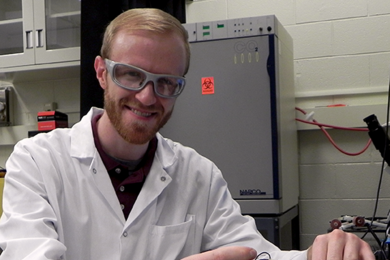
Customized arrays of iron oxide nanoparticles are possible based on their differing responses to alternating magnetic fields, MIT researchers report.
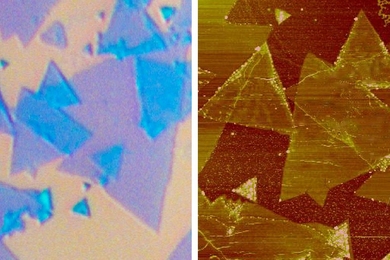
A promising light source for optoelectronic chips can be tuned to different frequencies.
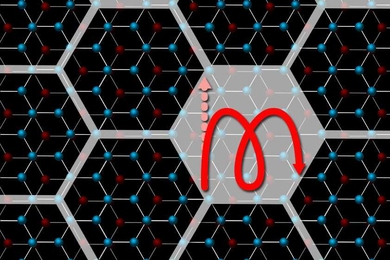
Discovery might ultimately lead to new, more energy-efficient transistors and microchips.
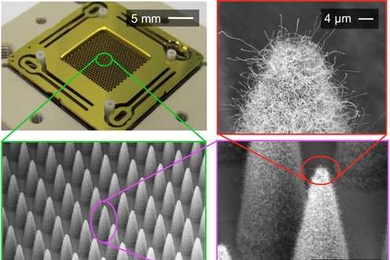
Electrospray arrays can dramatically downsize systems and costs for onsite chemical analysis — and many other applications.

Newly tenured Evelyn Wang — whose parents met at MIT — studies heat transfer in materials.
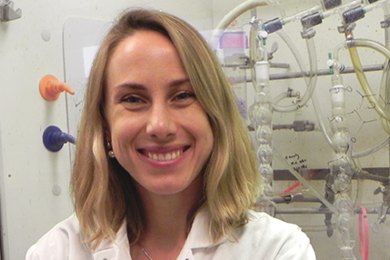
Flexible polymer probes and magnetic nanoparticles promise breakthroughs for treating paralysis and brain disease.
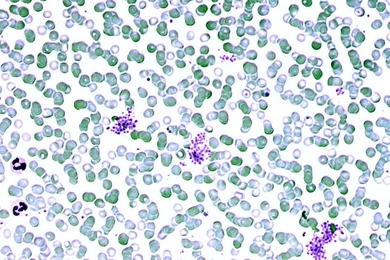
Using magnetic fields, technique can detect parasite’s waste products in infected blood cells.
Graduate student Wade Hsu and colleagues confine light to a crystal surface and design a transparent display using nanoparticles.

Silvija Gradečak customizes nanoscale systems for large-scale impact in light and energy.
MIT graduate student Yichen Shen designs a photonic crystal system that lets light pass through at a specific angle.
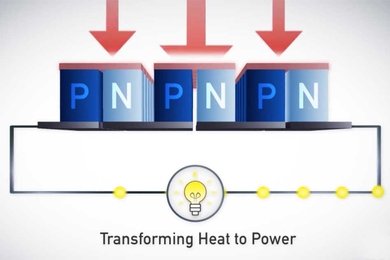
Gang Chen’s thermoelectric devices turn waste heat into electricity for vehicles and other machines.