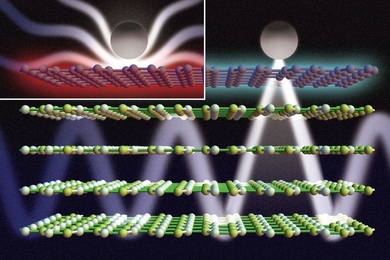
Taking control of light emission
Researchers find a way of tuning light waves by pairing two exotic 2-D materials.
Researchers find a way of tuning light waves by pairing two exotic 2-D materials.
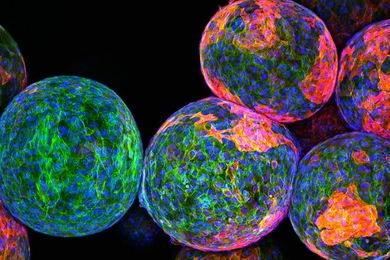
Optimal size and shape allow implantable devices to last longer in the body.
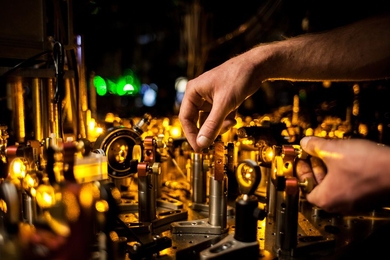
Instrument freezes and images 1,000 individual fermionic atoms at once.
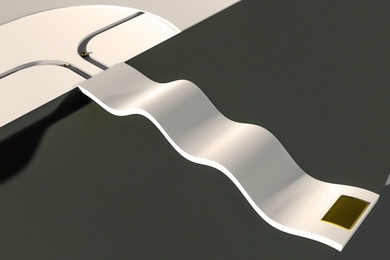
Device can measure the distribution of tiny particles as they flow through a microfluidic channel.

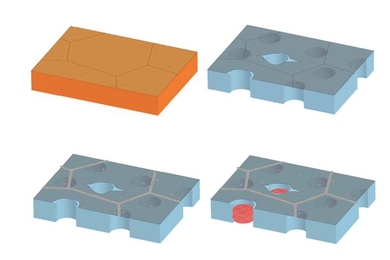

Tiny device could be incorporated into “smart packaging” to improve food safety.

New technique uses carbon nanotube film to directly heat and cure composite materials.
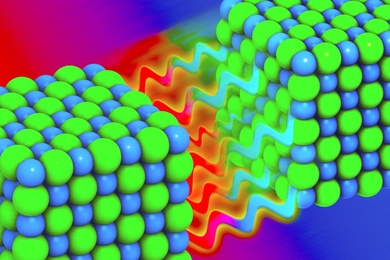
“Phonon tunneling” explains heat flow across nanometer-wide gaps, study finds.
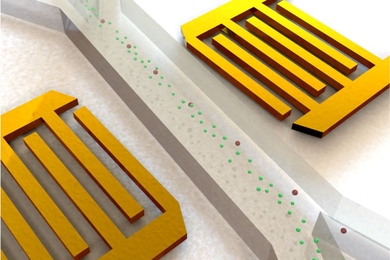
Acoustic device can rapidly isolate circulating tumor cells from patient blood samples.

New study identifies the promise and challenges facing large-scale deployment of solar photovoltaics.

MIT graduate student Bo Qing studies synthetic gels that could be used in better equipment to protect against traumatic injuries.

New technique could lead to long-lasting localized stimulation of brain tissue without external connections.
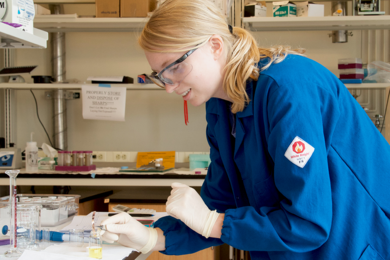
Service to faculty, collaboration with industry are hallmarks of campus-based Materials Processing Center at MIT.

A seminar series on the nuts and bolts of constructing a 200,000 square-foot nanotechnology laboratory comes to MIT.