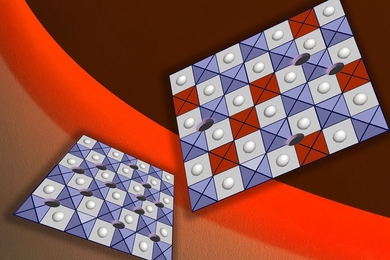
Researchers find a way to extend life and improve performance of fuel cell electrodes
Surface treatment greatly reduces degradation of catalyst material.
Surface treatment greatly reduces degradation of catalyst material.
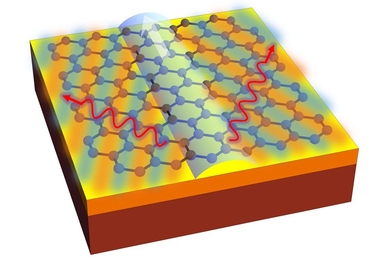
By slowing down light to a speed slower than flowing electrons, researchers create a kind of optical “sonic boom.”

Stretching process can produce nanoscale rods or strips made of many material combinations.
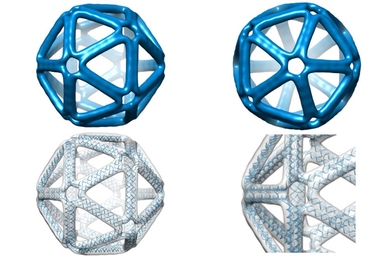
Like 3-D printing did for larger objects, method makes it easy to build nanoparticles out of DNA.

New super-resolution technique visualizes important role of short-lived enzyme clusters.
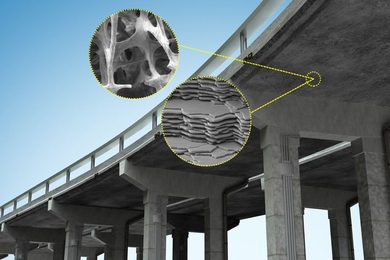
Researchers look to bones and shells as blueprints for stronger, more durable concrete.

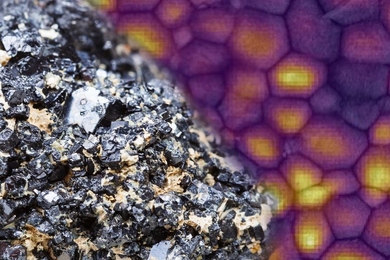
Defects in some new electronic materials can be removed by making ions move under illumination.

System converts solar heat into usable light, increasing device’s overall efficiency.
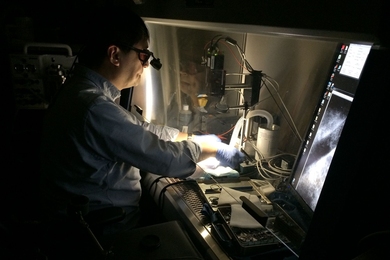
Mechanism developed at MIT and Massachusetts General Hospital shows promising results for improved ovarian cancer detection and removal.

Spectroscopic system with chip-scale lasers cuts detection time from minutes to microseconds.
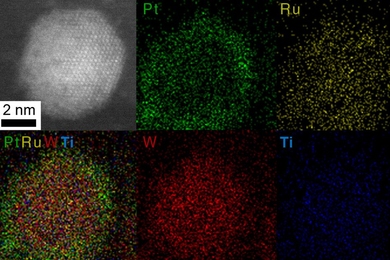
Process from MIT provides improved reactivity with much less platinum.

A new faculty member in materials science and engineering is creating healable metals.

“Second skin” polymer could also be used to protect dry skin and deliver drugs.
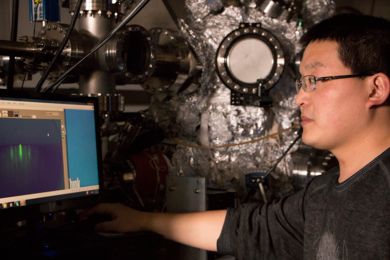
MIT postdoc Cui-Zu Chang makes a spintronic breakthrough in the Moodera group.