School of Science Infinite Kilometer Awards for 2017
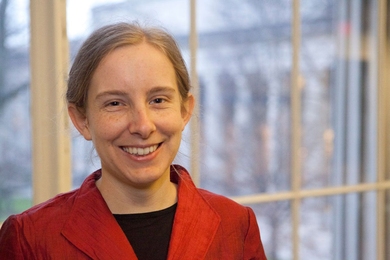
Eight research staffers and postdocs are recognized for their extraordinary contributions and dedication to programs, colleagues, and the Institute.
Eight research staffers and postdocs are recognized for their extraordinary contributions and dedication to programs, colleagues, and the Institute.
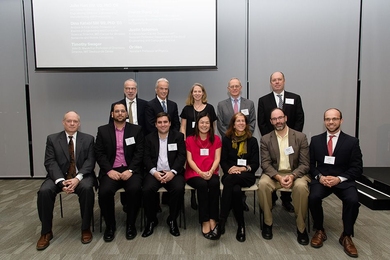
Six potentially paradigm-shifting research projects will make strides with funding from Professor Amar G. Bose Research Grants.
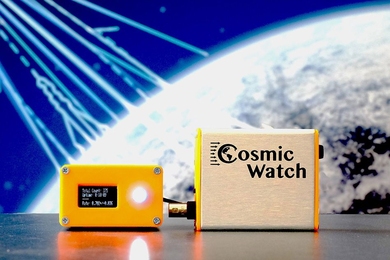
Pocket-sized device detects charged particles in surrounding air.
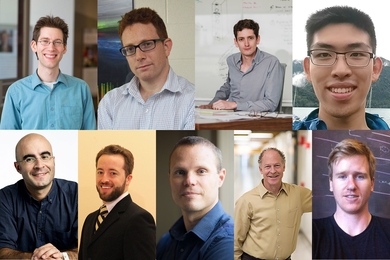
Prize winners span six departments in the schools of Science and Engineering.
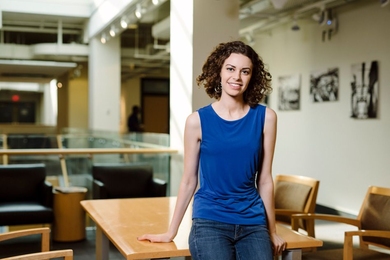
For MIT senior Talia Weiss, physics and theater have provided a springboard for new interests in political science.
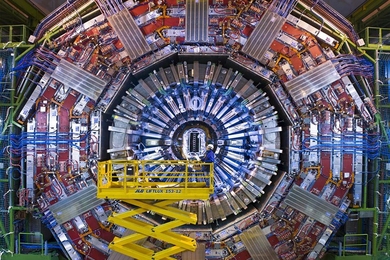
CERN Open Data Portal results reveal predictable patterns from colliding high-energy protons.
![“[MIT] is a fantastic place,” says associate professor Markus Klute, a member of the Laboratory of Nuclear Science. “Where else in the world do you get this amount of freedom?”](/sites/default/files/styles/term_page__news_article/public/images/201707/MIT-Klute-Markus-A1.jpg?itok=Giy6ox6l)
Now that the Higgs boson has come to light, Markus Klute is looking at physics beyond the Standard Model.
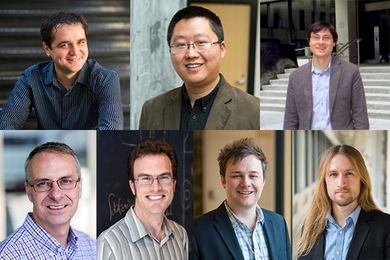
Seven award-winning faculty members represent the departments of Physics, Chemistry, and Biology.
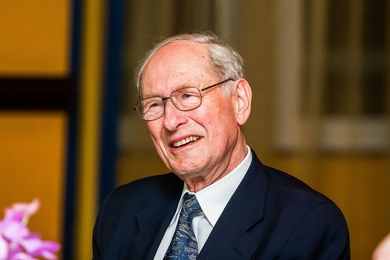
Former Laboratory for Nuclear Science and Center for Theoretical Physics director made important contributions to the study of nuclear structure and reactions.
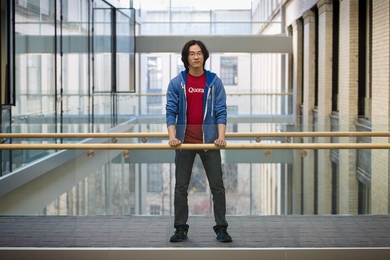
MIT senior will pursue theoretical physics studies as a Marshall Scholar.
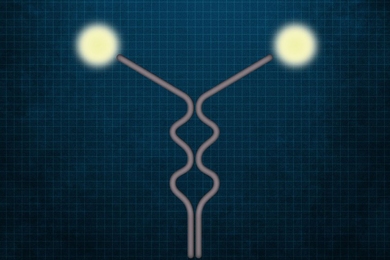
Seven-year study indicates two photons, not one, are exchanged in electron-proton interactions.
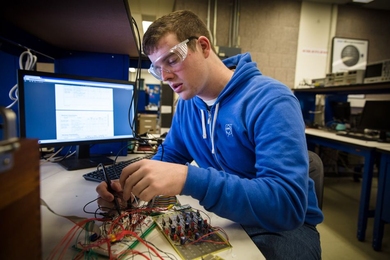
Zachary Hulcher, Marshall Scholar and offensive lineman, will study high-energy physics in the U.K.
Physicists address loophole in tests of Bell’s inequality, using 600-year-old starlight.
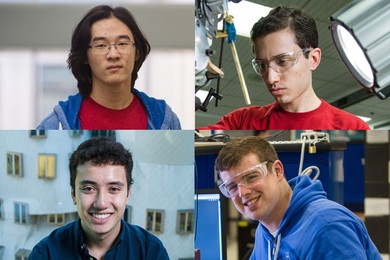
Matthew Cavuto, Zachary Hulcher, Kevin Zhou, and Daniel Zuo will pursue two years of study in the U.K.