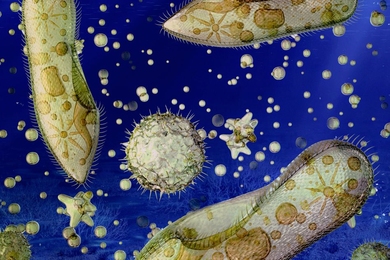
New study sets oxygen-breathing limit for ocean’s hardiest organisms
Bacteria can survive in marine environments that are almost completely starved of oxygen.
Bacteria can survive in marine environments that are almost completely starved of oxygen.

Experts call for regulatory, policy, and market transformation to realize potential of distributed energy technologies.
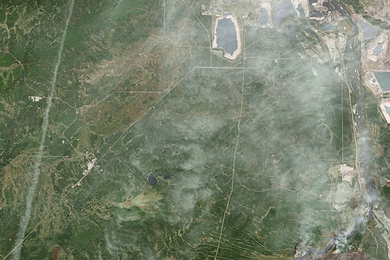
Study finds accounting for year-to-year variability enables more accurate projections of climate change and its impacts.
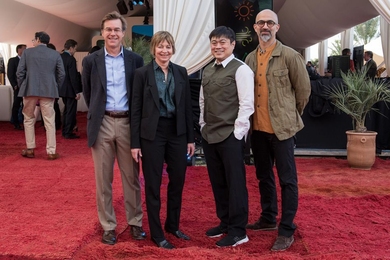
At UN Climate Change Conference, MIT researchers share insights on implementing climate commitments.

Why is it so hard for human beings to address climate change? What can motivate effective action?

How an enhanced cap-and-trade system can help the world’s top carbon emitter cut emissions and improve air quality.
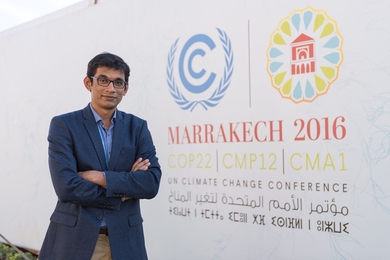
Tata Center graduate fellow Arun Singh shares energy-economic modeling research at UN Climate Change Conference.

Emissions trading would be more effective than mileage standards, new study shows.
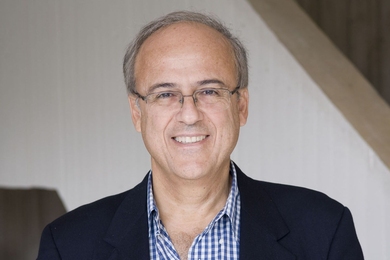
Metabolic engineering pioneer recognized for his work in the engineering of microbes for biofuels production.

Workshop explores ways to reduce or eliminate the carbon footprint of seawater desalination plants.

Report projects impacts of 2015 Paris climate agreement, identifies emissions paths/technology advances needed to limit global warming to 2 degrees Celsius.
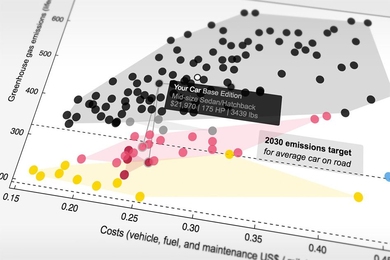
Detailed look at 125 U.S. auto models finds those emitting less carbon are the least expensive to drive.
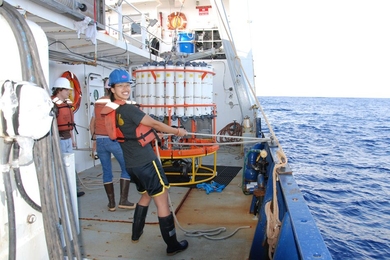
More anthropogenic carbon in the northeast Pacific means weaker shells for many marine species.
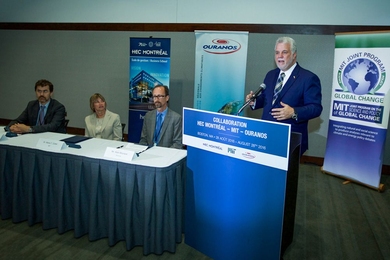
Focusing on New England/Québec Region, Québec premier and MIT vice president for research speak at Boston signing ceremony; Hydro-Québec CEO pledges funding.

Electric vehicles can meet drivers’ needs enough to replace nearly 90 percent of vehicles now on the road.