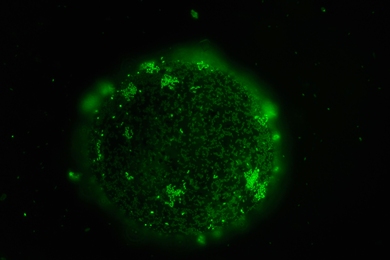
In search of the fundamental laws of microecology
A new MIT-led Simons Foundation collaboration aims to understand basic principles and laws of microbial ecosystems.
A new MIT-led Simons Foundation collaboration aims to understand basic principles and laws of microbial ecosystems.
![“The observations are telling us there will be increases [in extreme rainfall] at almost all latitudes, but if you want to know what’s going to happen at the scale of a continent or smaller, it’s a much more difficult question,” Paul O’Gorman says.](/sites/default/files/styles/term_page__news_article/public/images/201705/mit-extreme-rain.jpg?itok=3RZFd0k3)
Intensification of extreme rainfall varies from region to region, study shows.
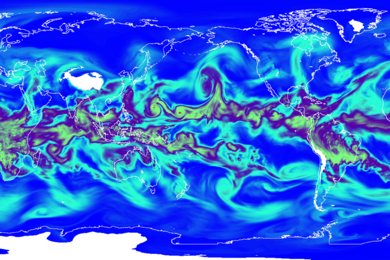
Associate Professor Paul O'Gorman describes three questions climate scientists recently suggested should frame the future of climate research.
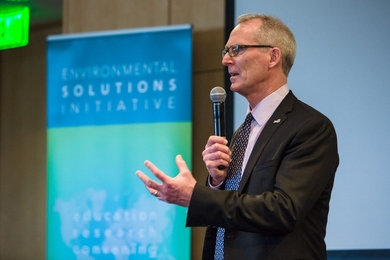
At MIT, former Congressman Bob Inglis speaks about climate and free enterprise.
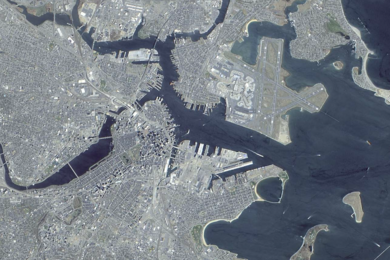
Advanced Land Imager instrument developed at MIT Lincoln Laboratory helped NASA mission exceed expectations.
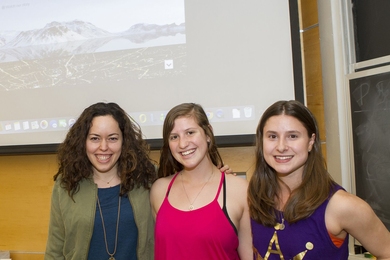
Fourth annual CEE Video Competition highlights global research and opportunities.
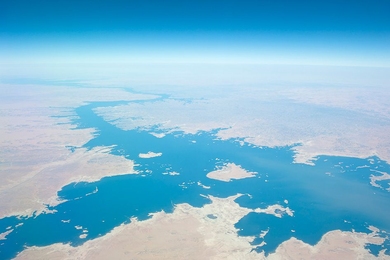
Climate change could lead to overall increase in river flow, but more droughts and floods, study shows.

Senior Elizabeth Rider uses atmospheric chemistry research to create international connections.
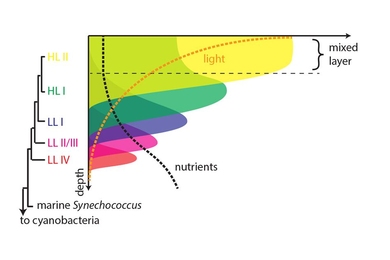
Ubiquitous marine organism has co-evolved with other microbes, promoting more complex ecosystems.
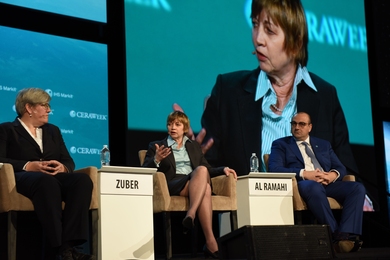
MIT energy and climate thought leaders play integral part in discussions at CERAWeek 2017.
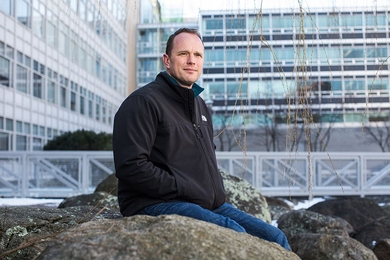
Geologist Oliver Jagoutz scales mountains to gain tectonic insights.
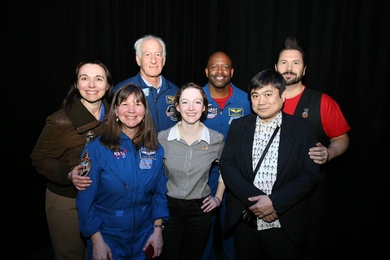
MIT Media Lab event, Beyond the Cradle, launches a new initiative to explore the final frontier.
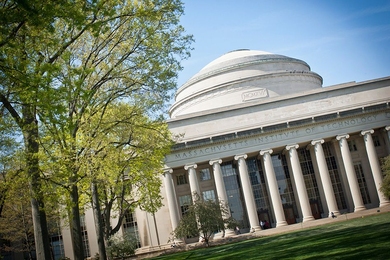
MIT ranked within the top 5 for 19 of 46 subject areas.
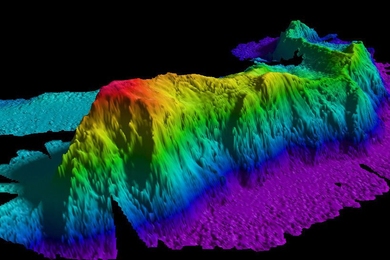
Turbulence from seafloor topography may explain longstanding question about ocean circulation.

Countries hit hardest by automaker’s emissions scandal include Germany, Poland, France, and Czech Republic.