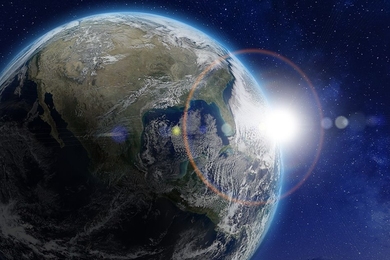
How Earth sheds heat into space
New insights into the role of water vapor may help researchers predict how the planet will respond to warming.
New insights into the role of water vapor may help researchers predict how the planet will respond to warming.
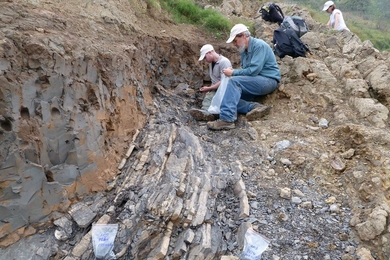
Study finds end-Permian extinction, which wiped out most of Earth’s species, was instantaneous in geological time.
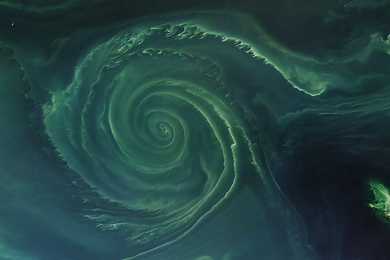
Model of nutrient recycling may explain longstanding mystery.
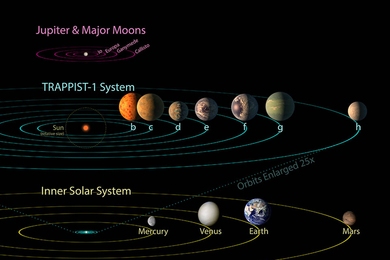
Assistant professor in EAPS and colleagues from the University of Liège were honored for groundbreaking planetary system discovery.

Graduate student Kelsey Moore uses genetic and fossil evidence to study the first stages of evolution on our planet.
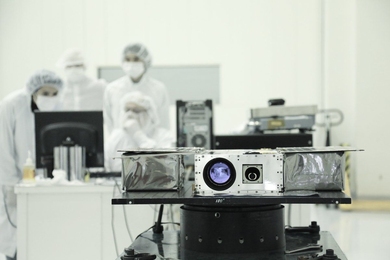
Measurement of an exoplanet transit demonstrates proof of concept that small spacecraft can perform high-precision photometry.

Research led by the MIT Haystack Observatory finds arctic winter stratospheric events dramatically affect the ionosphere at night.

Expert in landscape evolution will build upon the work of outgoing associate department head Tim Grove, supporting the EAPS education mission.
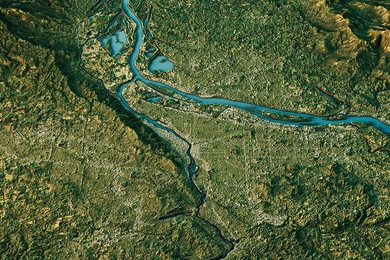
Results may help identify ancient climates on Earth or other planets.

Study finds 1–2 percent of Earth’s oldest mantle rocks are made from diamond.
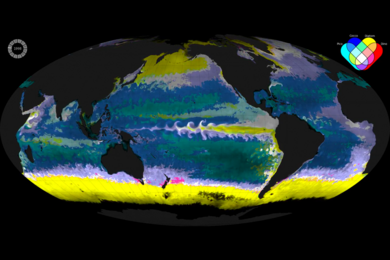
Simons Foundation-backed CBIOMES brings together researchers in oceanography, statistics, data science, ecology, biogeochemistry, and remote sensing.
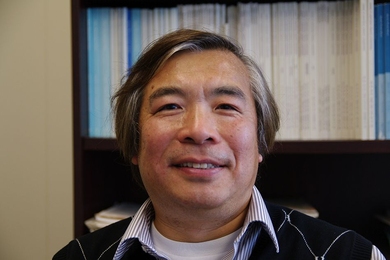
MIT senior research scientist is one of six U.S. scientists to join French President Emmanuel Macron's "Make Our Planet Great Again" program.
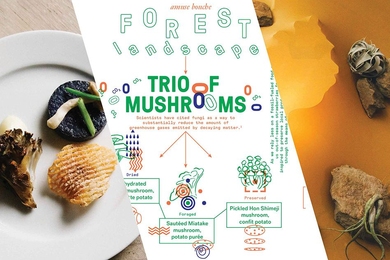
Climate Changed Symposium combines art and science to envision the global food system under climate change.
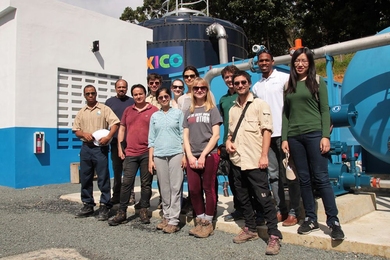
Class visit to St. Lucia helps teach cutting-edge geophysics techniques while locating drinking water for those in need.

A 4 percent reduction per year in carbon dioxide emissions should net $339 billion in health savings in 2030, researchers estimate.