
Felice Frankel donates image collection to the MIT Libraries
Landscape architecture photographs will be shared as a learning resource.
Landscape architecture photographs will be shared as a learning resource.
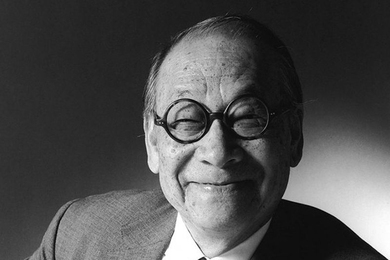
Designer of the Louvre pyramid and of the East Building of the National Gallery of Art left a distinctive mark on the MIT campus.
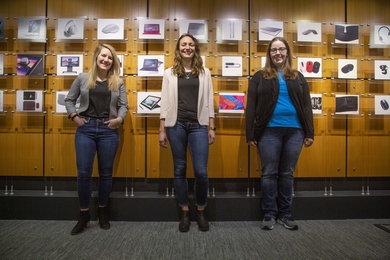
Mechanical engineering alumnae Jacklyn Herbst ’10, MEngM ’11, Isabella DiDio ’16, and Ann McInroy ’18 bring shared MIT experiences to the same Microsoft team.
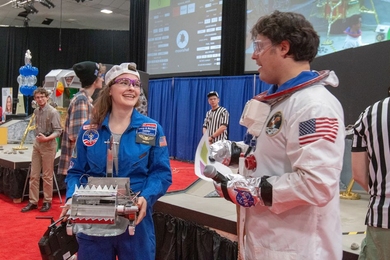
Robotic sweepers, flappers, and telescoping arms face off for a shot at coveted engineering prize.

Collaboration between MIT architect and chemical engineer could be at the center of new sustainable infrastructure for buildings.
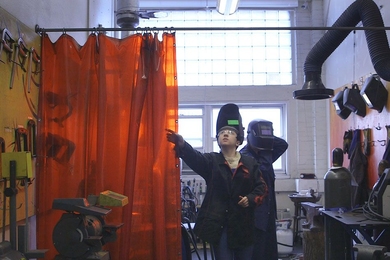
In MIT D-Lab class 2.729 (Design for Scale), MIT students devise ways to manufacture products to reach as many people as possible.
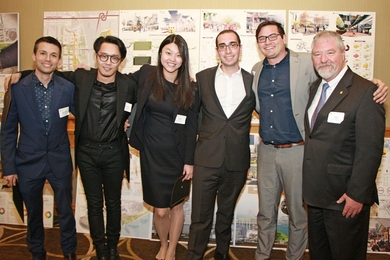
Their winning 2019 Hines Student Competition entry readies an urban space for the future while preserving the past.
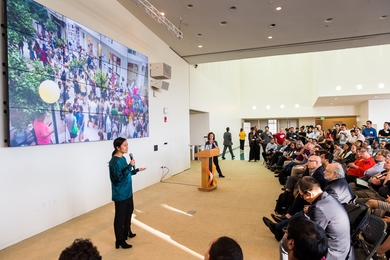
Seed fund will support venture-design education and entrepreneurship in the School of Architecture and Planning.
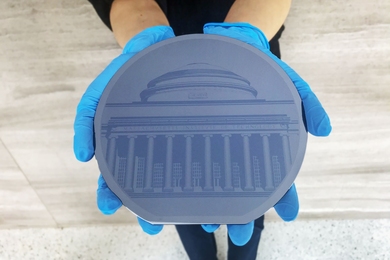
MIT.nano etches more than 270,000 names from the MIT community on a 6-inch wafer.

Visiting fellows engage with students in the School of Architecture and Planning to create startups aimed at social impact.
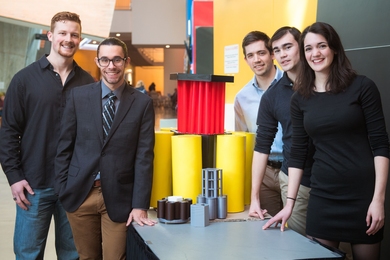
Undergraduates put their ideas on the line in a competition showcasing novel, consequential applications of nuclear science and engineering.
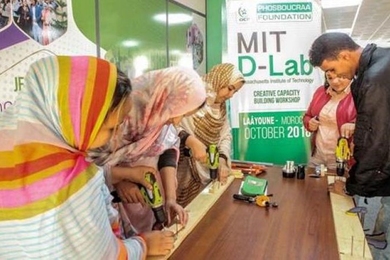
Gathering aims for collaborative solutions to economic and social development challenges using MIT D-Lab's participatory design methodology.
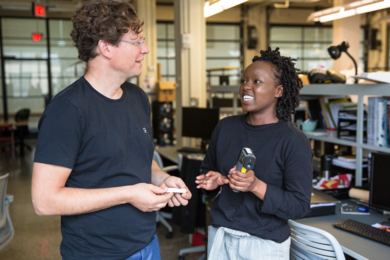
Christoph Reinhart is internationally known for using natural light to illuminate interiors and his lab's design tools are used by architects and urban planners worldwide.
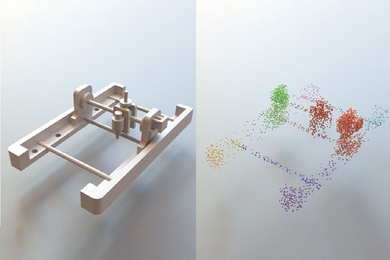
System breaks down complex designs into easily modifiable shapes for custom manufacturing and 3-D printing.
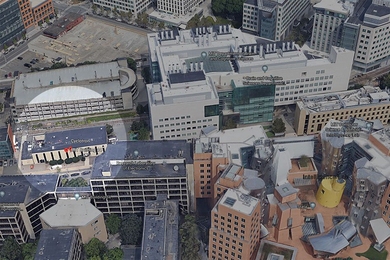
Headquarters would replace Building 44, forming an “entrance to computing” near the intersection of Vassar and Main streets.