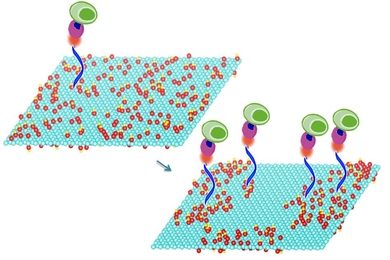
Graphene sheets capture cells efficiently
New method could enable pinpoint diagnostics on individual blood cells.
New method could enable pinpoint diagnostics on individual blood cells.
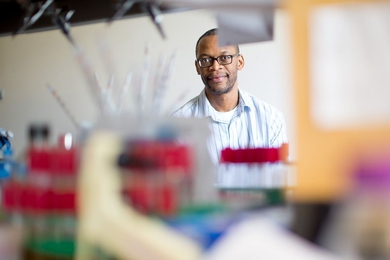
Measuring the parasite’s heme levels could help scientists develop better antimalarial drugs.

Annual poster session showcases recent work on biological effects of exposure to environmental agents.

Charles Jennings of MIT’s McGovern Institute discusses the intellectual property dispute over the gene-editing technique.
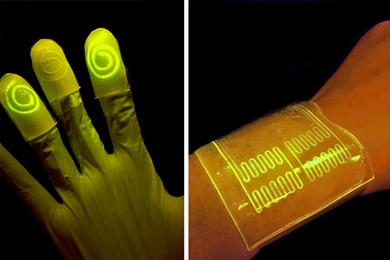
Cell-infused gloves and bandages light up when in contact with certain chemicals.


Innovators from a range of fields discuss their pioneering work and their founders’ journey.
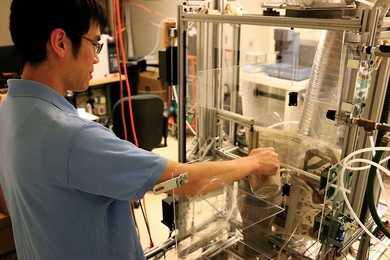
MIT researchers are developing mobile torrefaction technology that can convert biomass into clean-burning fuel, unlocking potential income for farmers.


CRISPR pioneer named to inaugural chair created by Patricia and James Poitras '63, founders of MIT’s Poitras Center for Affective Disorders Research.

MIT and Broad Institute scientist shares recognition with four other scientists for developing CRISPR gene-editing systems.

Noninvasive technique reduces beta amyloid plaques in mouse models of Alzheimer’s disease.
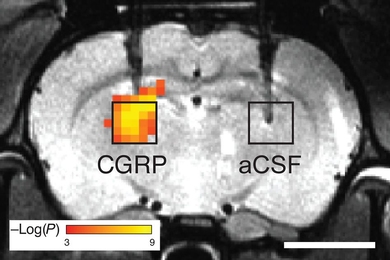
New probe induces blood flow changes that can be seen by MRI.

Encapsulating molecular components in artificial membranes offers more flexibility in designing circuits.

Newly discovered genetic code controls bacterial survival during infections.