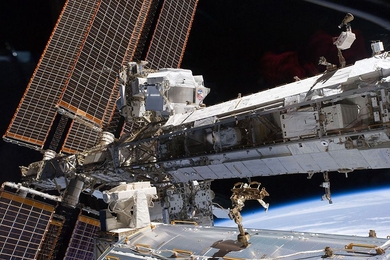
Particle detector finds hints of dark matter in space
Alpha Magnetic Spectrometer detects positrons in cosmic ray flux that hint at dark matter's origin.
Alpha Magnetic Spectrometer detects positrons in cosmic ray flux that hint at dark matter's origin.
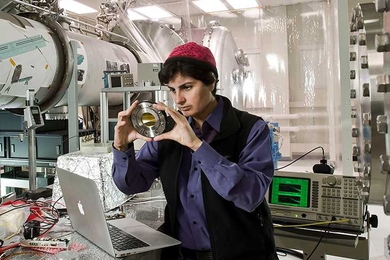
MIT professor Nergis Mavalvala helps build tools to detect gravitational waves.

MIT physicist lauded for his groundbreaking theory of cosmic inflation.
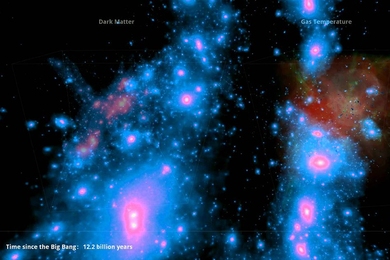
New model, spanning 13 billion years of cosmic evolution, makes important advances.

Career at MIT spanned more than 50 years, focusing on space plasma and the solar wind
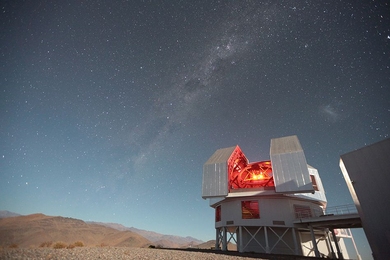
Faintest galaxy ever detected illuminates unusual aspects of the universe’s early evolution.
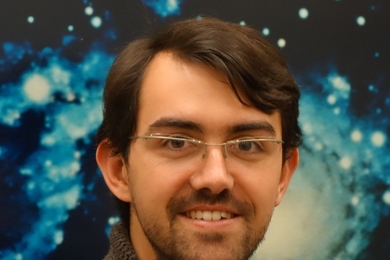
Postdoc fellow recognized for his PhD thesis on the discovery and characterization of many new exoplanetary systems.

MIT physicist explains how new results bolster his 1980 theory of cosmic inflation.
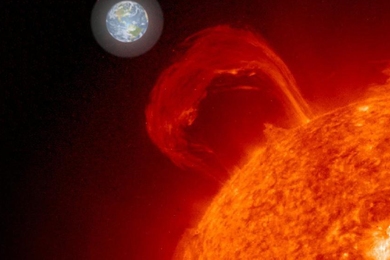
MIT scientists identify a plasma plume that naturally protects the Earth against solar storms.
The Cryogenic Dark Matter Experiment has set more stringent limits on light dark matter.
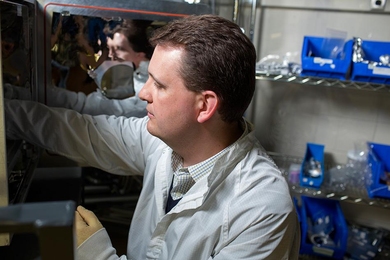
Robert Simcoe peers deep into the universe’s past to identify the first stars.
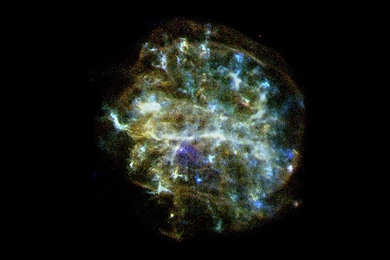
The discovery suggests that the very first generation of stars may not have been as powerful as previously thought.
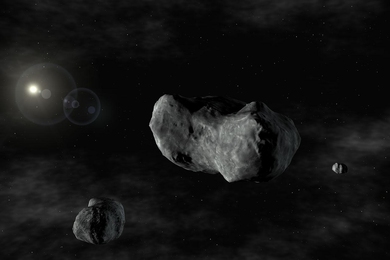
A new map of the solar system’s asteroids shows more diversity than previously thought.
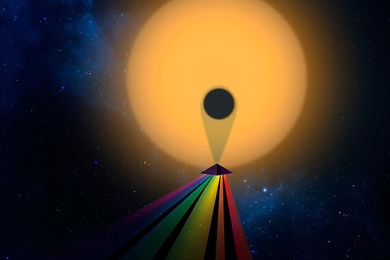
Method will help scientists determine the mass of exoplanets that are not measurable in any other way.
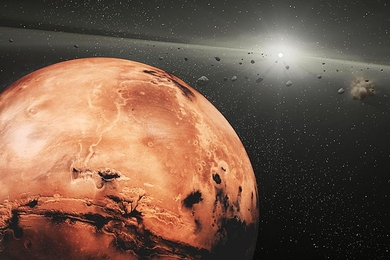
Scientists find that Mars, not Earth, shakes up some near-Earth asteroids.