3 Questions: Kenneth Oye on regulating drugs New potential for “homemade” opiates raises oversight issues. May 18, 2015 Read full story →
New evidence for how a rare form of liver cancer arises MIT team finds mechanism by which exposure to vinyl chloride may produce cancerous mutations. April 1, 2015 Read full story →
Taking technology from the lab to the patient Daniel Anderson wants to bring advances in drug delivery and biomaterials to the clinic. February 17, 2015 Read full story →
New way to turn genes on Technique allows rapid, large-scale studies of gene function. December 10, 2014 Read full story →
MIT researchers to receive awards from the Society for Neuroscience Three neuroscientists at MIT have been selected to receive awards from the Society for Neuroscience. November 10, 2014 Read full story →
Fast modeling of cancer mutations New genome-editing technique enables rapid analysis of genes mutated in tumors. October 22, 2014 Read full story →
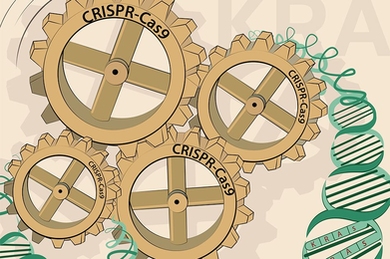
Researchers engineer new mouse model to study disease Time-saving tool takes advantage of CRISPR gene-editing technology. September 25, 2014 Read full story →
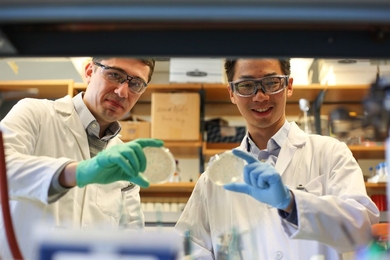
Battling superbugs Two new technologies could enable novel strategies for combating drug-resistant bacteria. September 21, 2014 Read full story →
An easier way to manipulate malaria genes New approach to knocking out parasite’s genes could make it easier to identify drug targets. August 10, 2014 Read full story →
A new way to model cancer New gene-editing technique allows scientists to more rapidly study the role of mutations in tumor development. August 6, 2014 Read full story →
3 Questions: Kenneth Oye on the regulation of genetic engineering Political scientist discusses regulatory gaps in assessing the impact of “gene drives.” July 17, 2014 Read full story →
Erasing a genetic mutation MIT team reverses a liver disorder in mice by correcting a mutated gene. March 30, 2014 Read full story →
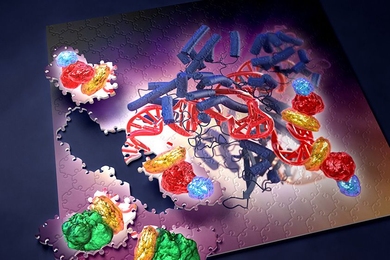
Research reveals structure of key CRISPR complex Work reveals how a genome-editing tool works to correct errors in the genetic code. February 13, 2014 Read full story →
Speeding up gene discovery New gene-editing system enables large-scale studies of gene function. December 12, 2013 Read full story →