Teamwork enables bacterial survival
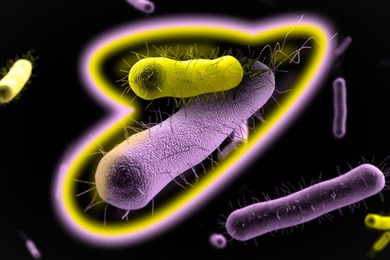
Strains of E. coli resistant to one antibiotic can protect other bacteria growing nearby.
Strains of E. coli resistant to one antibiotic can protect other bacteria growing nearby.
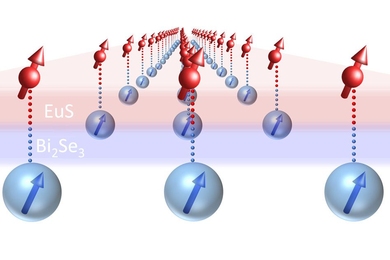
Combining two thin-film materials yields surprising room-temperature magnetism.
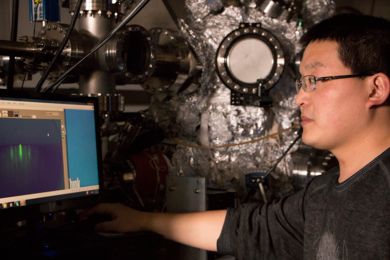
MIT postdoc Cui-Zu Chang makes a spintronic breakthrough in the Moodera group.
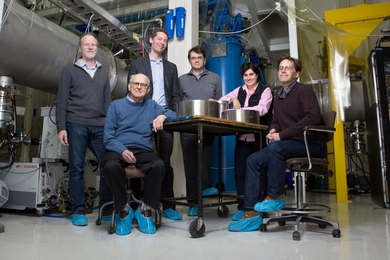
Team that detected gravitational waves to share $3 million prize.
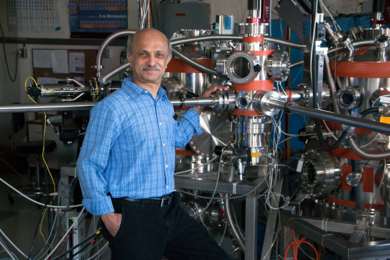
Step-by-step, the Moodera Research Group is building the essential knowledge and hardware for next-generation quantum computers.
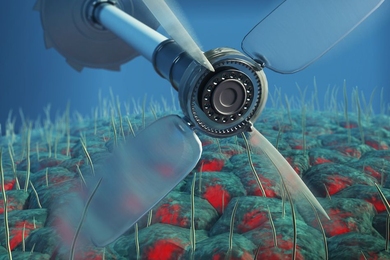
New data analysis technique distinguishes active from passive fluctuations inside cells.
Former MIT physics professor and dean of science recognized by the National Science Board.
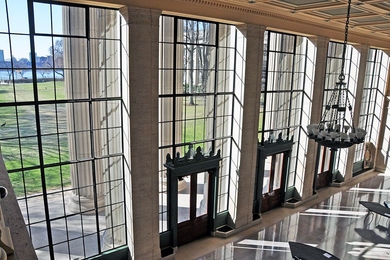
Prestigious honor society announces 213 new members this year.

Katharina Ribbeck and Jesse Thaler named recipients of the Harold E. Edgerton Award.
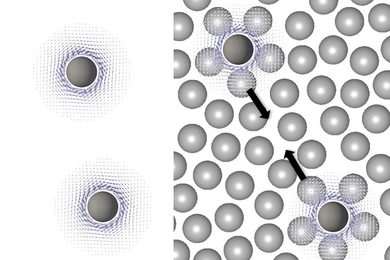
Spinning cells could attract each other across surprisingly long distances.
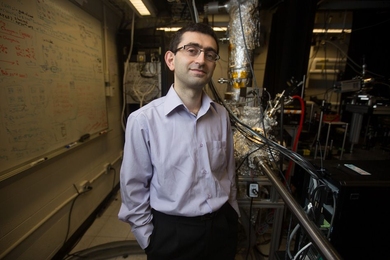
MIT physicist uses laser beams to study exotic electronic phenomena at high speeds.
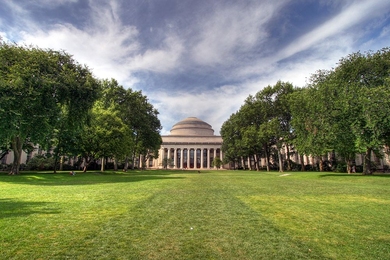
MIT ranked within the top 5 globally for 19 of 42 subject areas.
Beyond 2016: MIT’s Frontiers of the Future event offers a playful introduction to research at MIT.
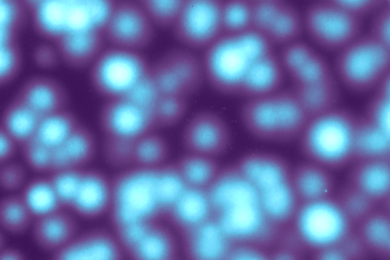
By clustering, cells can work together to survive challenging environments, MIT researchers show.