
Department
Brain and Cognitive Sciences
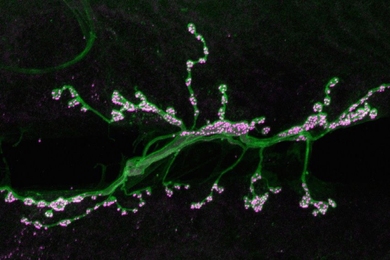
Neuroscientists reveal how the brain can enhance connections
Newly identified mechanism allows the brain to strengthen links between neurons.

What counts as fair?
Neuroscientists find that children’s ability to count is key to distributing resources based on merit.
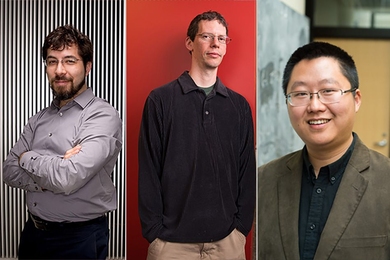
Edward Boyden wins 2016 Breakthrough Prize in Life Sciences
MIT physicists share prize in fundamental physics; Larry Guth and Liang Fu win New Horizons Prizes.

To locate objects, brain relies on memory
Neuroscientists identify brain region that holds objects in memory until they are spotted.

Kwanghun Chung awarded Packard Fellowship
Funding will support the development of novel technologies for better understanding of large-scale biological systems.
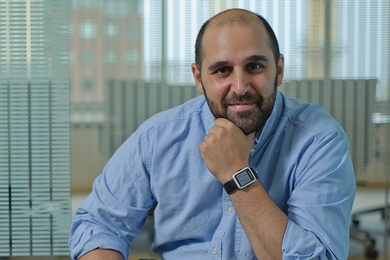
Taking stress to a new level
MIT spinout Neumitra brings an innovative approach to quantifying, understanding, and managing stress.
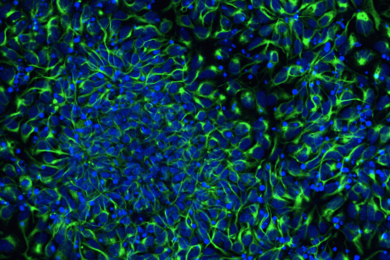
Leveraging genetic diversity to drive precision medicine
Taking advantage of genetic heterogeneity in autism and other neurodevelopmental disorders could lead to precision therapies.
How the brain recognizes objects
Neuroscientists find evidence that the brain’s inferotemporal cortex can identify objects.
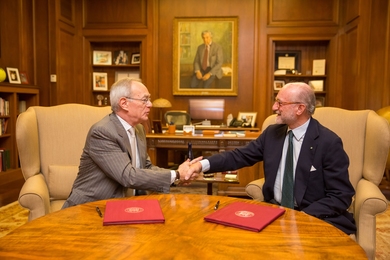
Significant foundation grant extends two-way partnership with Italy through 2020
Agreement will support a number of joint research projects, seminars, lectures, and other programming.

More-flexible machine learning
Giving machine-learning systems “partial credit” during training improves image classification.
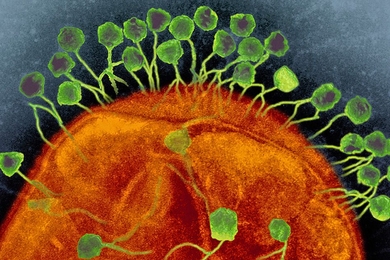
New system for human genome editing has potential to increase power and precision of DNA engineering
CRISPR-Cpf1 offers simpler approach to editing DNA; technology could disrupt scientific and commercial landscape.

How the brain encodes time and place
Neuroscientists identify a brain circuit that is critical for forming episodic memories.