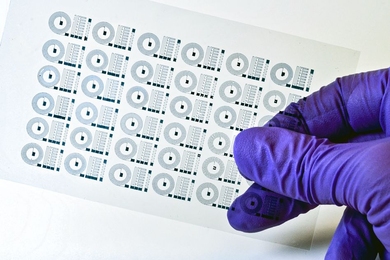
Engineers 3D print soft, rubbery brain implants
Technique may enable speedy, on-demand design of softer, safer neural devices.
Technique may enable speedy, on-demand design of softer, safer neural devices.

A variety of companies with MIT ties are working to address aspects of the Covid-19 pandemic.
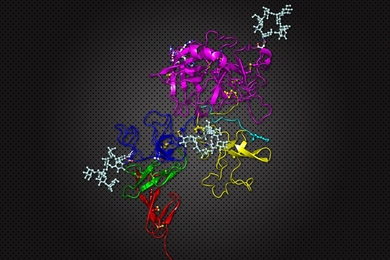
Repurposing a drug used for blood clots may help Covid-19 patients in danger of respiratory failure, researchers suggest.

An unusual synergy between cancer researchers, clinical centers, and industry leads to promising clinical trials for a new combination therapy for prostate cancer.
Entrepreneurial science award recognizes scientists whose work opens up “new dimensions of economic progress."
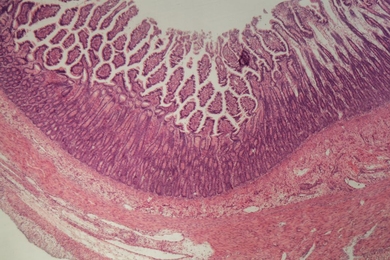
A new approach reveals how different tissues contribute to inflammatory diseases such as ulcerative colitis.
Molecular biology researcher and MIT alumna is an Office of Engineering Outreach Programs (OEOP) instructor.
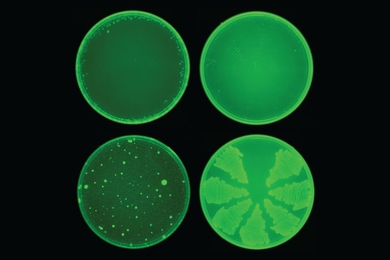
A deep-learning model identifies a powerful new drug that can kill many species of antibiotic-resistant bacteria.
Study suggests noninvasive spectroscopy could be used to monitor blood glucose levels.

Managing her own synthetic biology project helped graduate student Jesse Tordoff overcome imposter syndrome and hit her stride.
Voigt Lab's work could eventually replace cereal crops’ need for nitrogen from chemical fertilizers.
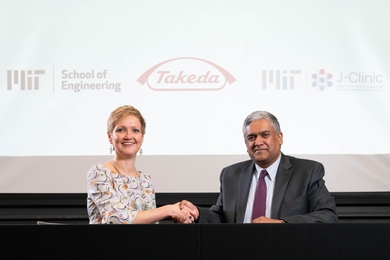
A key part of J-Clinic, the MIT-Takeda Program will create educational opportunities and support cutting-edge research to positively impact human health.
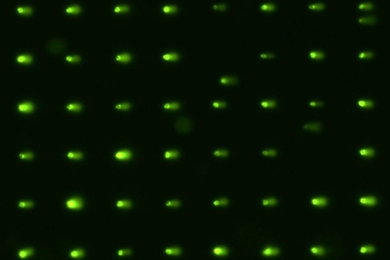
Using specialized liver cells, a new test can quickly detect potentially cancer-causing DNA damage.

Talya Klinger and Steven Truong will begin graduate studies in the UK next fall.
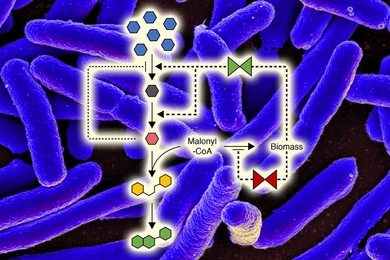
Chemical engineers program bacteria to switch between different metabolic pathways, boosting their yield of desirable products.