
Good medicine
Varesh Prasad, an MIT graduate student in health sciences and technology, is creating a multidisciplinary future in health care.
Varesh Prasad, an MIT graduate student in health sciences and technology, is creating a multidisciplinary future in health care.

Prestigious honor society announces 213 new members this year.

Chemotherapy delivered directly to tumors may slow the disease.

Students, researchers, and alumni honored in the 2016 Forbes 30 Under 30 lists showcasing America’s most important young entrepreneurs, thinkers, and leaders.
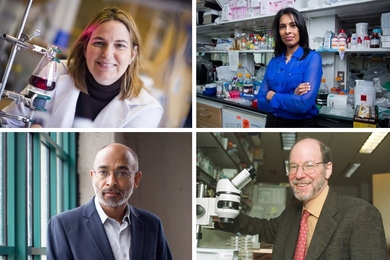
Belcher, Bhatia, Brown, and Horvitz recognized for demonstrating a prolific spirit of innovation and invention resulting in a tangible impact on society.
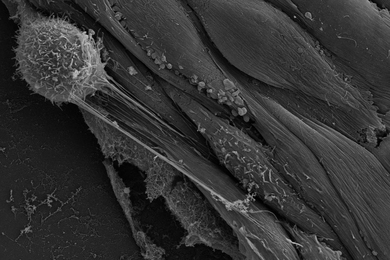
Study offers new targets for drugs that may prevent cancer from spreading.

Elazer Edelman’s multidisciplinary teams bring innovation to cardiovascular health worldwide.

Scientists exploit gene therapy to shrink tumors in mice with an aggressive form of breast cancer.

Jeff Karp’s diverse multidisciplinary team brings novel solutions to a wide array of health challenges.
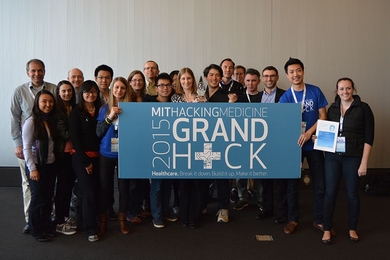
With MIT Hacking Medicine, brilliant minds converge at MIT to contribute to design thinking for health care.
New research suggests ways to reduce the likelihood that individuals and groups will become infected with influenza.

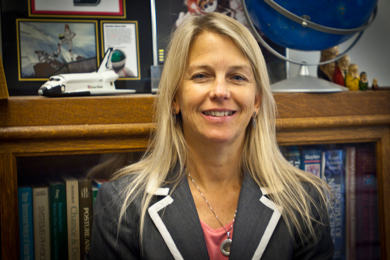
MIT aerospace and systems engineer will assume agency’s No. 2 post upon President Obama's signing.
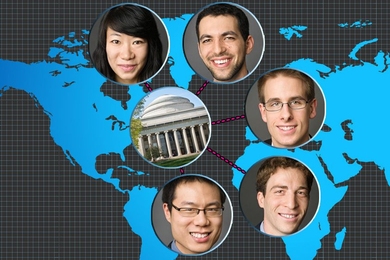
Recipients, all immigrants or children of immigrants, win $90,000 apiece to support graduate studies.

In middle-schoolers, neuroscientists find differences in brain structures where knowledge is stored.