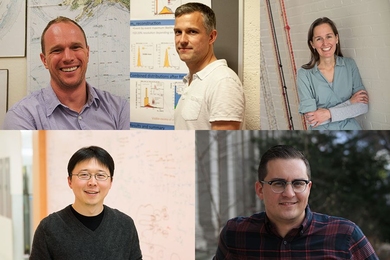
Eboney Hearn '01 named director of MIT Office of Engineering Outreach Programs
Chemical engineering alumna with deep knowledge of the Institute will lead hallmark diversity program.
Chemical engineering alumna with deep knowledge of the Institute will lead hallmark diversity program.
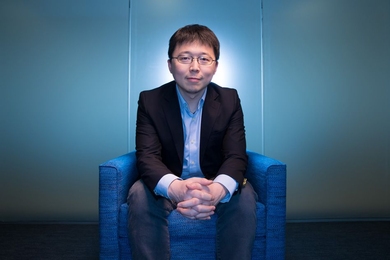
Broad Institute/MIT scientist among three honored for CRISPR contributions.
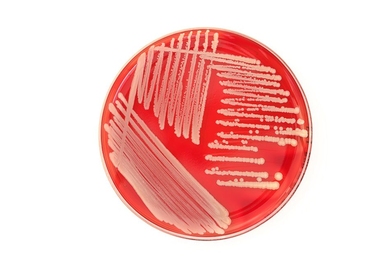
Scientists program C2c2, discovered in bacteria as a viral defense mechanism, to manipulate cellular RNA.
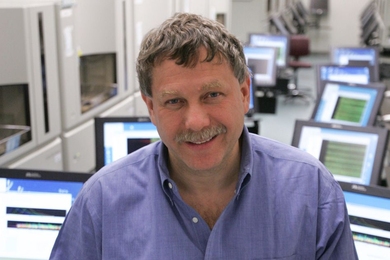
Biologist honored for his scientific leadership, pioneering work in genomics, and inspiring teaching.
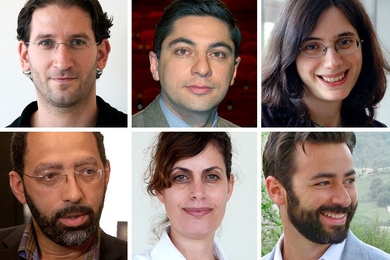
In step toward personalized medicine, researchers are using single-cell analysis to unravel cancer’s secrets.
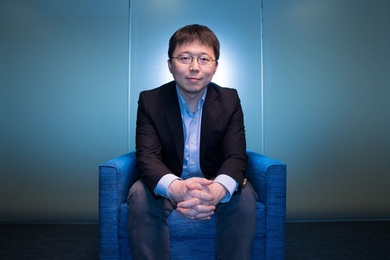
Broad/MIT scientist among five honored as pioneers of CRISPR-Cas9 system.
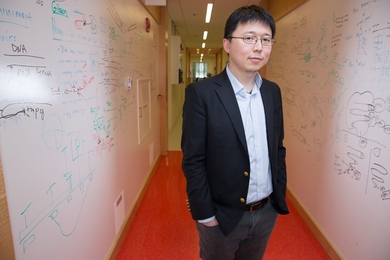
Genome-editing pioneer Feng Zhang hopes his work will shed light on neurological disorders.
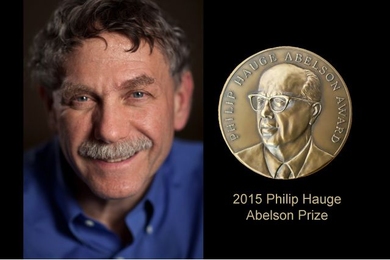
Professor and director of the Broad Institute honored by the American Association for the Advancement of Science for outstanding contributions to science and society.
Startup develops more cost-effective test for assessing how cells respond to chemicals.
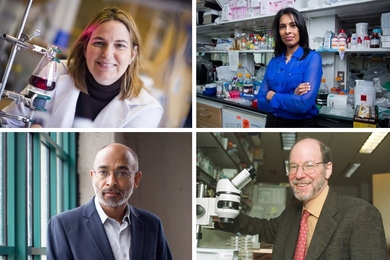
Belcher, Bhatia, Brown, and Horvitz recognized for demonstrating a prolific spirit of innovation and invention resulting in a tangible impact on society.
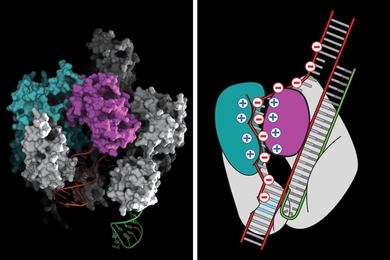
Team re-engineers system to dramatically cut down on editing errors; improvements advance future human applications.
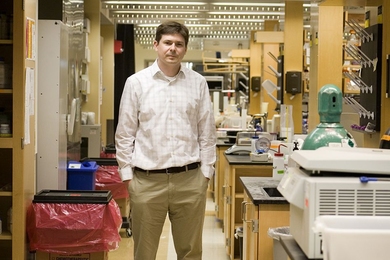
With a new DARPA contract, biological engineer Christopher Voigt aims to harness the power of living cells.