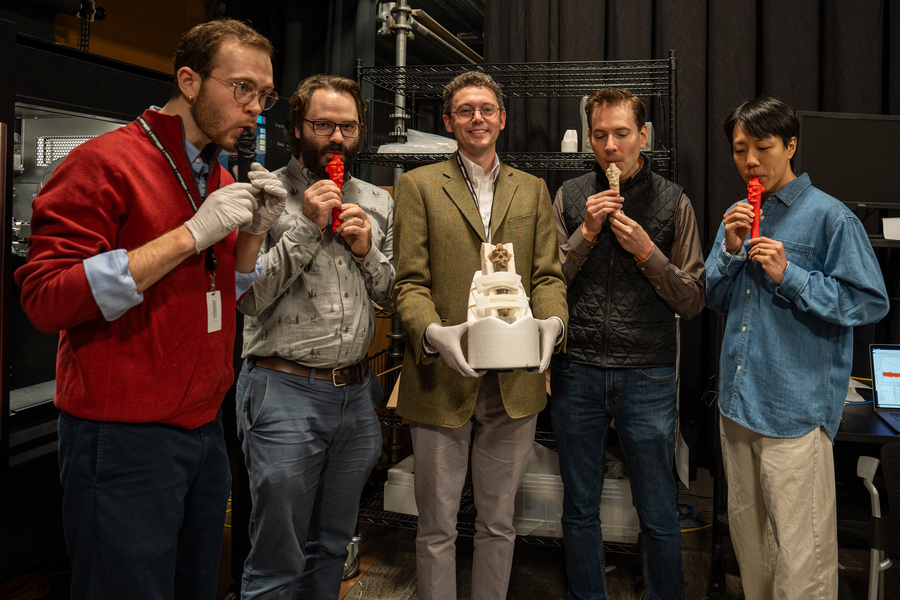
What if there were a way to create accurate replicas of ancient and historical instruments that could be played and heard?
In late 2024, senior MIT postdoc Benjamin Sabatini wrote MIT Professor Eran Egozy to ask just that, and about a collaborative research project between the Center for Materials Research in Archeology and Ethnology (CMRAE) and the MIT School of Humanities, Arts, and Social Sciences (SHASS) to CT scan, chemically and structurally characterize, and produce replicas of the ancient and historical musical instruments housed at the Museum of Fine Arts, Boston (MFA).
He was soon introduced to Mark Rau, a newly hired MIT professor in music technology and electrical engineering. Sharing similar interests, the two together contacted Jared Katz, the Pappalardo Curator of Musical Instruments at the MFA, to propose a cross-institutional project. Rau, an avid museum-goer, particularly of musical instrument collections, has always wanted to hear the instruments on display, commenting that “my biggest qualm is often there are no accompanying audio examples. I want to hear these instruments; I want to play these instruments.”
Katz, fortuitously, specializes in ancient musical practices and has developed a technique for 3D scanning and printing playable replicas of ancient instruments for his research. He had long dreamed of having access to a CT scanner to better understand how ancient instruments were constructed. The MFA was also an ideal institution for the project, since, according to Katz, the MFA’s musical instrument collection began in 1917 and has since grown to just over 1,450 instruments from six continents, with the earliest dating to approximately 1550 BCE.
Rau and Sabatini, soon after, applied to and were funded by the MIT Human Insight Collaborative (MITHIC) with Katz's support. The team of five, including Nate Steele, program associate in the MFA’s Department of Musical Instruments and MIT postdoc Jin Woo Lee, now meets regularly at the MFA to scan and acoustically measure the instruments.
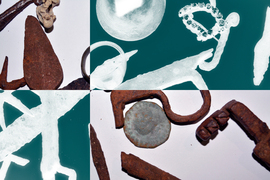
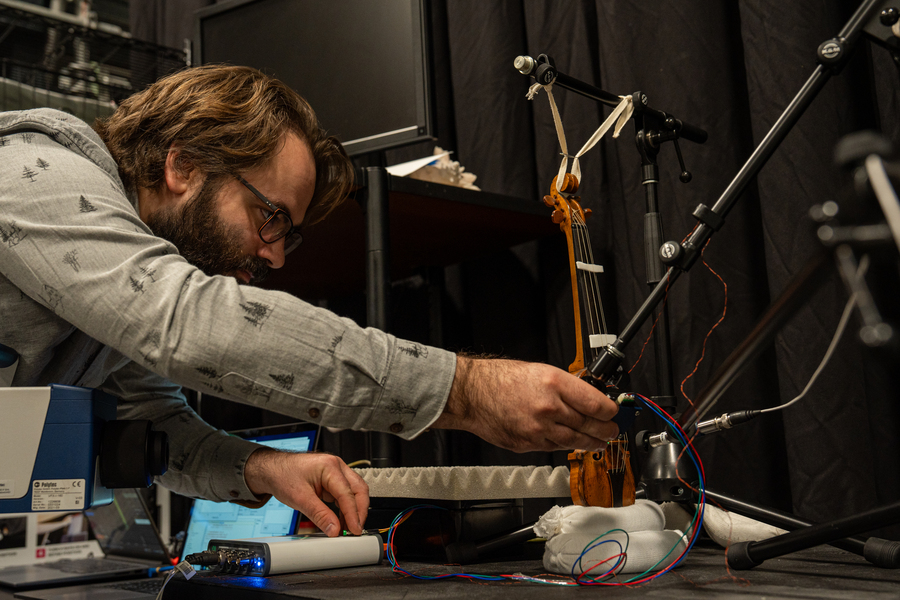
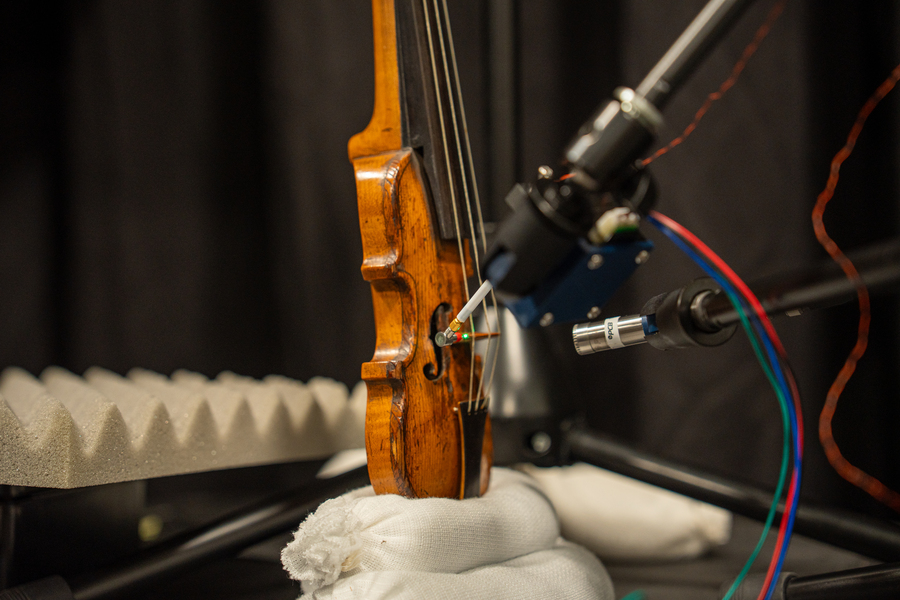
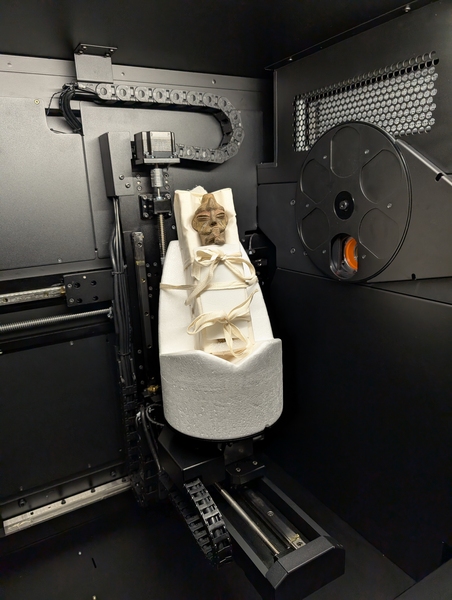
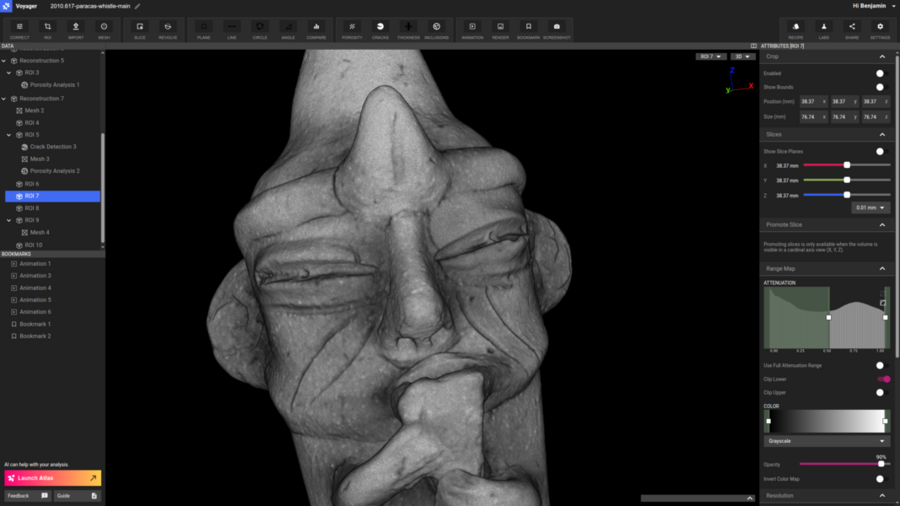
Using a CT scanner from Lumafield, a company founded by MIT alumni, the team measures both internal and external dimensions. When combined with non-destructive vibration and acoustic testing and numerical simulations, these measurements are used to digitally replicate the instruments’ sound accurately.
“For example, if we’re trying to recreate a violin, we can use an impact hammer — a very small hammer with a transducer in it — so we’re imparting a known force signal into the instrument, and then measure the resulting [surface] vibrations with a laser Doppler vibrometer,” says Rau.
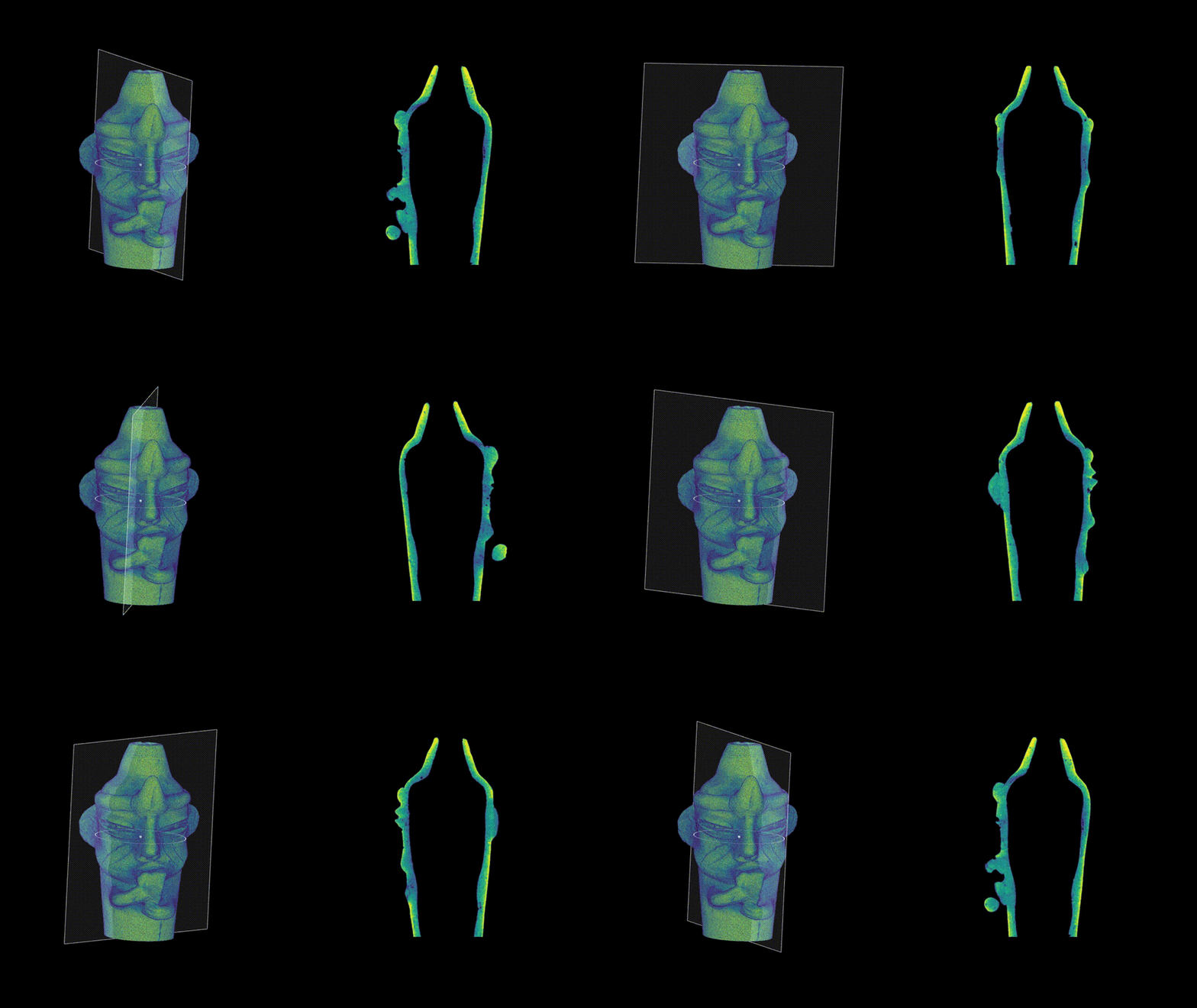
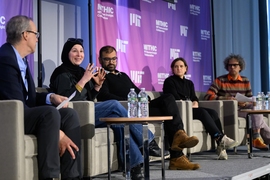
The team then uses 3D-printed copies of the instruments to create plaster mold negatives, which are cast into using slip, such as with the Paracas whistle, a ceramic artifact from Peru dating from 600-175 BCE, to replicate the instruments physically. The team demonstrated a playable replica at the MITHIC Annual Event in November. They also intend to build replicas of wooden instruments using old-growth wood in collaboration with local luthiers.
Sabatini, a member of CMRAE, sees the humanistic implications of the project and the importance of studying the instruments from a materials and archaeological perspective, which is to explore and understand the cultures that were involved in their production, stating that “[from our] perspective, we want to understand the people who made these instruments through both the materials that they’re made of, but also the sound that they have.”
With his team of Undergraduate Research Opportunities Program (UROP) students, including Irene Dong and Mouhammad Seck, Sabatini reproduced several ancient and historical clay instruments in the CMRAE archaeology lab, including the Paracas whistle, which was showcased at the MITHIC event.
So far, the team has scanned approximately 30 instruments from the MFA’s collection, with the goal of scanning at least 100 instruments over the duration of the project, documenting them, and supporting future study. The data from the scans are used to reconstruct the instruments, both physically and in software, matching their physical form and sound.
“They’re both visually beautiful and striking objects, but they are meant to be heard,” Katz says. Further stating that his “hope for this research is to provide us with a way to protect the original instrument while still allowing them to be heard and experienced in the way they were intended to be experienced.”

Katz also sees potential for outreach and community engagement through these playable replicas, which is a goal written into the project’s proposal, further stating that “[i]t shows how powerful it can be when art and science come together to create new understandings and to help us reactivate these instruments in exciting ways.”
Students have also been drawn to the project, including Victoria Pham, a second-year undergraduate in materials science and engineering, who is working with Sabatini as a UROP student. Pham was “drawn to this project because I love history,” she says. “I love wandering through the halls of the MFA and immersing myself in the descriptions of paintings and artifacts. I find learning about ancient peoples to be fascinating, especially in how their legacy affects us today.”
Her work involves finite element modeling of a Veracruz poly-glabular flute, dating to 500-900 CE, to investigate its acoustics non-destructively. She notes that “[m]y work is fulfilling because I was able to learn new software and problem-solve to improve my model, which was very satisfying.”
Pham thinks that “contributing to the new, budding field of music technology scratches an itch in my brain, and I hope that my work inspires others to get interested in archaeology, material science, or music technology.”
Alexander Mazurenko, a second-year undergraduate majoring in music and mathematics, has also been working on the project. He began last summer and continued during this year's Independent Activities Period in January.
Mazurenko notes that his involvement in this project has furthered his interdisciplinary education at MIT, commenting that “[t]he opportunity to participate in this UROP with Professor Rau was the perfect chance to begin to work in the intersection of my passions.” His work, and that of Pham, will be presented at upcoming conferences, and are expected to produce academic papers under the guidance of Sabatini and Rau.