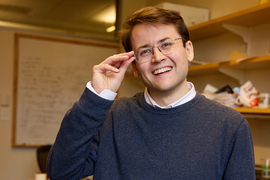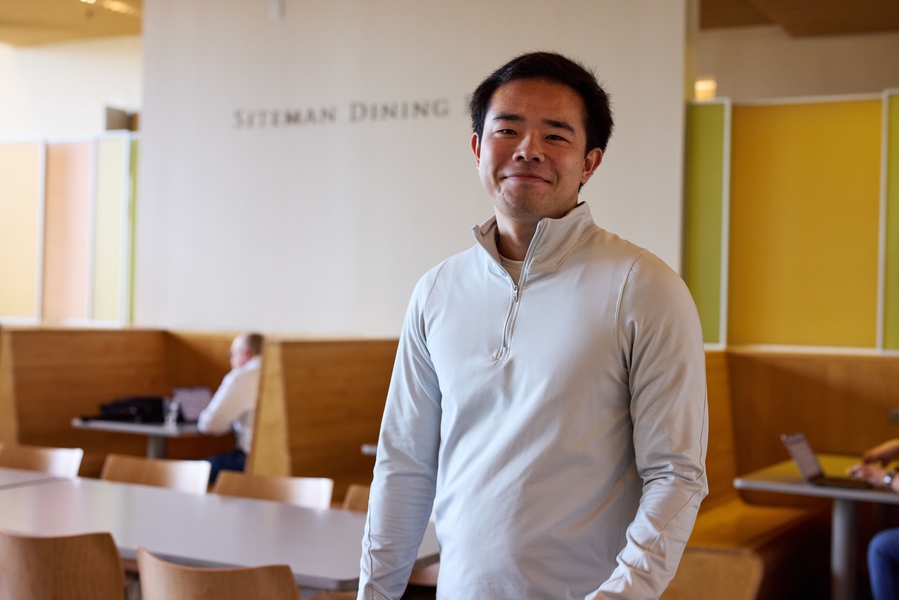
Senior MBA student Patrick Yeung came to MIT Sloan School of Management wanting to be surrounded by a community of builders.
“I come from a consulting background, which has its own strengths and gives you a specific toolkit, but I felt like I was not very technical, and so I wanted to be surrounded and inspired by people who had that knowledge and experience,” he says.
“MIT Sloan’s Sustainability Initiative provides a great platform to help a generalist like myself become more specialized in this space, whether it be the Sustainability lunch series that they run every Thursday, the annual conference that gets organized, or the class catalog that aligns with the Sustainability Certificate.”
Yeung eventually hopes to join a climate tech scale-up to help formalize the business and scale, using what he’s learned at MIT Sloan to make a real impact.
“I've come to appreciate the systems thinking approach to sustainability that MIT Sloan has, especially in the context of the tech and lab-scale tech spinout ecosystem that MIT more broadly has. The technology is obviously an important piece of both climate mitigation and adaptation, but we will also need other techno-economic regime changes to be able to truly change our planet for the better — that takes policy and legal changes, that takes leadership and courage, and ultimately it takes a willingness to fail, over and over, in order to iterate.”
The following photo gallery provides a snapshot of what a typical day for Yeung has been like as an MIT student.
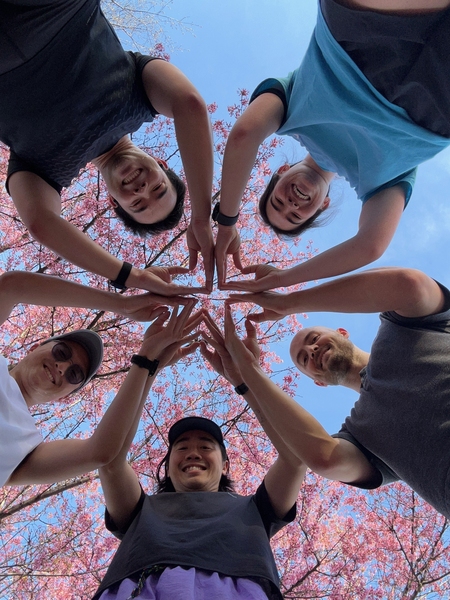
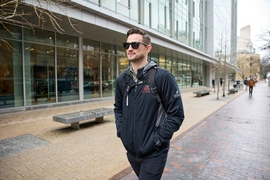
I start my morning with the MIT Sloan Runners Club, colloquially known as the Sloan and Steady Run Club. We meet on campus by the river.
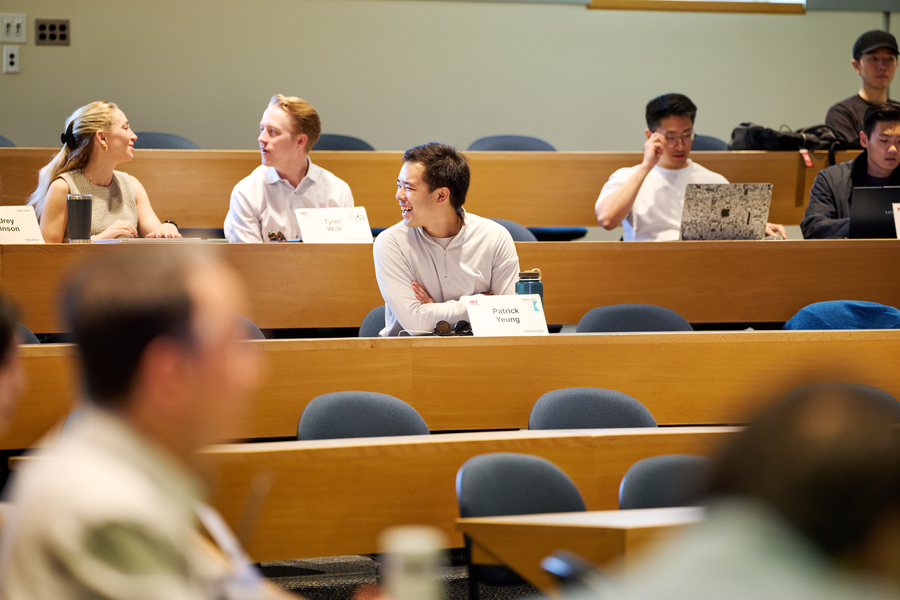
My first class of the day is ASEAN lab, which is part of MIT Sloan’s Action Learning program and focuses on solving complex management challenges facing companies operating in Southeast Asia.
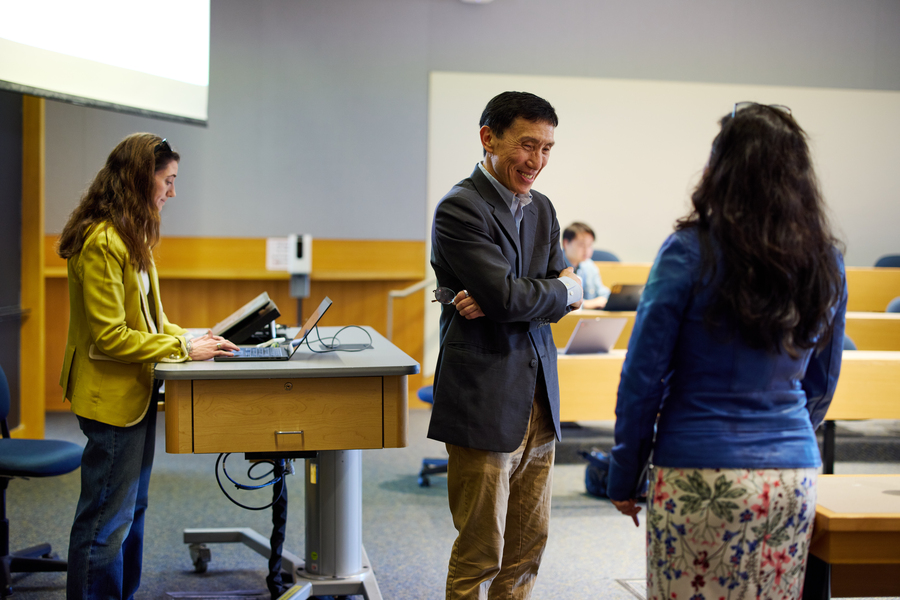
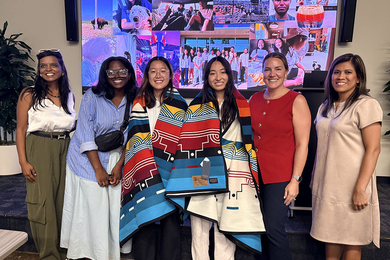
Along with Rachel Card, Professor Yasheng Huang (center) teaches this class. He founded and runs China Lab, ASEAN Lab, and India Lab, which have provided low-cost consulting services to hundreds of small and medium enterprises in these countries.
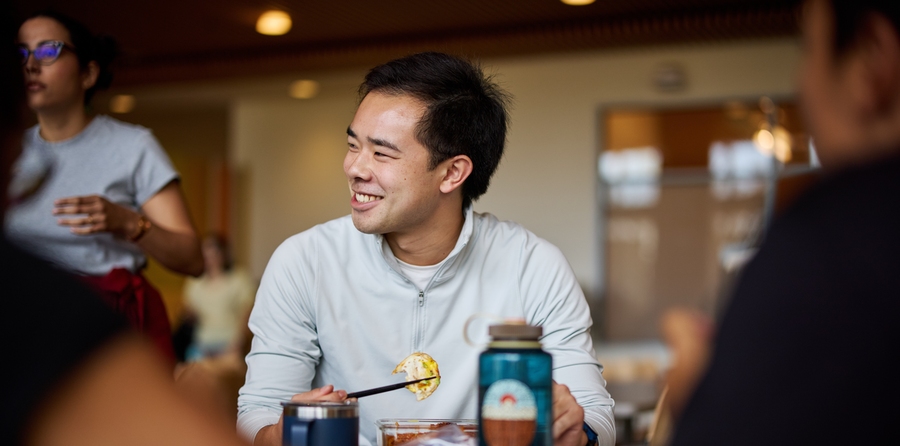
Next, I grab lunch at the cafe on campus. MIT Sloan Cafe — or Slafe, as we affectionately call it — is a great place to stop for food or to run into friends. It’s also one of my favorite places to just sit and think. Whether it’s in the armchairs chatting with a friend or in the booths with my headphones in, the Slafe is the place where you’re most likely to run into me.
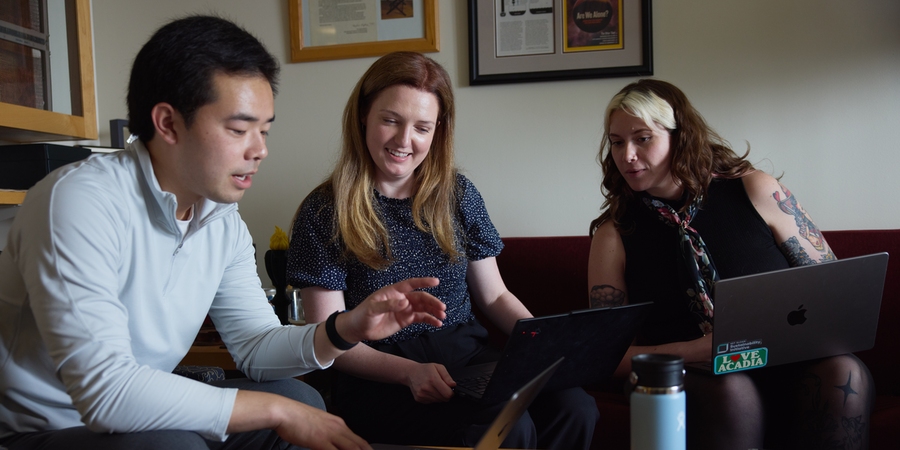
My next meeting is about the ClimateCAP MBA Summit. I’m the chief of staff, so I’ve been working to organize this conference focused on climate and sustainability for 500-plus MBA students from about 50 partner schools with the Sustainability Initiative team, as well as a small but mighty team of MBA students all passionate about sustainability.
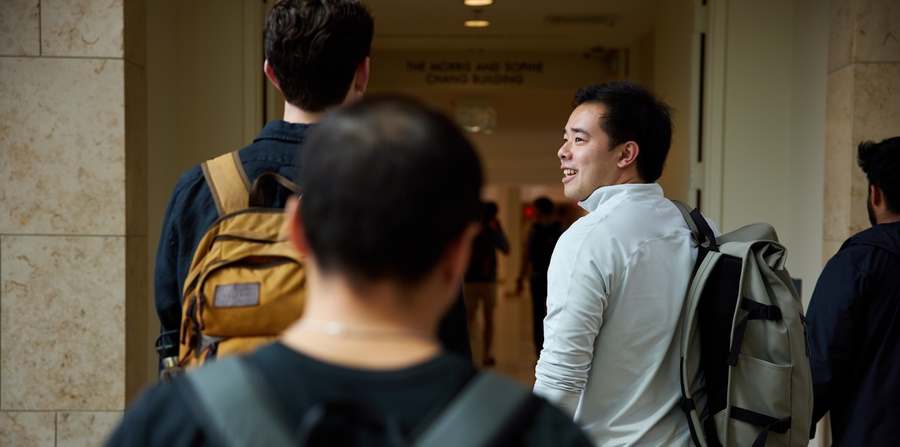
I head to a meeting with SWITCH Maritime, which I’m working with as part of another Action Learning class, Sustainability Lab. We’re helping them refine a market entry strategy, including identifying an ideal customer profile and practical go-to-market motions for their hydrogen fuel cell passenger ferry offering.
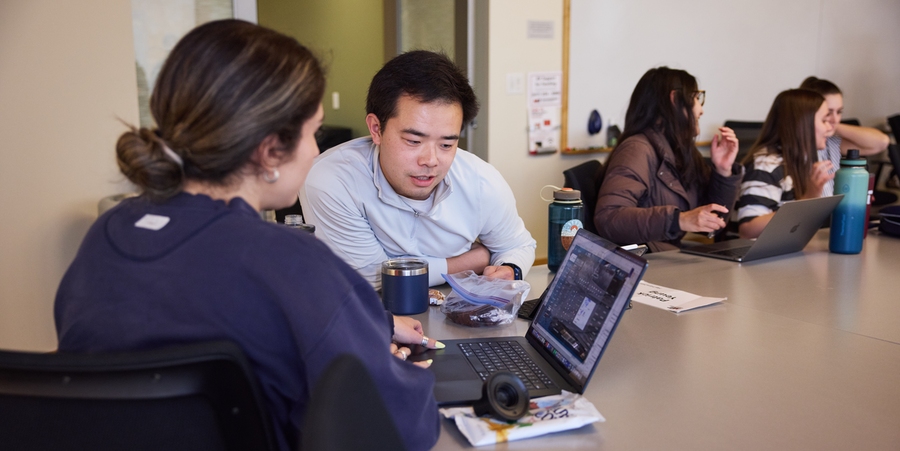
For my last class of the day, I have Sustainability Lab. Much of my sustainability work has been in the realm of community building, and Sustainability Lab both utilizes and expands that experience.
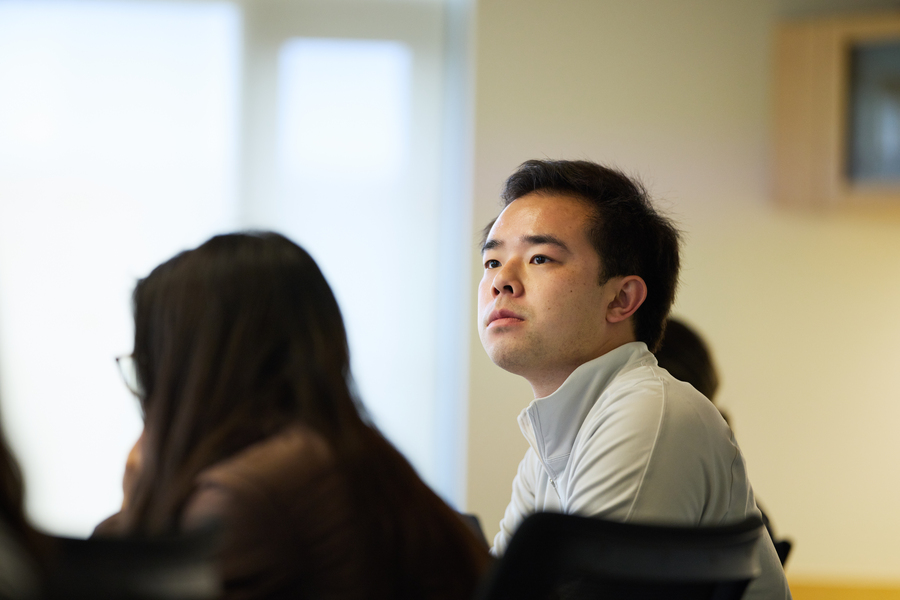
I find that the action learning labs are often a good way to get two birds with one stone and pursue both an academic interest while also pursuing a career interest.

Time to head home for the day! After busy days on campus, I always feel so energized by the things I’m working on. I’ll often grab dinner or drinks with friends or hang out at home with my three MIT Sloan roommates.