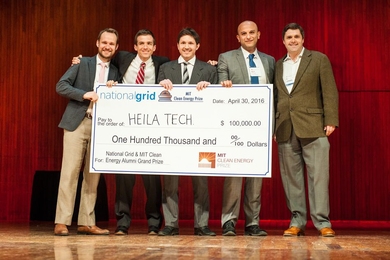
MIT team’s “brain” for microgrids wins Clean Energy Prize
Six teams split $225,000 in prizes at the annual competition that funds clean-energy ideas.
Six teams split $225,000 in prizes at the annual competition that funds clean-energy ideas.
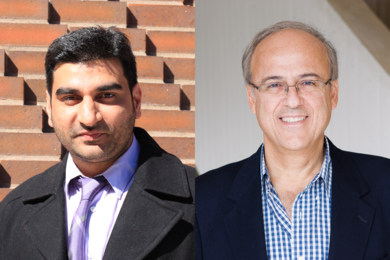
Research conducted by Kumar, along with a team led by Professor Greg Stephanopoulos, looks to the future of emissions reduction and recycling.

MIT’s Environment, Health and Safety Office gave out $5,000 in seed money on April 22 as part of its Green Lab contest.

Modular boxes that keep food shipments fresh win Rabobank-MIT Food and Agribusiness Innovation Prize.
Progress report underscores strong collaboration across campus to address climate change.

Oral Buyukozturk develops innovative designs and technologies for durable, sustainable physical infrastructure projects.

MIT study projects end-of-century climate under different scenarios.
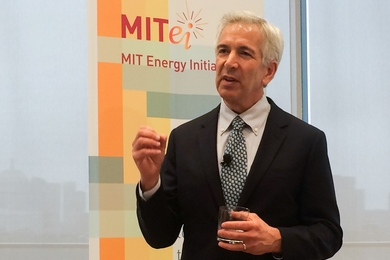
The Environmental Defense Fund's Fred Krupp speaks about the Paris Climate Agreement at MIT.
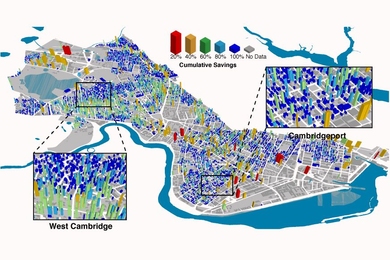
Retrofitting a small portion of buildings would have big impact on cities’ carbon emissions.
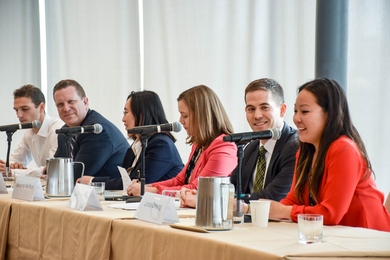
Sustainable transportation, grid modernization, building efficiency among topics at MIT Energy Initiative event with Department of Energy's David Danielson.

Program will feature advances in technologies at the nexus of food, water, and the environment.

Assistant professor studies how small differences in molecular structure alter behavior in unexpected ways for energy-related applications.
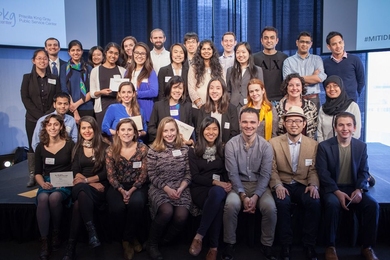
Twelve teams competing in social-entrepreneurship competition split $97,500 in cash prizes.
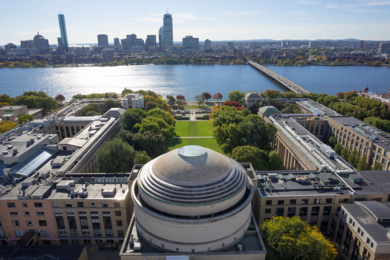
MIT President L. Rafael Reif responds to Congressional request for information.
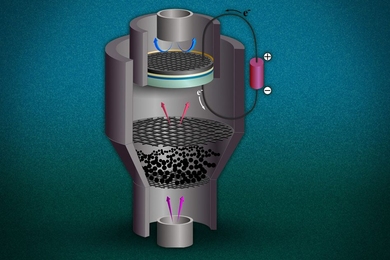
Combining gasification with fuel-cell technology could boost efficiency of coal-powered plants.