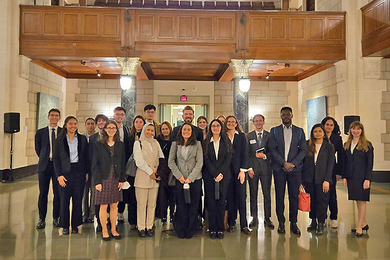
MIT’s Science Policy Initiative holds 15th annual Executive Visit Days
Students and postdocs traveled to Washington to learn about federal science and technology policymaking.
Students and postdocs traveled to Washington to learn about federal science and technology policymaking.

In a conversation with Rep. Jake Auchincloss, Bhattacharya focused on the agency’s policy goals and funding practices.
The Institute will commit up to $1 million in new funding to increase supply of UROPs.
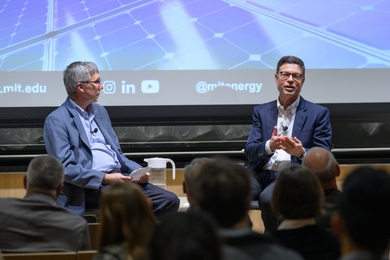
At MITEI’s Fall Colloquium, General Motors’ battery development expert emphasized how affordability, accessibility, and commercialization can position the US as a leader in battery tech.
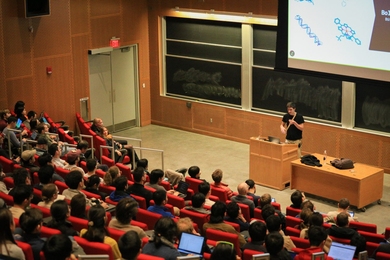
BoltzGen generates protein binders for any biological target from scratch, expanding AI’s reach from understanding biology toward engineering it.
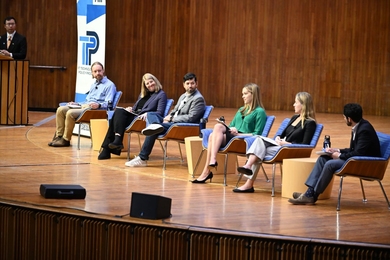
The MIT Technology and Policy Program marked 50 years with a symposium exploring its history of education, research, and impact — while looking ahead to technology policy issues of the future.
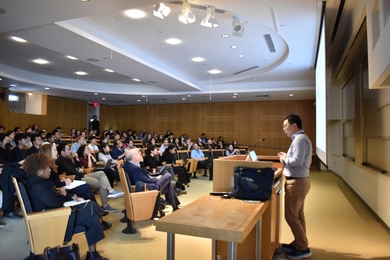
Seven speakers from around the country convened at MIT to describe some of the latest research on the neural mechanisms that we need to survive.

Industry leaders agree collaboration is key to advancing critical technologies.
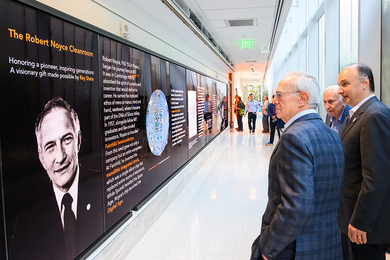
MIT.nano cleanroom complex named after Robert Noyce PhD ’53 at the 2025 Nano Summit.
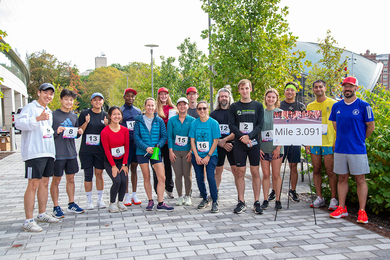
Quick thinking and good spirit marked the Department of Materials Science and Engineering’s first-ever community run.

Organized by the MIT Museum, the 2025 Cambridge Science Carnival included activities with air cannons, sea bots, and electron microscopes.

Incoming students tested the climate simulation tool En-ROADS with the goal of creating “a healthier, safer, more prosperous, and more sustainable world.”
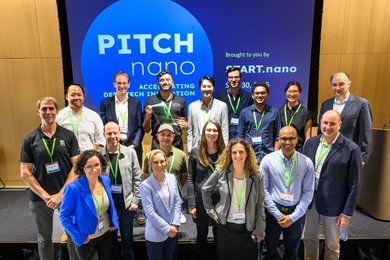
Twelve START.nano companies competed for the grand prize of nanoBucks to be used at MIT.nano’s facilities.

Receiving the Robert A. Muh award, the technologist and author heralded a bright future for AI, breakthroughs in longevity, and more.
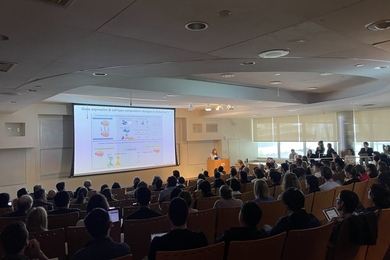
Speakers at MIT’s Aging Brain Initiative symposium described how immune system factors during aging contribute to Alzheimer’s, Parkinson’s and other conditions. The field is leveraging that knowledge to develop new therapies.