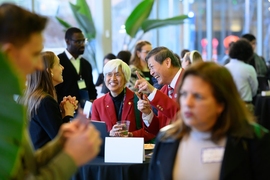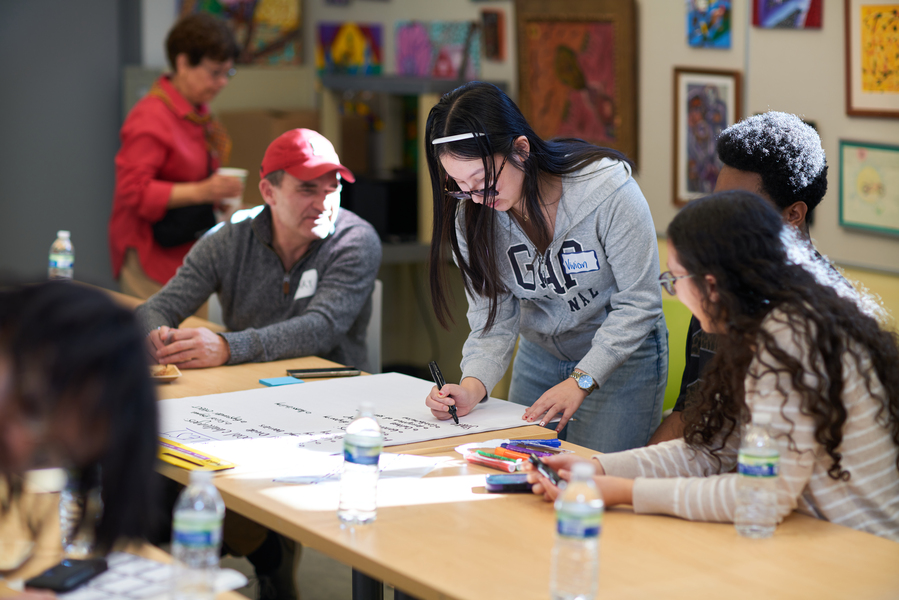
On Nov. 8, the MIT Priscilla King Gray Center for Social Impact (MIT PKG Center) collaborated with the MIT Club of Princeton, New Jersey, and the Trenton Area Soup Kitchen (TASK) to prototype tech-driven interventions to the growing challenge of food insecurity in the Trenton, New Jersey region.
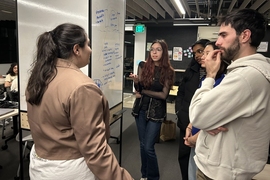
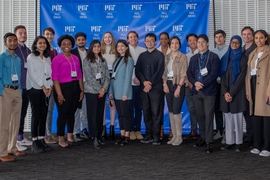
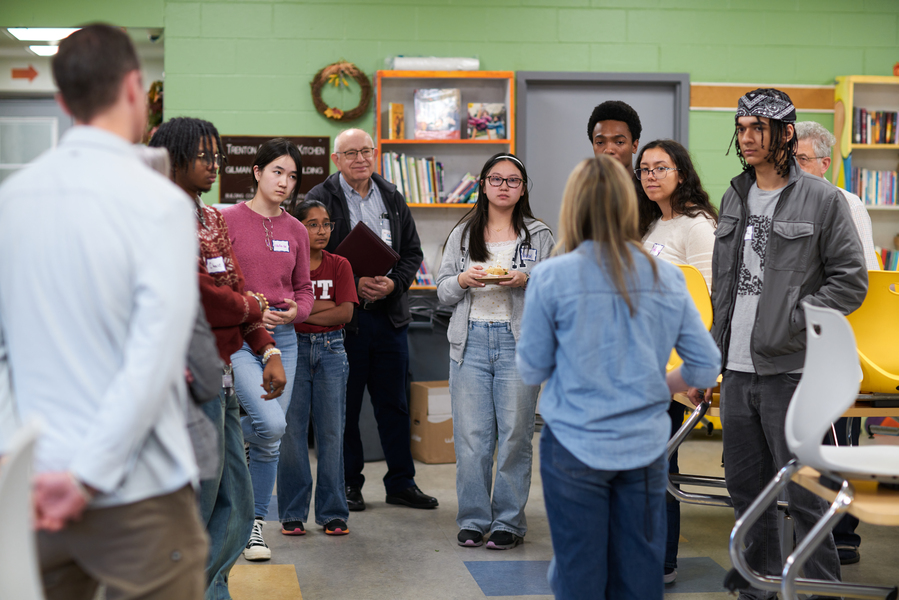
Twelve undergraduates traveled to Trenton for a one-day social impact hackathon, working in teams with alumni active in the MIT Club of Princeton to address technical challenges posed by TASK. These included predicting the number of daily meals based on historical data for an organization serving over 12,000 meals each week, and gathering real-time feedback from hundreds of patrons with limited access to technology.
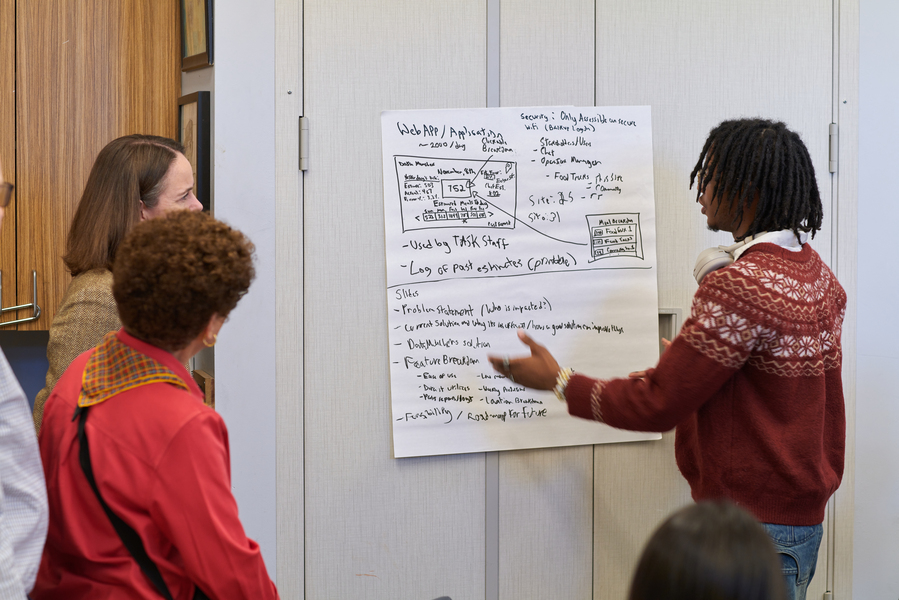
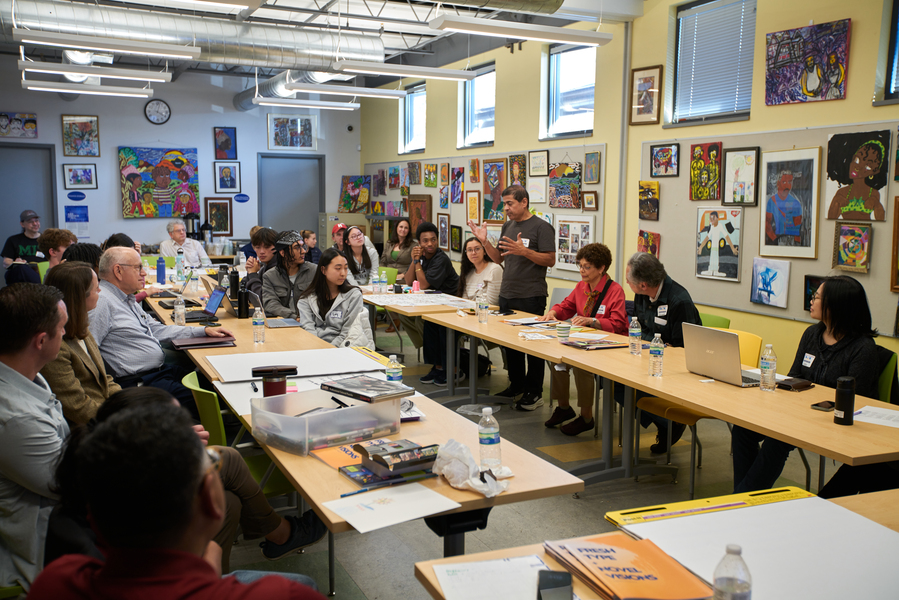
The day culminated in a pitch session judged by MIT alumni and TASK leadership. The winning solution, developed by a cross-generational team of MIT alumni and students, addressed one of TASK’s most pressing challenges with a blend of technical ingenuity and human-centered design. Drawing on TASK datasets and external data such as weather and holidays, the team proposed a predictive dashboard that impressed judges with its practical utility, enabling the kitchen to reduce waste and distribute the appropriate number of meals to varied locations. TASK also appreciated several elements of solutions proposed to gather real-time feedback from patrons, and plans to experiment with them.
“The last few weeks have shown how quickly the need for food can escalate in a place like Trenton, where so many people are living below or close to the federal poverty line,” says TASK CEO Amy Flynn. “The issues we are facing are complex and unprecedented, and the hackathon was an opportunity to think about our challenges, and their solutions, in modern and innovative ways. TASK is very excited to be partnering with MIT, the PKG Center for Social Impact, and the local MIT Club of Princeton for this event, particularly at this critical time.”
Students will implement the winning intervention through the PKG Center’s Social Impact Internship Program during MIT’s Independent Activities Period (IAP) in January 2026. Alumni from the MIT Club of Princeton will also serve as mentors to students during their internship.
Alumni connections
The PKG Center recently completed a new strategic plan, and heard through the process that alumni and students passionate about making a positive impact want more opportunities to interact with and learn from each other.
“A hackathon seemed like an ideal way to connect students and alumni, generating mentoring relationships while making a tangible impact,” says Alison Badgett, associate dean and director of the PKG Center. “We’re grateful to the MIT Club of Princeton and the Trenton Area Soup Kitchen for enabling us to pilot what we hope will be a regular event.”
The idea for a regional hackathon came from the Friends of the PKG Center, the center’s alumni advisory board, which grew 25 percent this year with the addition of several young alumni. Princeton-based alumni Eberhard Wunderlich SM ’75, PhD ’78 and Shahla Wunderlich PhD ’78 offered to help make the idea a reality by connecting PKG with local partners.
"We have been longtime friends of the PKG Center and have observed over the years that MIT students are uniquely positioned to make a real impact. We were eager to connect the PKG Center with the MIT Club of Princeton and TASK because we knew this collaboration would be meaningful not only for students, alumni, and families, but also for many people in need within our community," said the Wunderlichs. “It was a wonderful experience working with such talented students. We were happy to participate and look forward to the project enhancing the operation of TASK, which provides meals and develops skills for independence for those in need in Mercer County, New Jersey.”
A legacy of innovation and impact
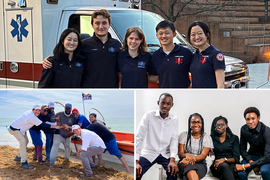
The hackathon was facilitated by Lauren Tyger, the PKG Center’s assistant dean for social innovation, who leads a growing suite of social innovation and entrepreneurship programming for the PKG Center. Tyger recruited the 12 undergraduate participants from PKG’s Social Innovation Exploration first-year pre-orientation program (FPOP), an intensive five-day hackathon exploring food insecurity through the lens of sustainability at MIT and in Cambridge, Massachusetts.
“For students, the regional alumni-student hackathon was an opportunity to implement what they learned through PKG’s FPOP to a real-world challenge with TASK,” says Tyger. “We hope students will not only be inspired to implement their winning interventions through an IAP internship, but also to explore social enterprise solutions to food insecurity through our IDEAS Social Innovation Incubator, now in its 25th year.”
With the success of this event, the PKG Center is exploring opportunities to host more alumni-student hackathons with regional MIT clubs, as a way to celebrate the 25th anniversary of the IDEAS Social Innovation Challenge, which has invested $1.3 million in nearly 300 social enterprises since its inception in 2001.
“Getting to work with TASK was amazing because it allowed me to put the skills I learned in PKG’s SIE FPOP to a real-world application that could help people,” says Vivian Dinh, a student who participated in the hackathon. “It was a great feeling to put together things that we learned in SIE like ideation strategies, interviewing skills, and prototyping into a product, and then see that TASK truly believed in our ideas. Overall, it was a very empowering experience, knowing that my skills and ideas could help a community.”