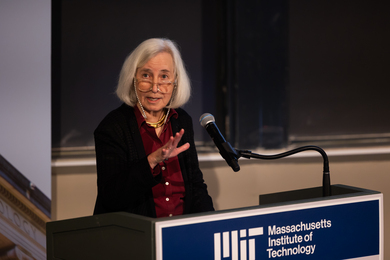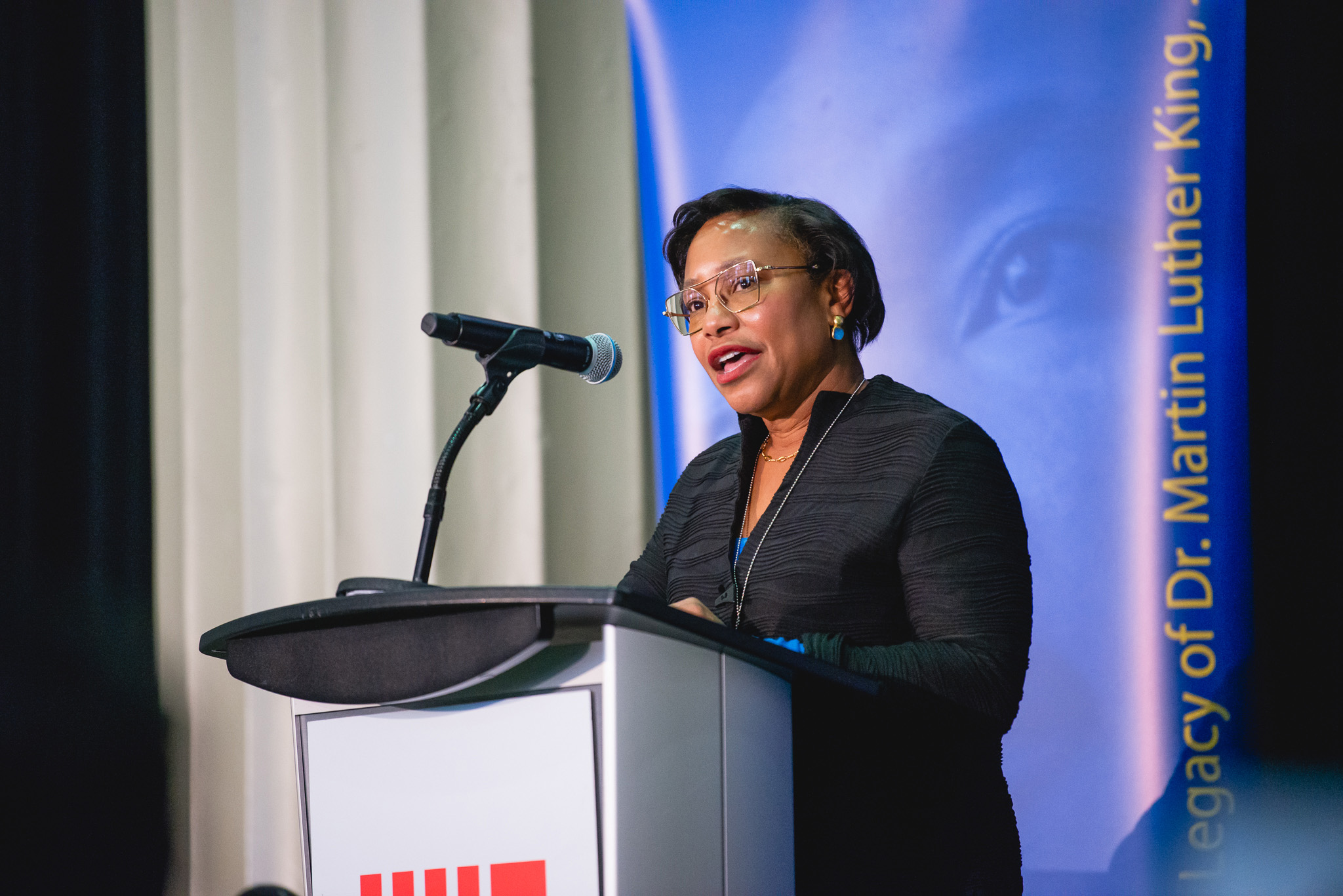
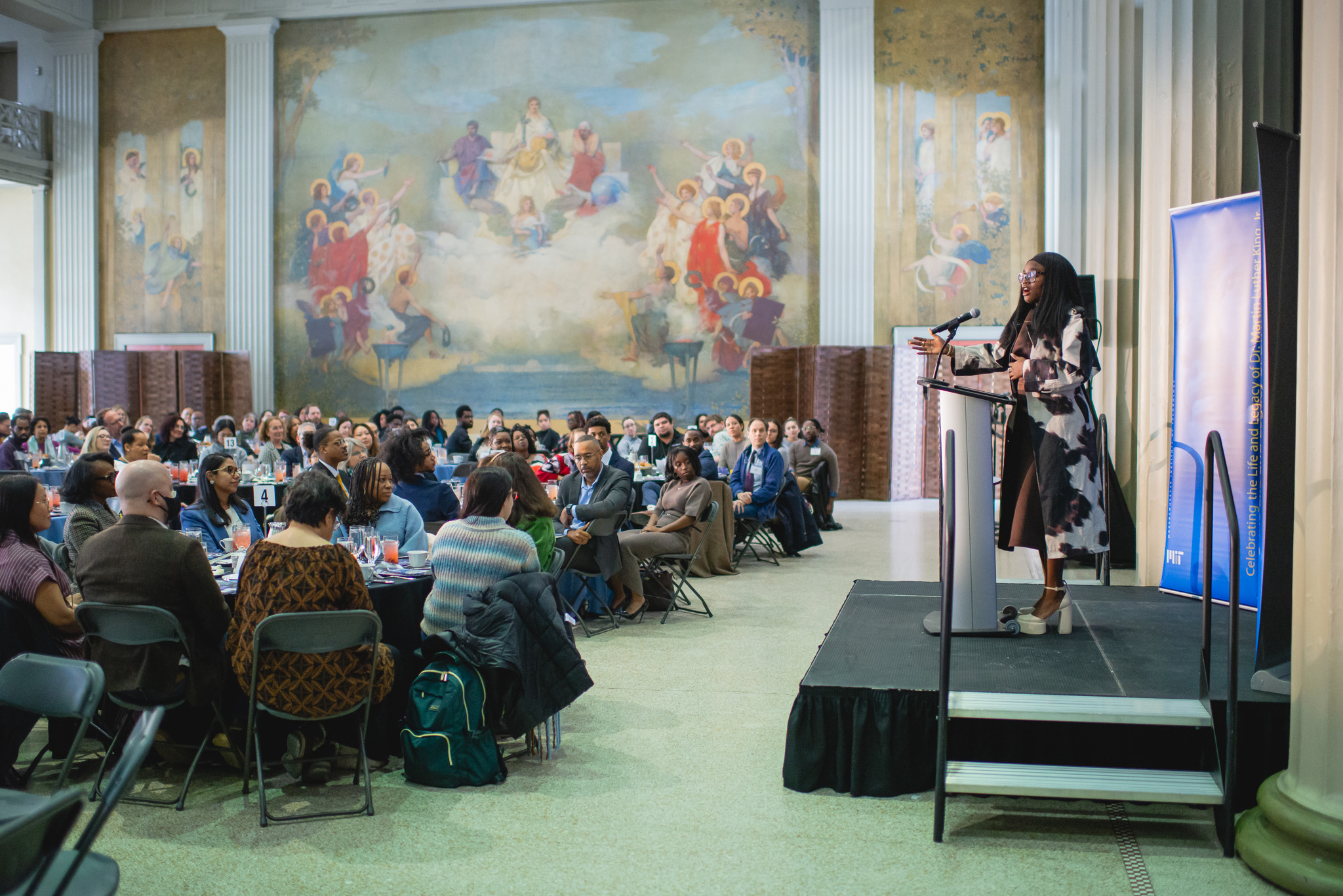
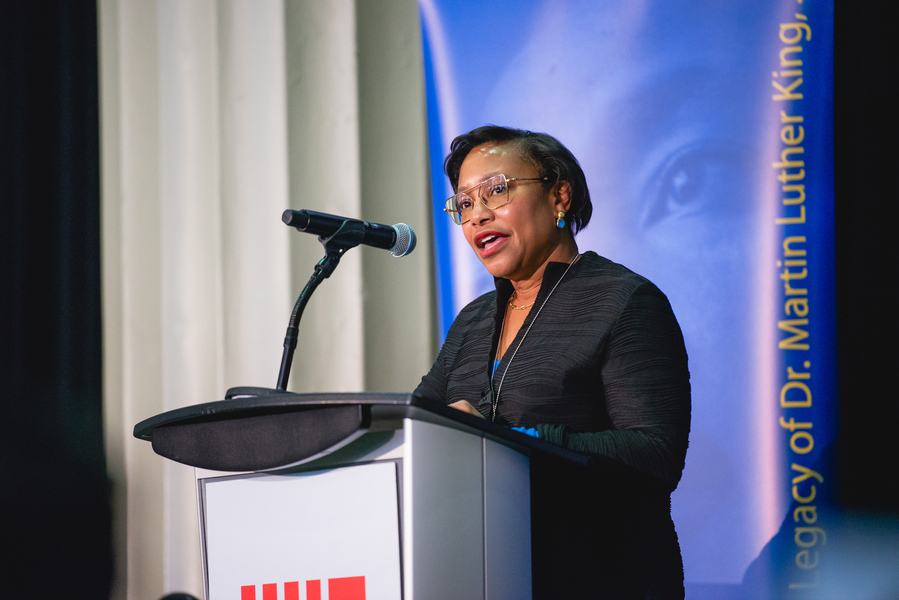
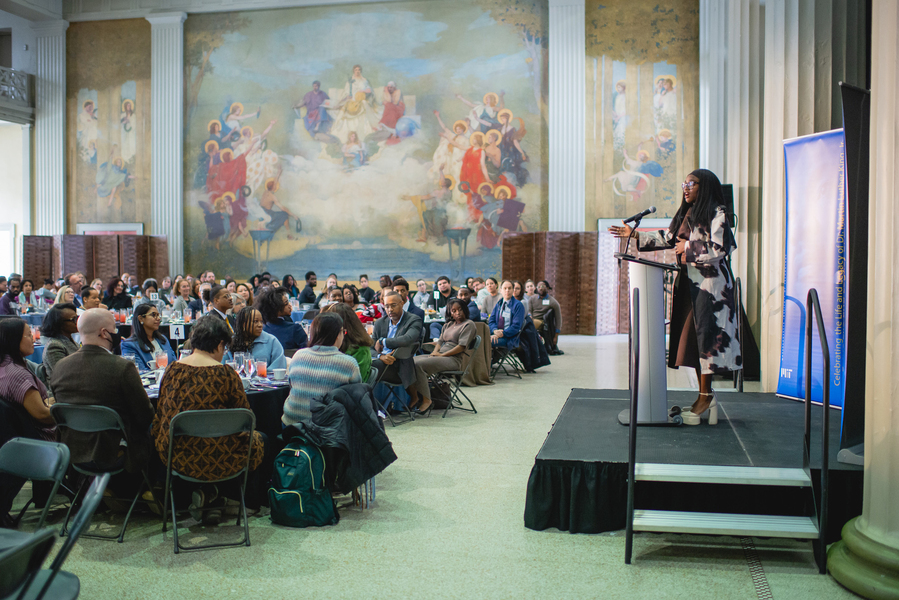
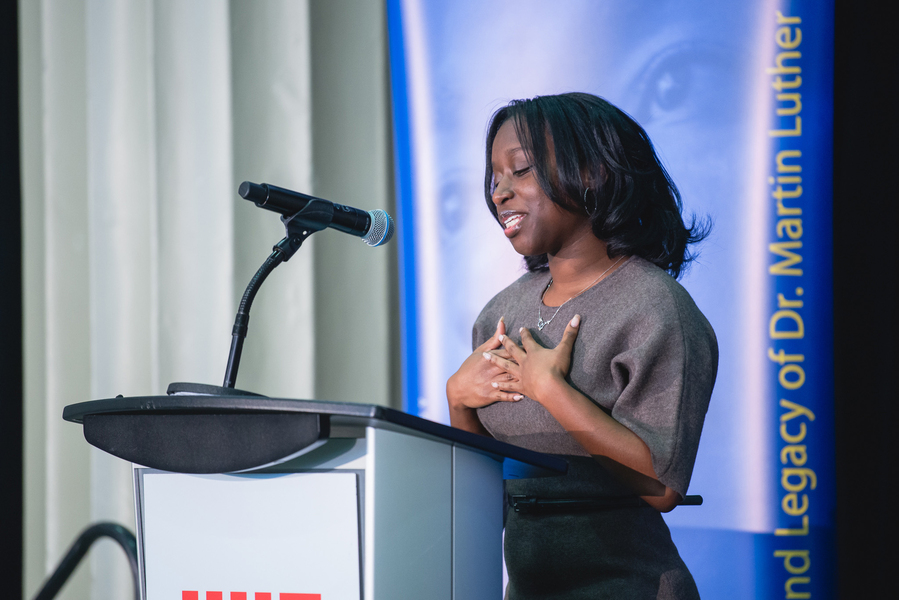
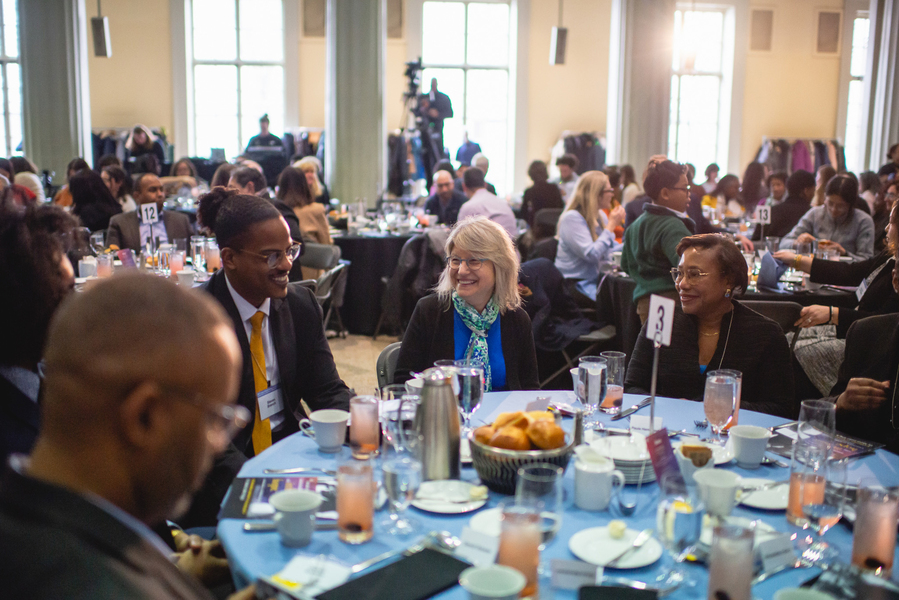
Dean of Engineering Paula Hammond ’84 PhD ’93 made a resounding call for the MIT community to “embrace endless hope” and “never stop looking forward,” in a keynote address at the Institute’s annual MLK Celebration on Wednesday, Feb. 11.
“We each have a role to play in contributing to our future, and we each must embrace endless hope and continuously renew our faith in ourselves to accomplish that dream,” Hammond said, to an audience of hundreds at the event.
She added: “Whether it is through caring for those in our community, teaching others, providing inspiration, leadership, or critical support to others in their moment of need, we provide support for one another on our journey … It is that future that will feed the optimism and faith that we need to move forward, to inspire and encourage, and to never stop looking forward.”
The MLK Celebration is an annual tribute to the life and legacy of Martin Luther King Jr., and is always thematically organized around a quotation of King’s. This year, that passage was, “We must accept finite disappointment, but never lose infinite hope.”
Hammond and multiple other speakers at the event organized their remarks around that idea, while weaving in personal reflections about the importance of community, family, and mentorship.
As Hammond noted, “We can lay the path toward a better, greater time with the steps that we take today even in the face of incredible disappointment, shock and disruption.” She added: “Principles founded in fear, ignorance, or injustice ultimately fail because they do not meet the needs of a growing and prosperous nation and world.”
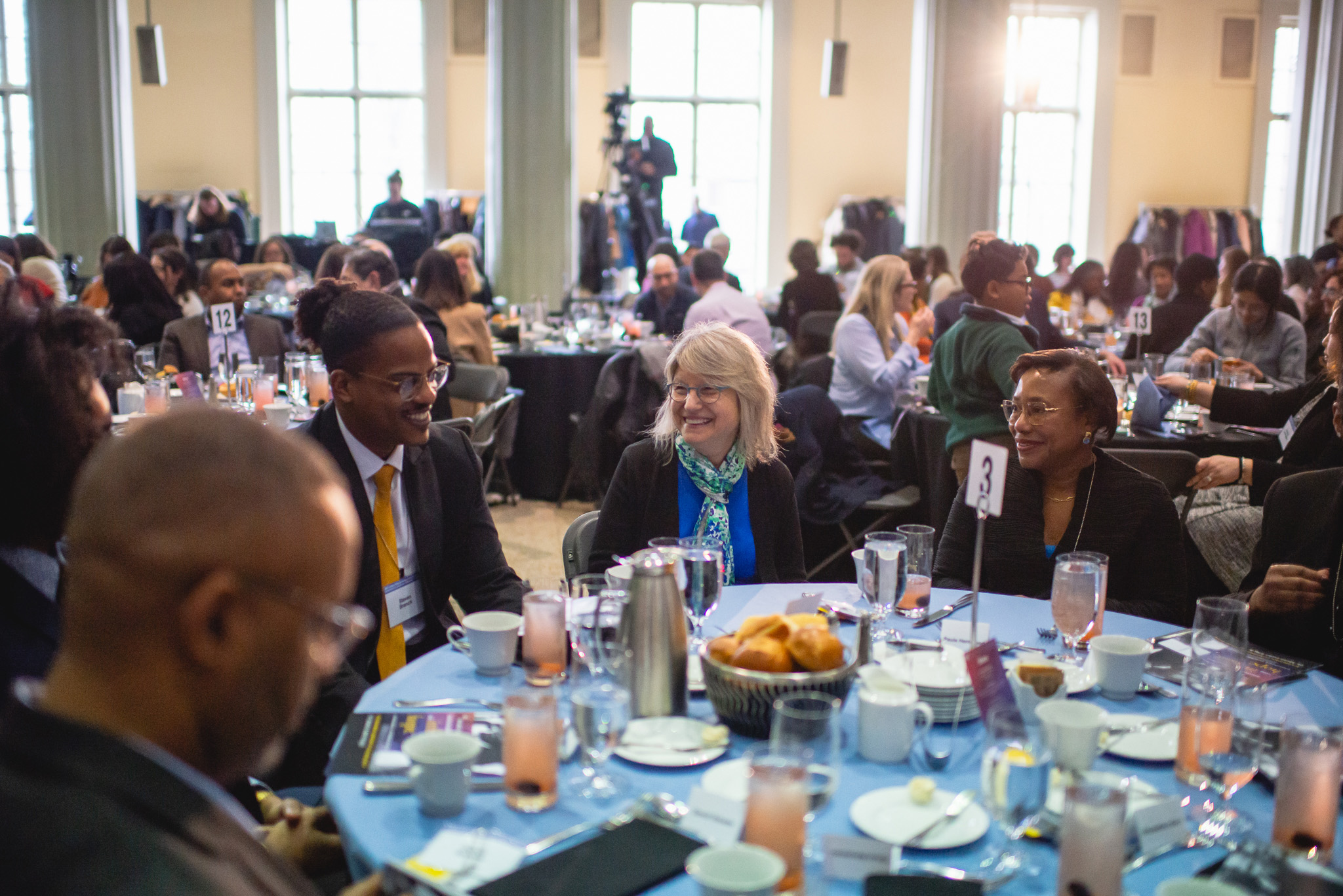
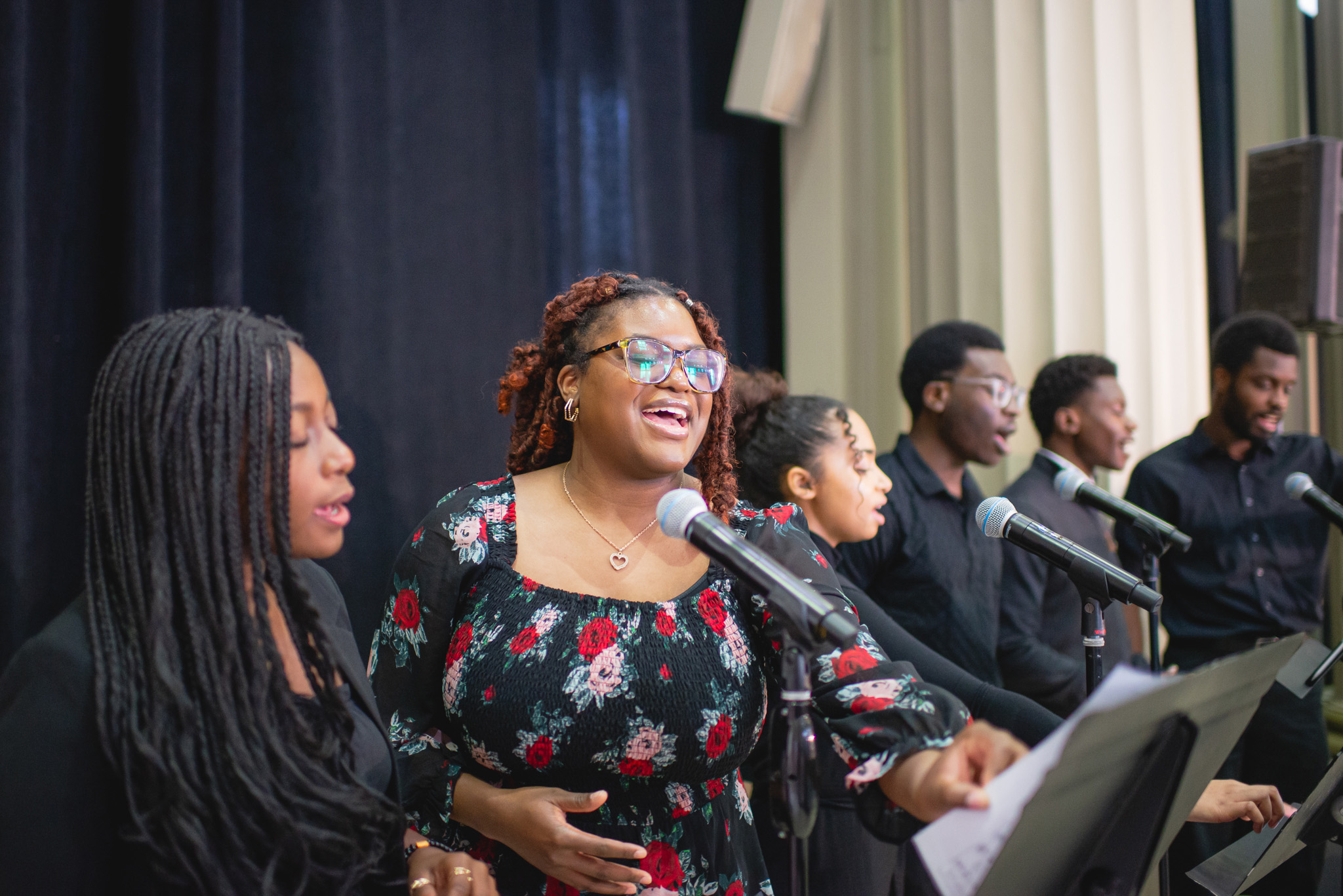
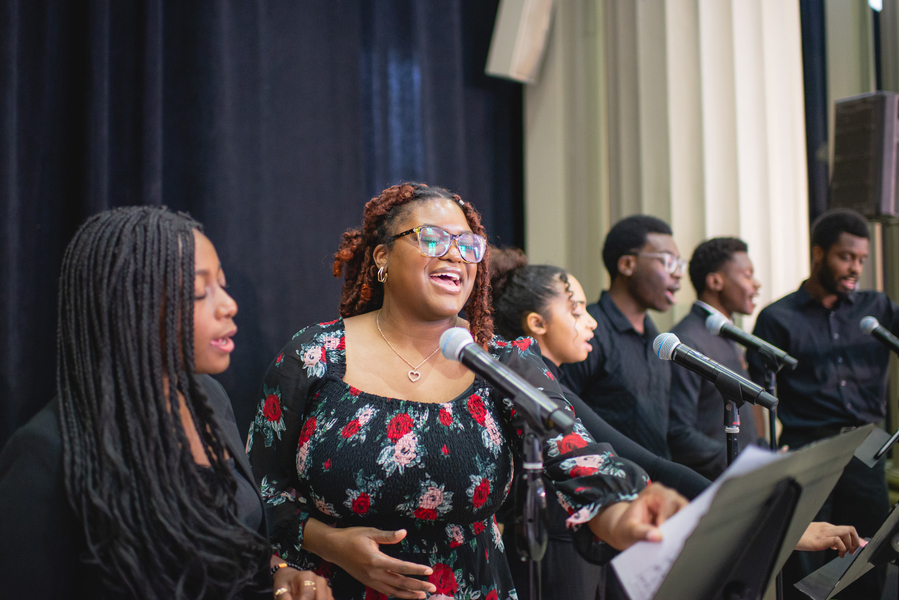
The event, which took place in MIT’s Walker Memorial (Building 50), featured remarks by students, staff, and campus leaders, as well as musical performances by the recently reconstituted MIT Gospel Choir. (Listen to one of those performances by clicking on the player at the end of this article.)
MIT President Sally A. Kornbluth provided introductory remarks, noting that this year’s event was occurring during “a time when feeling fractured, isolated, and pitted against each other feels exhaustingly routine. A time when it’s easy to feel discouraged.” As such, she added, “the solace we take from [coming together at this event] couldn’t be more relevant now.”
Kornbluth also offered laudatory thoughts about Hammond, a highly accomplished research scientist who has held numerous leadership roles at MIT and elsewhere. Hammond, a chemical engineer, was named dean of the MIT School of Engineering in December. Prior to that, she has served as vice provost for faculty, from 2023 to 2025, and head of the Department of Chemical Engineering, from 2015 to 2023. In honor of her accomplishments, Hammond was named an Institute Professor, MIT’s highest faculty honor. A member of MIT’s Koch Institute for Integrative Cancer Research, Hammond has developed polymers and nanoscale materials with multiple applications, including drug delivery, imaging, and even battery advances.
Hammond was awarded the National Medal of Technology and Innovation in 2024. That year she also received MIT’s Killian Award, for faculty achievement. And she has earned the rare distinction of having been elected to all three national academies — the National Academy of Engineering, the National Academy of Medicine, and the National Academy of Sciences.
“I’ve never met anyone who better represents MIT’s highest values and aspirations than Paula Hammond,” Kornbluth said, citing both Hammond’s record of academic excellence and Institute service.
Among other things, Kornbluth observed, “Paula has been a longtime champion of MIT’s culture of openness to people and ideas from everywhere. In fact, it’s hard to think of anyone more open to sharing what she knows — and more interested in hearing your point of view. And the respect she shows to everyone — no matter their job or background — is an example for us all.”
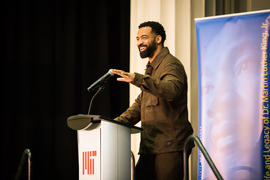
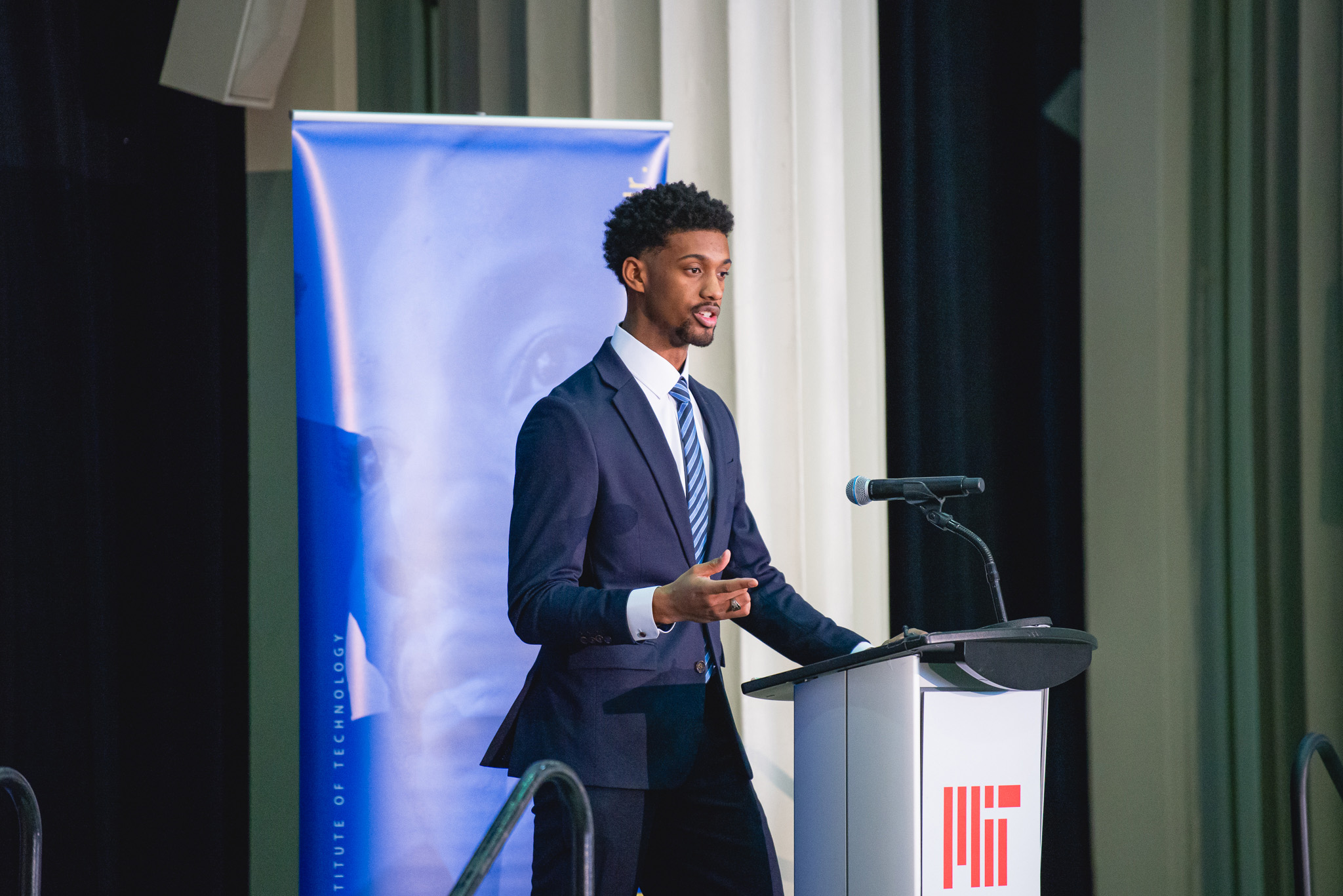
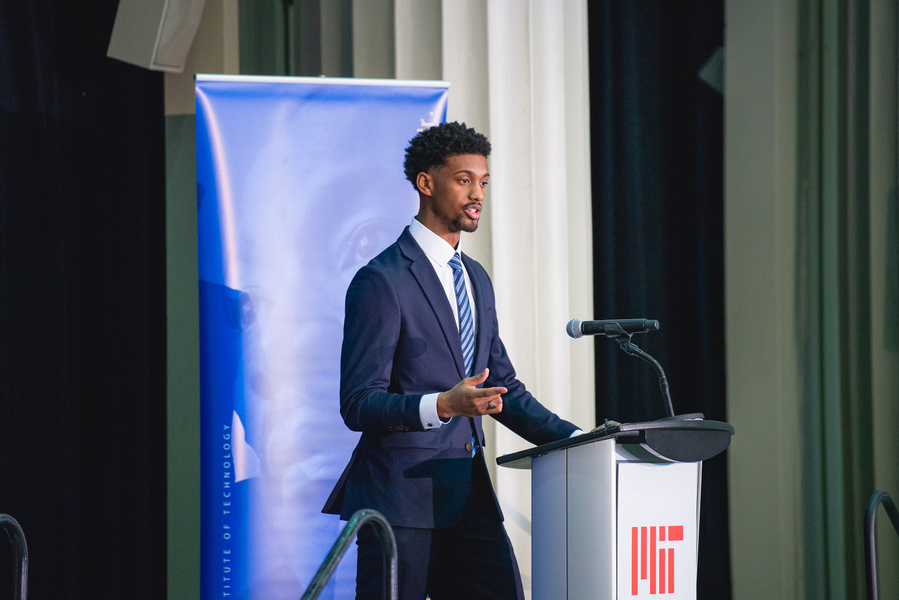
Michael Ewing ’27, a mechanical engineering major, provided welcoming remarks while introducing the speakers as well as the MLK Celebration planning committee.
Ewing noted that the event remains “extremely and vitally important” to the MIT community, and reflected on the meaning of this year’s motif, for individuals and larger communities.
“Dr. King’s hope constitutes the belief that one can make things better, even when current conditions are poor,” Ewing said. “In the face of adversity, we must remain connected to what’s most important, be grateful for both the challenges and the opportunities, and hold on to the long-term belief that no matter what, no matter what, there’s an opportunity for us to learn, grow, and improve.”
The annual MLK Celebration also highlighted further reflections from students and staff on King’s life and legacy and the value of his work.
“Everyone that has fought for a greater good in this world has left the battle without something that they came with,” said Oluwadara Deru, a senior in mechanical engineering and the featured undergraduate speaker. “But what they gained is invaluable.”
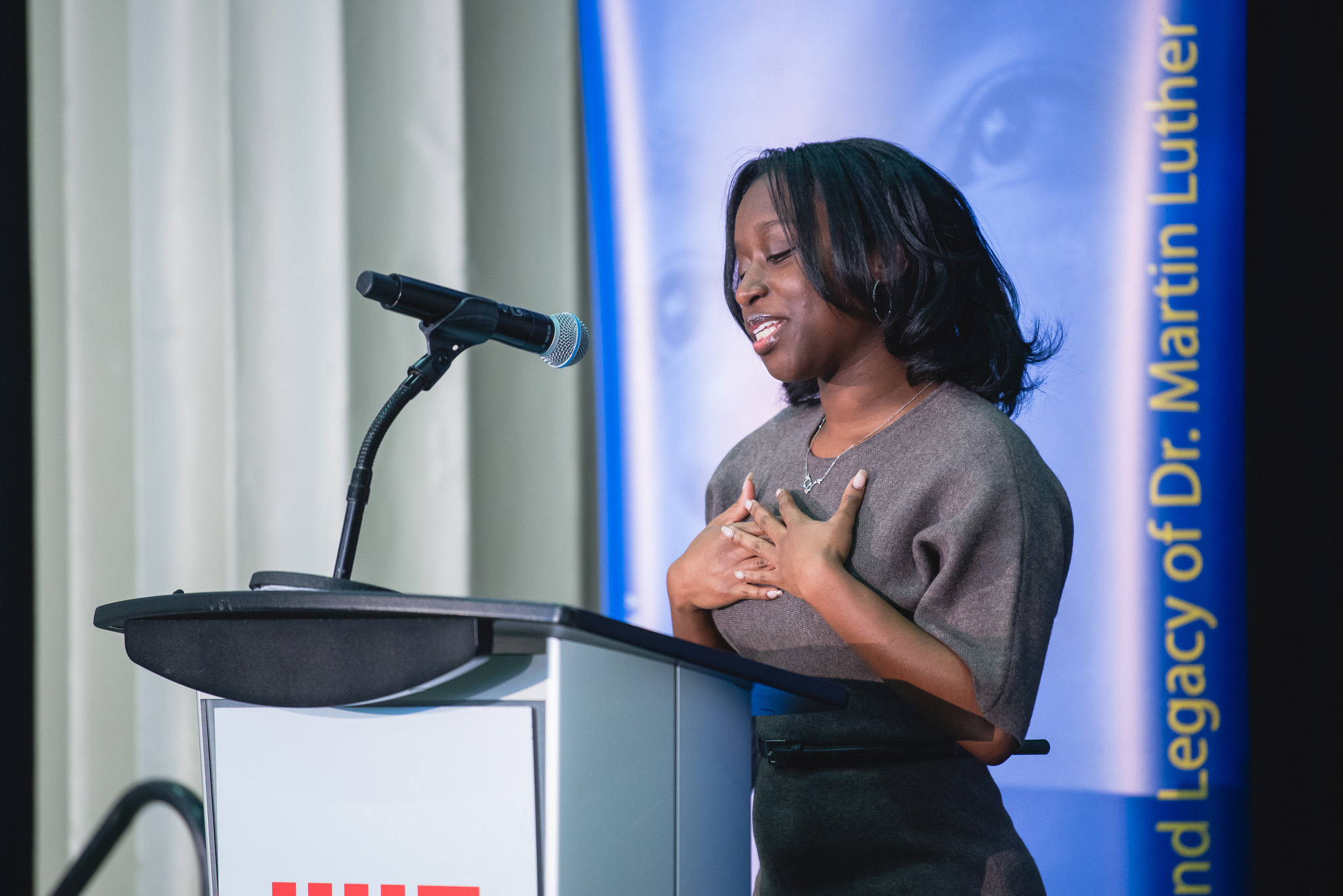
Ekua Beneman, a graduate student in chemistry, offered thoughts relating matters of academic achievement, and helping others in a university setting, to the larger themes of the celebration.
“Hope is not pretending disappointment doesn’t exist,” Beneman said. “Hope is choosing to pass forward what was once given to you. At a place like MIT, infinite hope looks like mentorship. It looks like making space. It looks like sharing knowledge instead of guarding or gatekeeping it. If we truly want to honor Dr. King’s legacy, beyond this beautiful celebration today, we do it by choosing community, mentorship, and hope in action.”
Denzil Streete, associate dean and director of the Office of Graduate Education, related the annual theme to everyday life at the Institute, as well as social life everywhere.
“Hope lies in small, often uncelebrated acts,” Streete said. “Showing up. Being present. Responding with patience. Translating complicated processes into next steps. Making one more call. Sending one more email.”
He concluded: “See your daily work as moral work … Every day, through joy and care, we choose infinite hope, for our students, and for one another.”
Reverend Thea Keith-Lucas, chaplain to the Institute and associate dean in the Office of Religious, Spiritual, and Ethical Life, offered both an invocation and a benediction at the event.
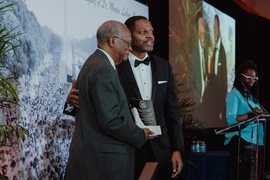
The annual celebration includes the Dr. Martin Luther King Jr. Leadership Awards Recipients, given this year to Melissa Smith PhD ’12, Fred Harris, Carissma McGee, Janine Medrano, and Edwin Marrero.
For all the turbulence in the world, Hammond said toward the conclusion of her address, people can continue to make progress in their own communities, and can be intentional about focusing, in part, on the possibilities of progress ahead.
At MIT, Hammond noted, “The commitment of our faculty, students, and staff to continuously learn, to ask deep questions and to apply our knowledge, our perspectives and our insights to the biggest world problems is something that gives me infinite hope and optimism for the future.”