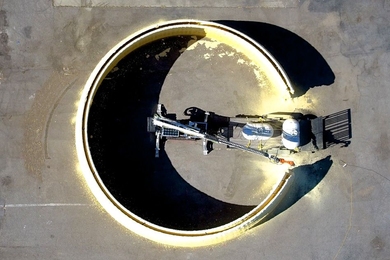
3-D printing offers new approach to making buildings
Technology developed at MIT could enable faster, cheaper, more adaptable building construction.
Technology developed at MIT could enable faster, cheaper, more adaptable building construction.

A simple statistical trick could help make a ubiquitous model of decision processes more accurate.

Microfluidic device generates passive hydraulic power, may be used to make small robots move.
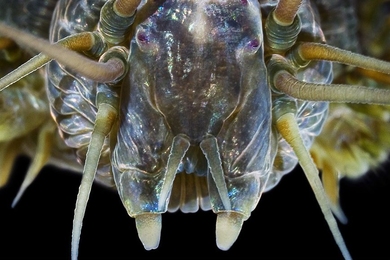
A bio-inspired gel material developed at MIT could help engineers control movements of soft robots.
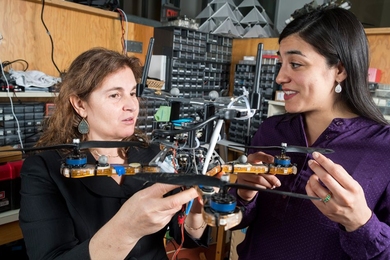
New technique could protect robot teams’ communication networks from malicious hackers.
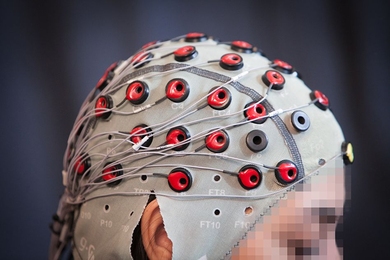

Made from hydrogel, robots may one day assist in surgical operations, evade underwater detection.
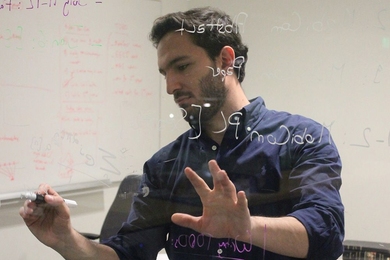
Adib is directing a new research group at the Media Lab, aiming to uncover, analyze, and engineer natural and human-made networks.
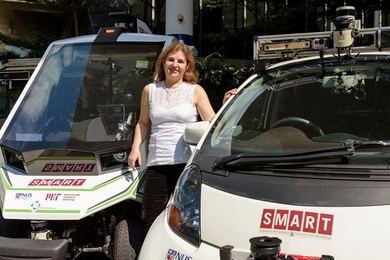
MIT Professor Daniela Rus combines automation and mobility to create a smarter world.

Fund establishes a global initiative to advance artificial intelligence research for the public good.
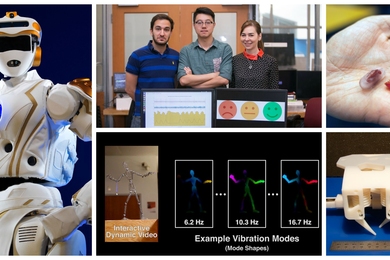
A look at 16 of the coolest things that happened at the Computer Science and Artificial Intelligence Laboratory in 2016.
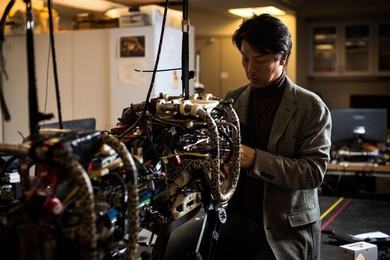
Mechanical engineer Sangbae Kim builds animal-like machines for use in disaster response.

Technique shrinks data sets while preserving their fundamental mathematical relationships.
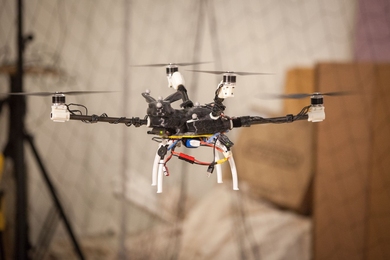
CSAIL system lets users design and fabricate drones with a wide range of shapes and structures.
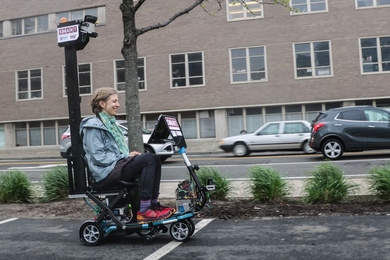
Self-driving scooter demonstrated at MIT complements autonomous golf carts and city cars.