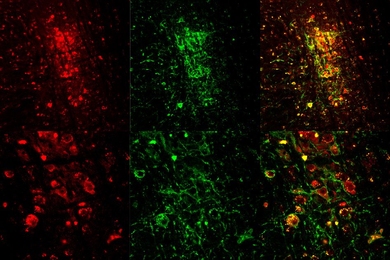
Using light to produce natural sleep patterns
Researchers use optogenetics to trigger REM sleep in mice.
Researchers use optogenetics to trigger REM sleep in mice.
Here are eight of the coolest things that happened at CSAIL in 2014.

New programming language automatically coordinates interactions between Web page components.

New CSAIL genomics work suggests vocalizing birds could tell us more about speech disorders.

New understanding of how to halt photons could lead to miniature particle accelerators, improved data transmission.

New study shows clusters, across fields, help growth, jobs, and innovation.
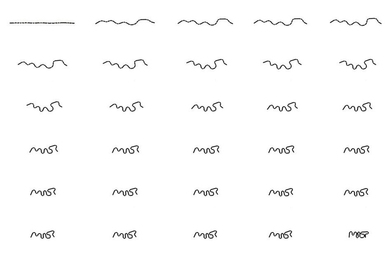
3-D-printable materials deform to change surface area, enabling curvature rather than rigid folding.
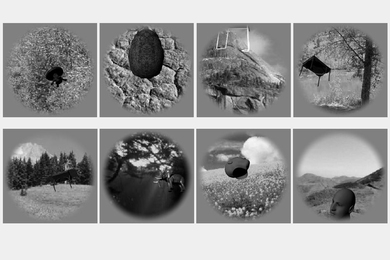
Newest computer neural networks can identify visual objects as well as the primate brain.
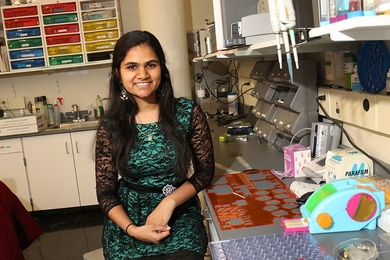
Rhodes Scholar Anisha Gururaj aims to connect life-changing technologies with people who need them.

MIT study finds an exoplanet, tilted on its side, could still be habitable if covered in ocean.
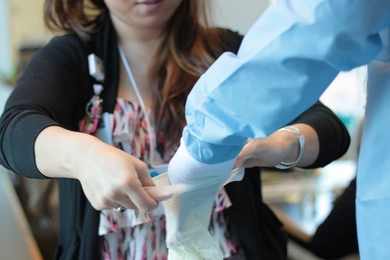
More than 100 spend a weekend devising better personal protections, diagnostics, and medical records in the face of a deadly disease.
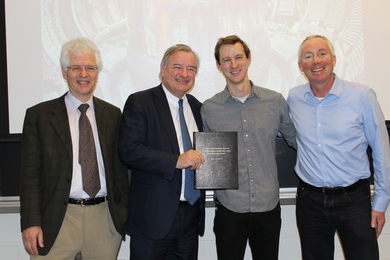
In inaugural Del Favero Doctoral Thesis Prize Lecture, Zach Hartwig PhD '14 explains why fusion research should be at the top of NSE's agenda.
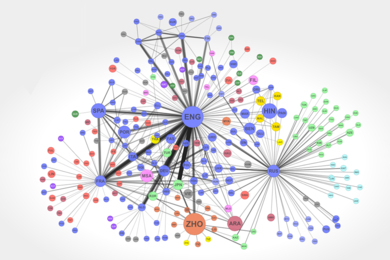
Networks that map strength of connections between languages predict global influence of their speakers.
Mathematical description of relationship between thickness, temperature, and resistivity could spur advances.