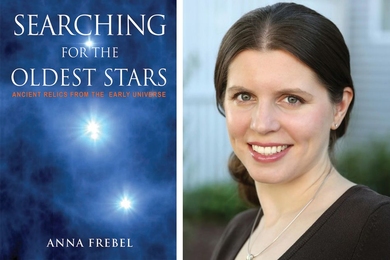
3 Questions: Anna Frebel on searching for the oldest stars
New book details astronomers’ hunt for clues to the early universe.
New book details astronomers’ hunt for clues to the early universe.
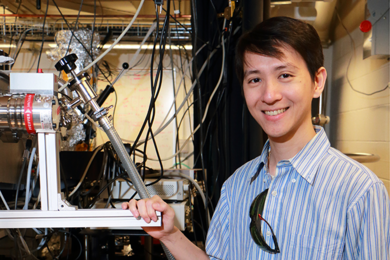
MIT graduate student Edbert Jarvis Sie shows promise of new valleytronics by optical tuning of electronic valleys in tungsten disulfide.
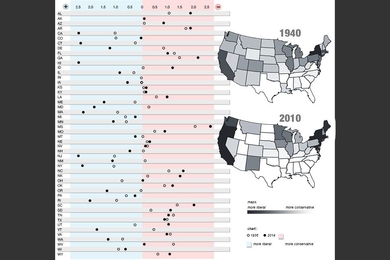
Unique new study shows political orientation of all 50 U.S. states over time.
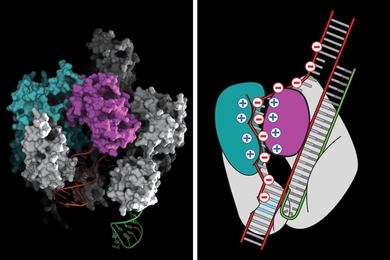
Team re-engineers system to dramatically cut down on editing errors; improvements advance future human applications.
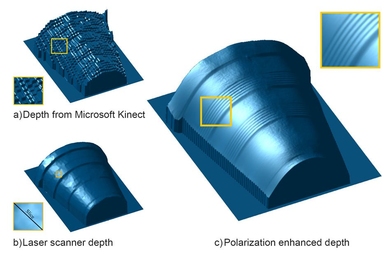
Algorithms exploiting light’s polarization boost resolution of commercial depth sensors 1,000-fold.


New formula identifies limits to nanoscale heat transfer, may help optimize devices that convert heat to electricity.
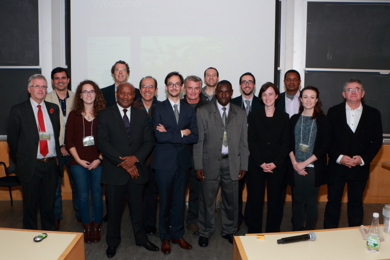
Farmers in Africa and other tropical areas in the Southern Hemisphere are stripping potassium from soils without replacing it.
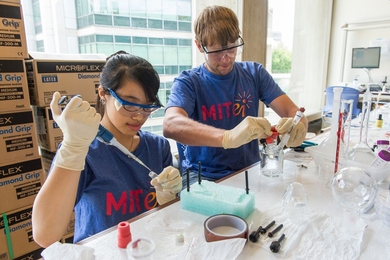
Students gain hands-on experience over the summer with MITEI's Energy Undergraduate Research Opportunities Program.
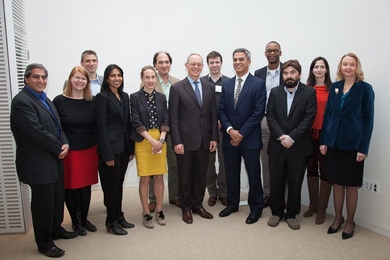
Four high-risk, high-reward projects launch with support from Professor Amar G. Bose Research Grants.
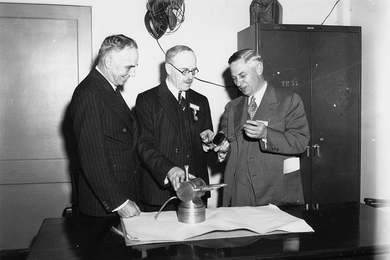
Seventy-five years ago, an international meeting of scientific minds changed forever how MIT and other research institutions develop new technologies.
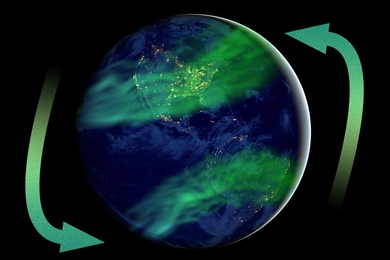
Researchers find geomagnetic field intensity is double the long-term historical average.
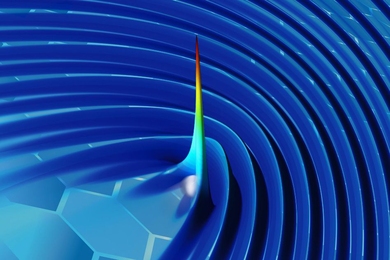
MIT researchers have found a phenomenon that might lead to more compact, tunable X-ray devices made of graphene.
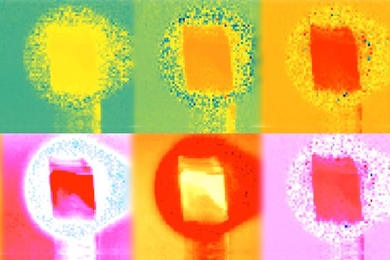
Mathematical modeling enables $100 depth sensor to approximate the measurements of a $100,000 piece of lab equipment.
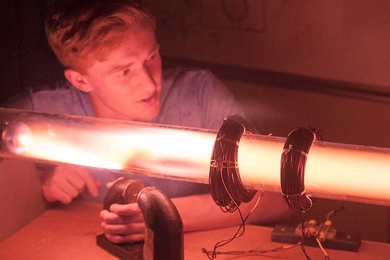
After starting his physics education with online courses, an MIT graduate student is now practicing cutting-edge research in nuclear fusion at MIT.