
A "GPS for inside your body"
CSAIL wireless system suggests future where doctors could implant sensors to track tumors or even dispense drugs.
CSAIL wireless system suggests future where doctors could implant sensors to track tumors or even dispense drugs.
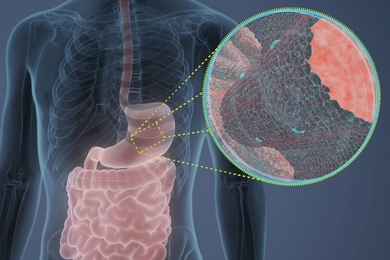
Screen of human proteins reveals some with antimicrobial power.

Results are among the strongest evidence yet for “spooky action at a distance.”
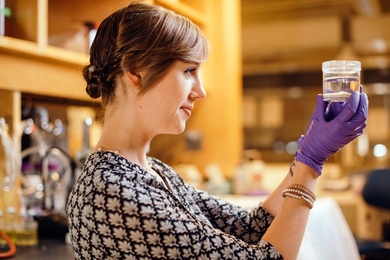
Graduate student Kelsey Moore uses genetic and fossil evidence to study the first stages of evolution on our planet.
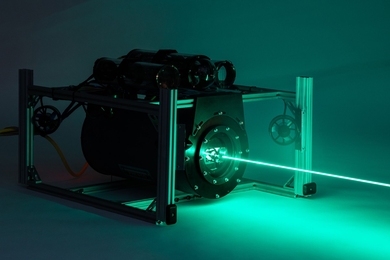
Lincoln Laboratory researchers are applying narrow-beam laser technology to enable communications between underwater vehicles.

Novel combination of two encryption techniques protects private data, while keeping neural networks running quickly.

Bright light from black hole in a feeding frenzy had been obscuring surrounding galaxies.
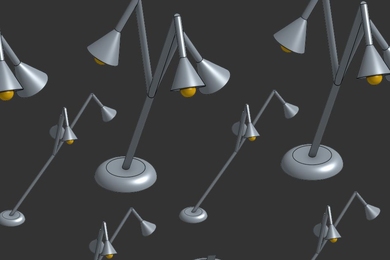
Users can quickly visualize designs that optimize multiple parameters at once.
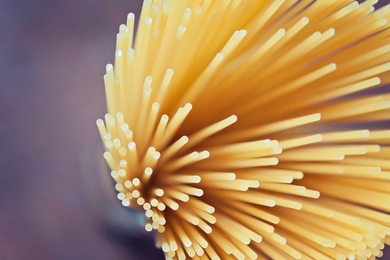
It’s nearly impossible to break a dry spaghetti noodle into only two pieces. A new MIT study shows how and why it can be done.
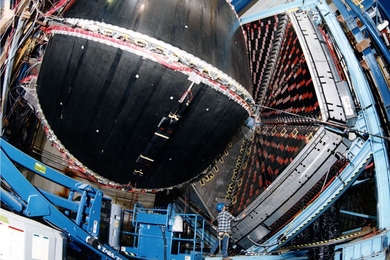
The positively charged particles may have an outsize influence on the properties of neutron stars and other neutron-rich objects.
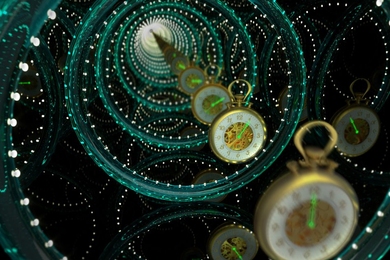
Technique can capture a scene at multiple depths with one shutter click — no zoom lens needed.
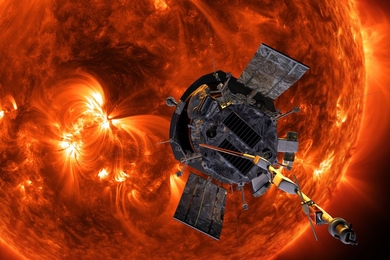
MIT’s John Belcher discusses the launch of the Parker Solar Probe, which will fly directly into the sun’s atmosphere.
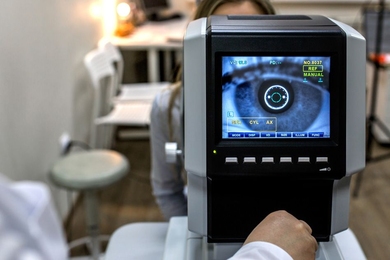
Unexpected findings show that the body’s own immune system destroys retinal cells.
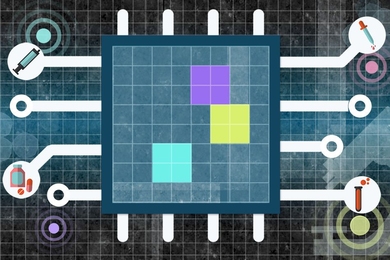
Machine-learning system determines the fewest, smallest doses that could still shrink brain tumors.
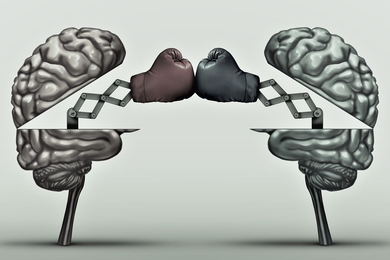
Scientists present dueling theories in the high-stakes quest to understand how we hold and juggle multiple pieces of information in mind.