
Real-time readouts of thinking in rats
New open-source system provides fast, accurate neural decoding and real-time readouts of where rats think they are.
New open-source system provides fast, accurate neural decoding and real-time readouts of where rats think they are.
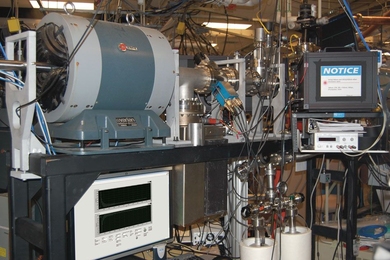
Facility could rapidly provide data on how material properties change in a nuclear reactor.
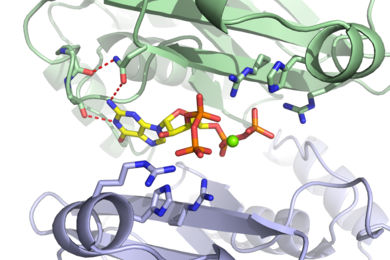
Researchers develop a method to investigate how bacteria respond to starvation and to identify which proteins bind to the “magic spot” — ppGpp.
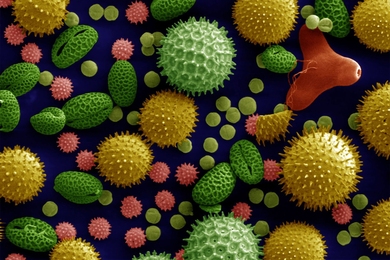
Whitehead Institute and MIT researchers uncover the detailed molecular structure of the sporopollenin polymer, an inert material key for the emergence of land plants.
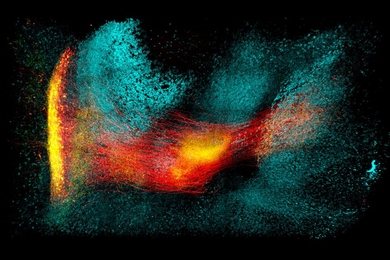
Technique for preserving tissue allows researchers to create maps of neural circuits with single-cell resolution.

New research finds a unique component of cell membranes in an archaea species conveys protection against acidic surroundings.
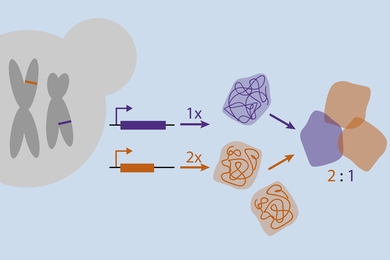
Researchers refine a method to quantify protein production, show that the precision with which bacteria and eukaryotes tune their gene expression is remarkably similar.
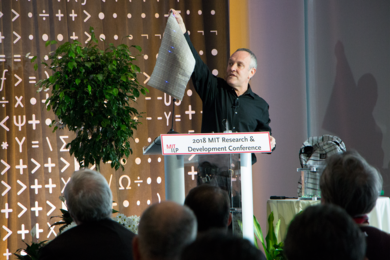
Faculty researchers share insights into new capabilities at the annual Industrial Liaison Program Research and Development Conference.
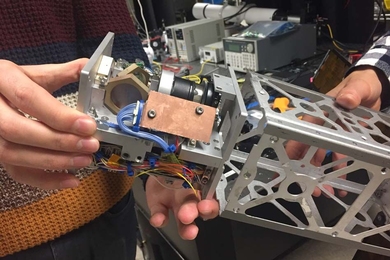
Platform offers the precision that shoebox-sized CubeSats need to beam down hefty data packets.
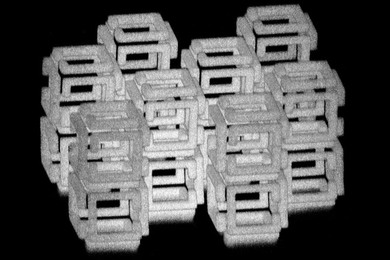
It’s not quite the Ant-Man suit, but the system produces 3-D structures one thousandth the size of the originals.
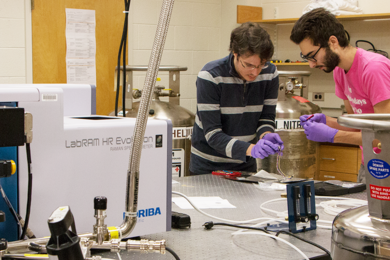
Riccardo Comin seeks to elucidate the microscopic physics of high-temperature superconducting devices to advance their technological applications.
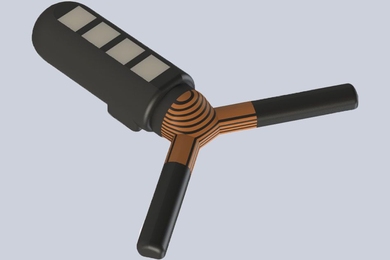
Electronic pill can relay diagnostic information or release drugs in response to smartphone commands.
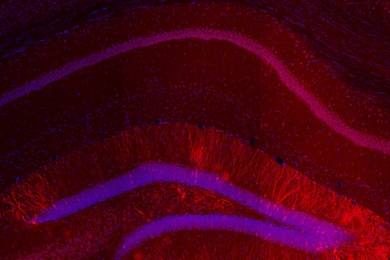
Picower Institute researchers discover the brain mechanism that helps details come flooding back when you visit a scene again.
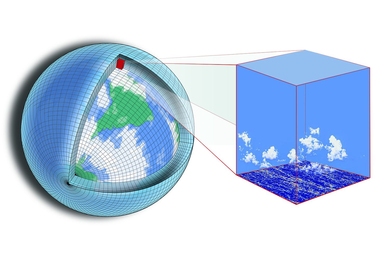
Scientists and engineers will collaborate in a new Climate Modeling Alliance to advance climate modeling and prediction.

Method could illuminate features of biological tissues in low-exposure images.