
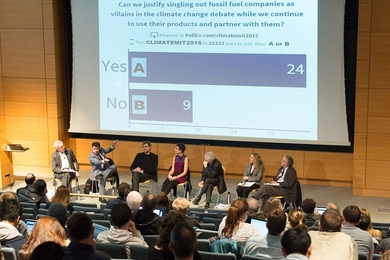
Communicating climate change: Focus on solutions
MIT discussion highlights causes for optimism and the importance of emphasizing positive steps.

Interdisciplinary medicine
Senior Yiping Xing’s view of health care draws upon research, public health, and policy.
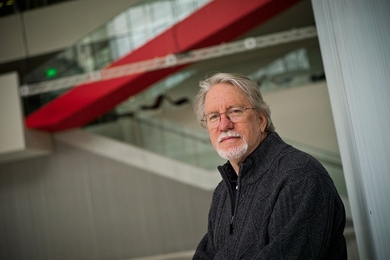
When logic meets rhetoric
Edward Schiappa has studied reason and rhetoric from ancient Greece to “Will & Grace.”
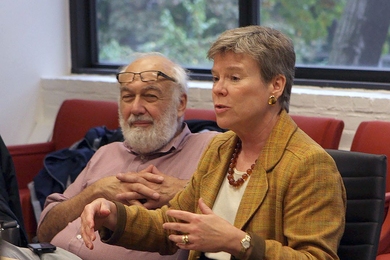

Can the U.S. and Russia make more progress on nuclear security?
State Department official lauds enforcement of New START Treaty, but cites need for more work.

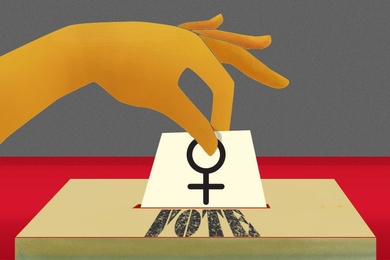
Study: Contrary to image, city politicians do adapt to voters
Urban politicians in the U.S. are responsive to voters’ views, regardless of the form of government.

Time to rethink foreign policy?
In a new book, political scientist Barry Posen makes the case for a more limited U.S. military strategy.

Bruno Perreau examines the politics of adoption in France
A lens for views on gender, parenthood, and "Frenchness."
3 Questions: John Tirman on the warming U.S.-Iran relationship
New book examines misunderstandings as two nations try to work out a permanent deal on nuclear weapons.
Modeling cyberspace control worldwide
Nazli Choucri analyzes issues of governance, politics, and participation in online communications.
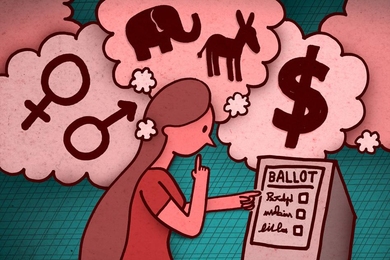
Inside the minds of voters
An MIT political scientist proposes a new polling method to reveal how voters make choices at the ballot box.
After the U.S. leaves Afghanistan, then what?
In talk, MIT professor examines the implications of the military drawdown for regional rivals India and Pakistan.

In search of transparency
Former military analyst and whistleblower Daniel Ellsberg speaks on the need for open public discussion of vital issues.