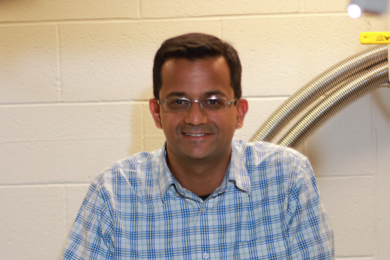
Riding an electronic wave
Graduate student Fahad Mahmood and colleagues show presence of charge-density waves in superconductive material.
Graduate student Fahad Mahmood and colleagues show presence of charge-density waves in superconductive material.
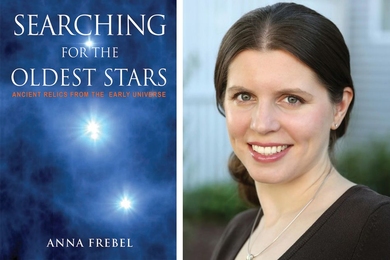
New book details astronomers’ hunt for clues to the early universe.
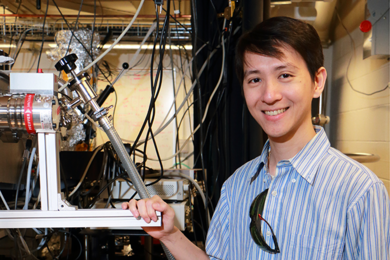
MIT graduate student Edbert Jarvis Sie shows promise of new valleytronics by optical tuning of electronic valleys in tungsten disulfide.
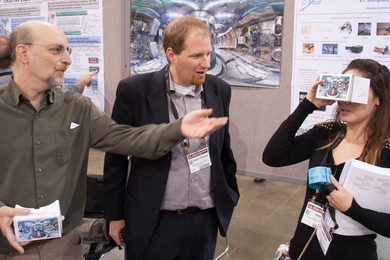
Members of MIT's Plasma Science and Fusion Center wow colleagues, students, and teachers with a 3-D tour of the Institute's nuclear fusion experiment.
![“I hope to embody the [Buddhist] values of compassion, mindfulness, and understanding in everything I do,” says Võ Tiến Phong, MIT’s newest Marshall Scholar.](/sites/default/files/styles/term_page__news_article/public/images/201511/MIT-Phong-Vo-01.jpg?itok=UYxewxs1)
MIT senior Võ Tiến Phong will study theoretical physics at Cambridge University.
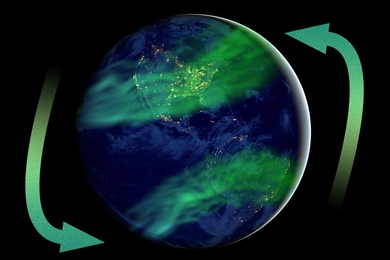
Researchers find geomagnetic field intensity is double the long-term historical average.
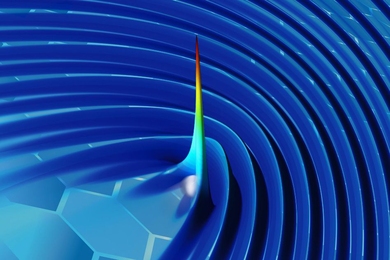
MIT researchers have found a phenomenon that might lead to more compact, tunable X-ray devices made of graphene.
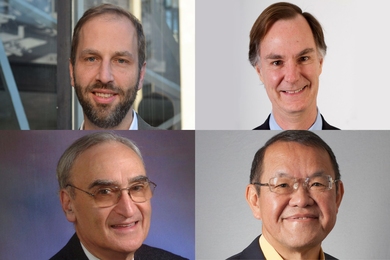
Berggren, Bertschinger, Fink, and Zue are among those recognized for efforts toward advancing science.
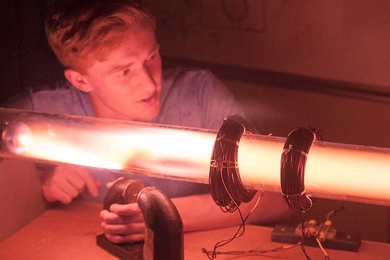
After starting his physics education with online courses, an MIT graduate student is now practicing cutting-edge research in nuclear fusion at MIT.
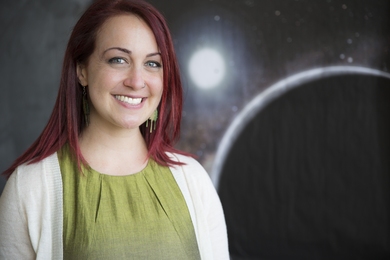
Kavli Institute postdoc and 2015 L'Oreal USA For Women in Science Award winner speaks on her career and why roadblocks remain for women in science.
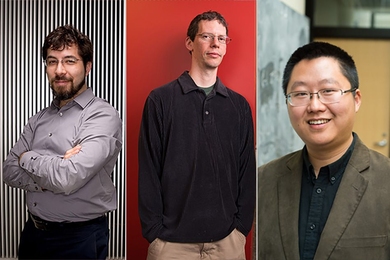
MIT physicists share prize in fundamental physics; Larry Guth and Liang Fu win New Horizons Prizes.
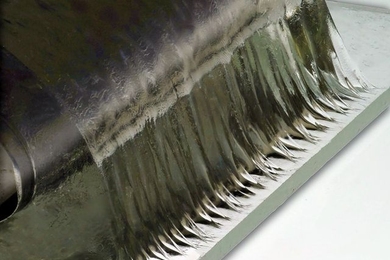
New “water adhesive” is tougher than natural adhesives employed by mussels and barnacles.
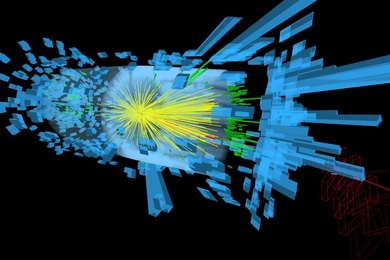
Scientists precisely count particles produced in a typical proton collision.