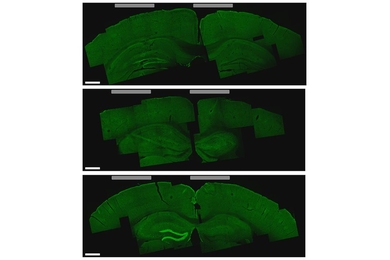
A noninvasive method for deep brain stimulation
Electrodes placed on the scalp could help patients with brain diseases.
Electrodes placed on the scalp could help patients with brain diseases.
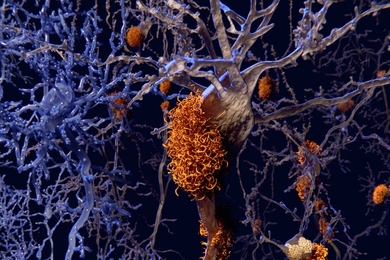
Discovery of how amyloids bind metal ions sheds light on protein function.
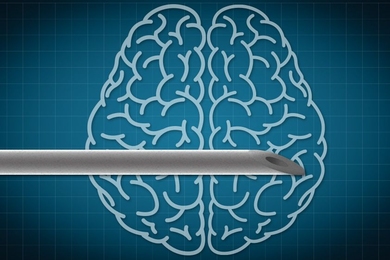
Thin fibers could be used to deliver drugs or electrical stimulation, with less damage to the brain.

Keyboard-monitoring technique can detect motor difficulties as patients type.
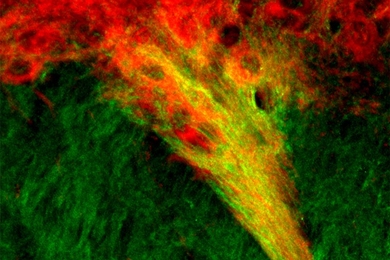
Researchers suspect cells in this brain circuit could also be targets of Parkinson’s disease.

Over half a century at MIT, Corkin made lasting contributions to the biology of memory and cognitive disorders.
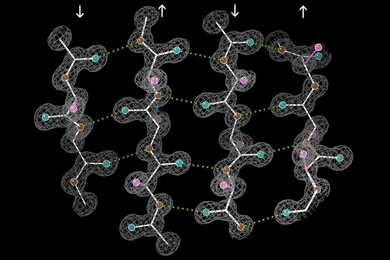
Enhanced-sensitivity NMR could reveal new clues to how proteins fold.

Yeast protein could offer clues to how Alzheimer’s plaques form in the brain.
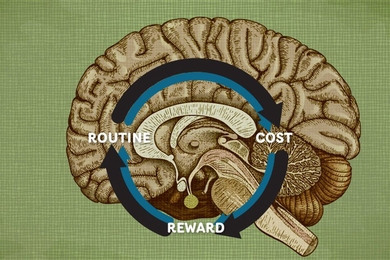
Researchers discover neurons in the brain that weigh costs and benefits to drive formation of habits.
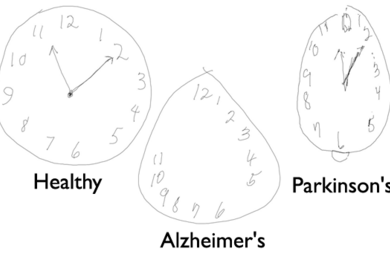
Team from MIT's Computer Science and Artificial Intelligence Lab detects dementia using AI and a digital pen.

By revealing loss of motor skills, typing patterns may help to identify early onset of Parkinson’s.
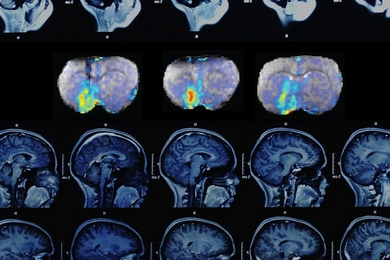
MRI sensor allows neuroscientists to map neural activity with molecular precision.
Computer modeling may resolve conflicting results and offer hints for new drug-design strategies.
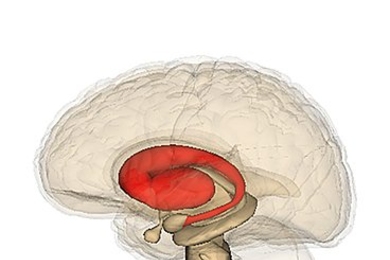
New study is first to analyze how affected brain cells respond during different behavioral tasks.
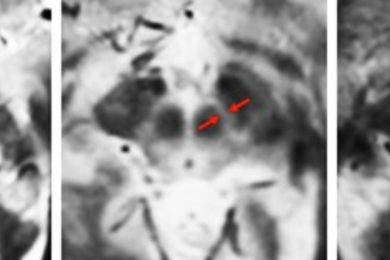
New MRI technique could help doctors track how patients respond to treatment.